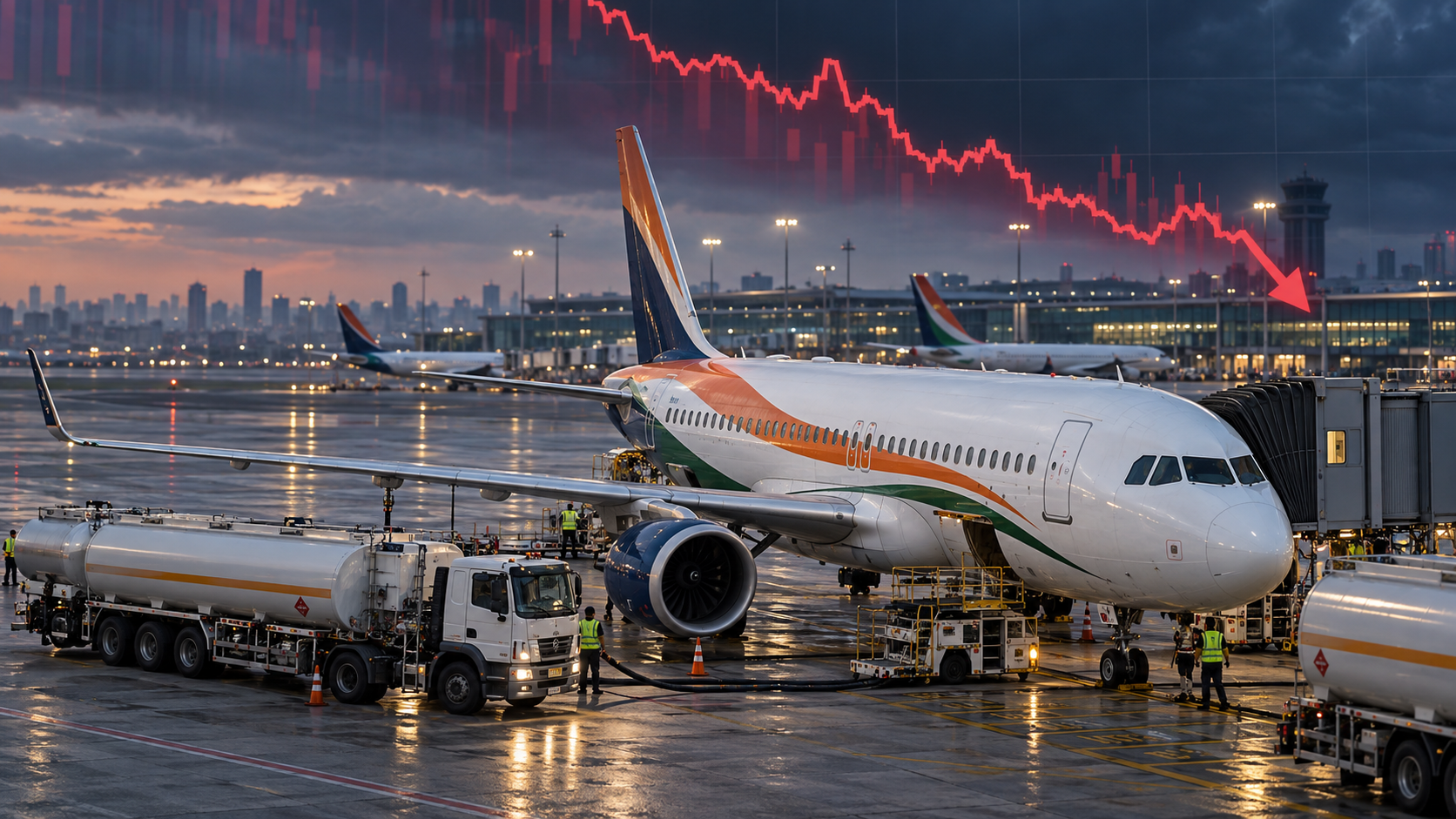
India’s aviation industry could see net losses widen to ₹36,000-38,000 crore in FY2026-27, as rising fuel prices, rupee depreciation, geopolitical disruptions and weaker passenger traffic put pressure on airline finances, according to rating agency ICRA.
Mumbai, October 29: The Indian aviation industry is expected to report net losses of ₹36,000-38,000 crore in the current financial year, compared with estimated losses of ₹28,000-30,000 crore in the previous fiscal, rating agency ICRA said on Thursday. The projected losses are primarily driven by slower passenger traffic growth, higher aviation turbine fuel (ATF) prices and foreign exchange losses resulting from the depreciation of the Indian rupee against the US dollar.
The ongoing conflict in West Asia, which began in late February 2026, is also expected to affect passenger traffic growth during FY27. Airspace restrictions and disruptions to international flight routes have affected airline operations, while higher fares are putting additional pressure on discretionary travel demand.
The impact is already visible in passenger traffic figures. Domestic air passenger traffic declined 6.5% year-on-year to 118.2 lakh in September 2026, compared with 126.4 lakh in the same month last year. During April-September, domestic passenger traffic fell 1.9% to 786.1 lakh. International passenger traffic for Indian carriers also declined 19.3% during the first half of FY27, reflecting disruptions caused by the West Asia conflict.
Fuel costs remain a major concern for airlines. ATF prices for domestic operations increased 46.2% year-on-year in October 2026 and rose 13.2% compared with September. During the first half of FY27, average ATF prices were 24.1% higher than in the corresponding period last year. Fuel typically accounts for 30-40% of airline operating expenses, making price increases particularly challenging for carriers.
The depreciation of the Indian rupee is adding to the financial burden, as several major airline expenses, including aircraft leasing, fuel and maintenance, are denominated in US dollars. According to ICRA, around 35-50% of airline costs are linked to the US dollar, increasing their exposure to currency fluctuations and foreign exchange losses.
Airlines are also facing higher lease rentals amid continued aircraft deliveries and fleet availability challenges. These additional expenses are expected to further affect profitability, particularly as carriers may not be able to pass on the entire increase in operating costs through higher ticket prices without affecting passenger demand.
ICRA expects domestic passenger traffic to grow 3-6% in FY27, while international passenger traffic for Indian carriers is projected to decline 3-6%. The agency has maintained a negative outlook on the aviation industry, citing uncertainty surrounding fuel prices, currency movements and geopolitical developments.
The projected losses highlight the growing financial pressure on Indian airlines as they attempt to balance rising operating costs with competitive airfares and passenger demand.