
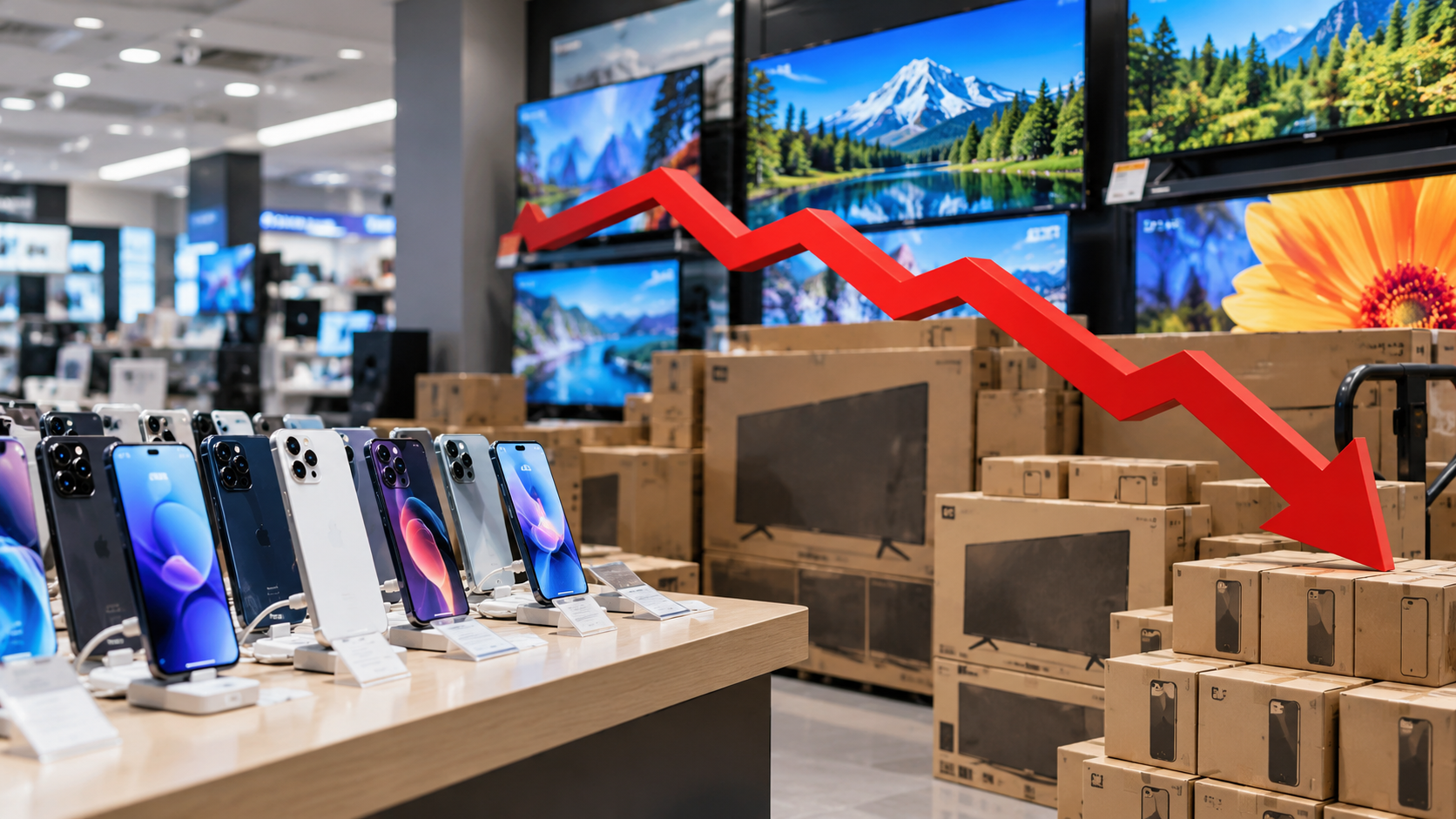
Weak festive demand, rising memory chip prices and mounting unsold inventory have forced smartphone and television manufacturers to reconsider production plans for the coming months.
Highlights
- Smartphone and TV makers plan production cuts of up to 20%.
- Festive season sales volumes declined around 25% year-on-year.
- Handset and TV sales fell more than 10% during January–September.
- Rising memory chip costs pushed smartphone prices up 35–40%.
- Television prices increased 20–25%, affecting consumer demand.
- Festive sales account for nearly 30% of annual business in both categories.
Full Story
New Delhi, October 30, 2026: India’s smartphone and television manufacturers are preparing to reduce production by up to 20% over the next two to three months after a disappointing festive sales season left companies struggling with unsold inventory.
According to a report by The Economic Times, rising product prices, weak consumer demand and higher input costs have created fresh challenges for the electronics industry during what is traditionally its biggest selling season.
Festive Sales Decline 25%
Smartphone and television sales volumes declined approximately 25% year-on-year during the festive season, according to leading brands and contract manufacturers cited in the report.
The slowdown is particularly significant because the festive period typically contributes nearly 30% of annual business for both categories.
Industry players are now dealing with excess inventory as consumers delay purchases amid rising prices.
Production Cuts of Up to 20% Planned
Manufacturers are considering reducing output by as much as 20% over the next two to three months to manage unsold stock.
The proposed cuts come after a challenging year for the consumer electronics industry.
Sales of smartphones and televisions declined by more than 10% year-on-year during January–September, indicating that demand weakness had emerged even before the festive season.
Memory Chip Prices Push Up Costs
A sharp increase in memory chip prices has emerged as a major challenge for electronics manufacturers.
According to the report, higher memory costs have pushed smartphone prices up by 35–40% and television prices by 20–25% on average.
These increases have particularly affected entry-level and mid-range products, which account for the largest share of India’s consumer electronics market.
Budget-conscious consumers have become increasingly cautious about purchasing new devices.
Discounts Become Less Attractive
Higher input costs have also limited manufacturers’ ability to offer aggressive festive discounts.
With production expenses rising, brands have struggled to maintain competitive pricing while protecting profit margins.
The combination of higher retail prices and reduced discounts has further weakened demand during the crucial shopping period.
What Happens Next?
Manufacturers are expected to focus on clearing existing inventory before increasing production.
The slowdown could also affect component suppliers and contract manufacturers that depend on steady orders from major electronics brands.
Industry recovery will depend on consumer demand, inventory levels and whether memory chip prices stabilise in the coming months.
For consumers, the slowdown could eventually lead to promotional offers as retailers attempt to clear stock, although continued high component costs may limit price reductions.