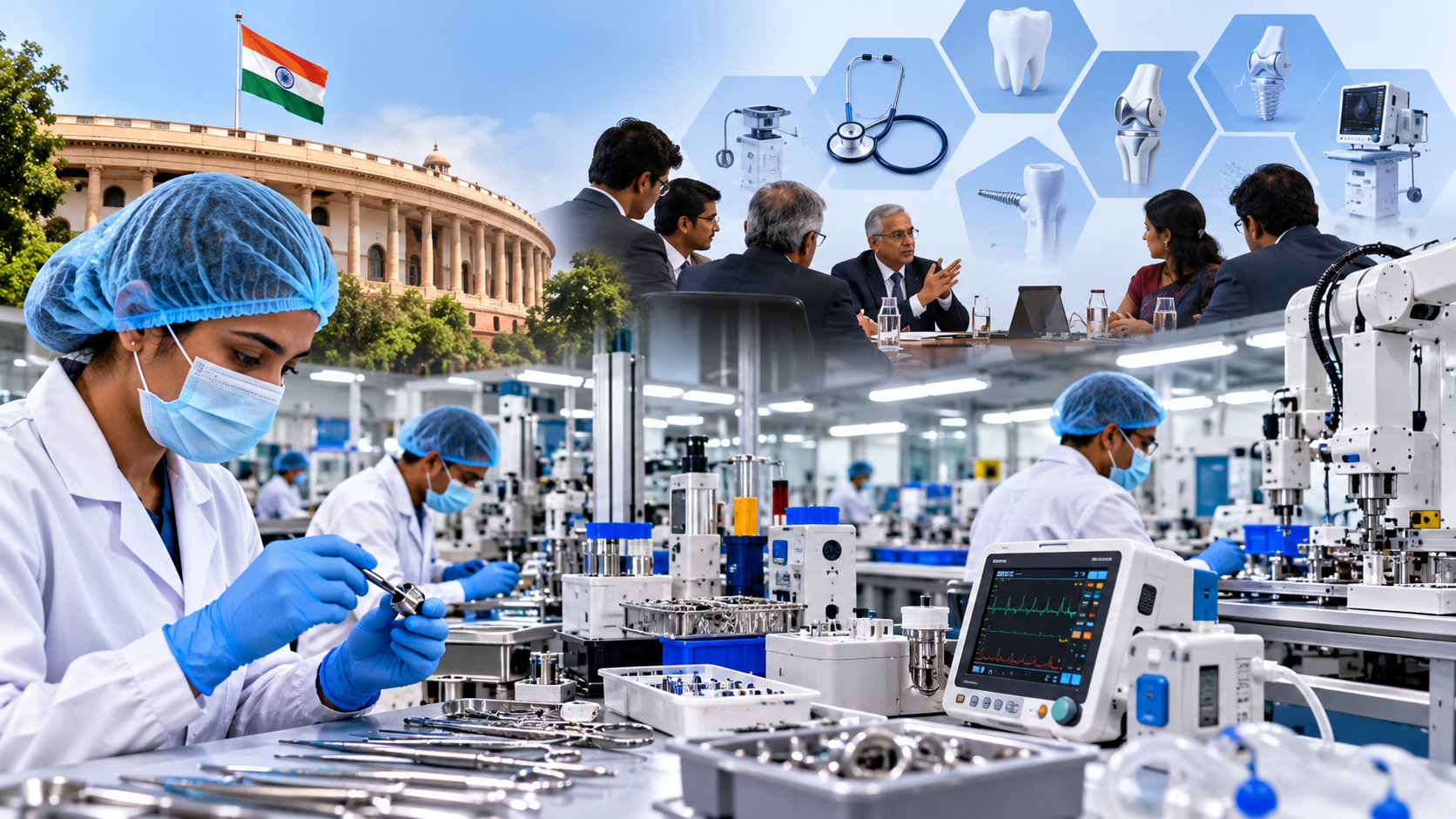
NITI Aayog is exploring regulatory reforms, infrastructure improvements and financial incentives to strengthen domestic medical and dental device manufacturing and reduce dependence on imports.
Highlights
- NITI Aayog explores policy measures to boost medical and dental device manufacturing.
- Meeting chaired by NITI Aayog Vice Chairman Ashok Lahiri.
- Industry seeks a dedicated law for medical devices and faster regulatory approvals.
- Indian manufacturers face a 10–15% cost disadvantage compared with imports.
NITI Aayog Eyes Policy Support to Strengthen Medical and Dental Device Manufacturing in India
NITI Aayog is exploring comprehensive policy interventions to boost domestic manufacturing of medical and dental devices in India. The initiative aims to address regulatory challenges, infrastructure gaps and high production costs that currently affect Indian manufacturers.
According to an Economic Times report, the government policy think tank recently held discussions with industry representatives, government officials and experts to identify major obstacles facing the sector.
The meeting was chaired by NITI Aayog Vice Chairman Ashok Lahiri and focused on developing recommendations to strengthen India’s medical device manufacturing ecosystem.
Industry Leaders Discuss Manufacturing Challenges
The meeting brought together representatives from the departments of pharmaceuticals, health, science and technology, along with the Indian Council of Medical Research (ICMR).
Experts from IIT Delhi and IIT Mumbai also participated in the discussions.
Industry representatives included the Association of Indian Medical Device Industry (AiMeD) and companies involved in medical and dental device manufacturing.
The discussions focused on identifying opportunities for collaboration between government agencies and manufacturers.
Industry Demands Dedicated Medical Device Law
One of the major recommendations presented during the meeting was the introduction of a dedicated law governing medical devices.
AiMeD called for simpler regulatory approvals and financial assistance to help Indian manufacturers compete with imported products.
Industry representatives argued that the existing regulatory framework creates unnecessary delays and increases business costs.
They believe that a separate legal framework could improve transparency and streamline approvals for medical device manufacturers.
Indian Manufacturers Face 10–15% Cost Disadvantage
According to the industry body, domestic medical device manufacturers face a cost disadvantage of approximately 10–15% compared with imported products.
The higher costs are attributed to expensive capital, energy and logistics, along with limited access to risk capital.
Inadequate testing and research infrastructure also increases production expenses.
These challenges make it difficult for Indian companies to compete with established international manufacturers.
Regulatory Delays Affect New Manufacturing Units
The industry also highlighted the growing regulatory burden associated with establishing new manufacturing facilities.
According to industry representatives, setting up a medical device manufacturing plant previously required around 18 months.
However, the process can now take nearly four years because of multiple approvals, overlapping regulatory authorities and changing compliance requirements.
Such delays discourage investment and slow the expansion of domestic manufacturing capacity.
Government Focuses on Domestic Manufacturing
NITI Aayog’s consultation is expected to help formulate recommendations aimed at improving India’s medical and dental device manufacturing capabilities.
The policy discussions also seek to align industrial development with the country’s healthcare priorities.
Improved infrastructure, easier regulatory approvals and targeted financial support could help domestic companies expand production and compete more effectively with imported devices.
The initiative is part of broader efforts to strengthen India’s healthcare manufacturing ecosystem and encourage greater domestic production of medical technologies.