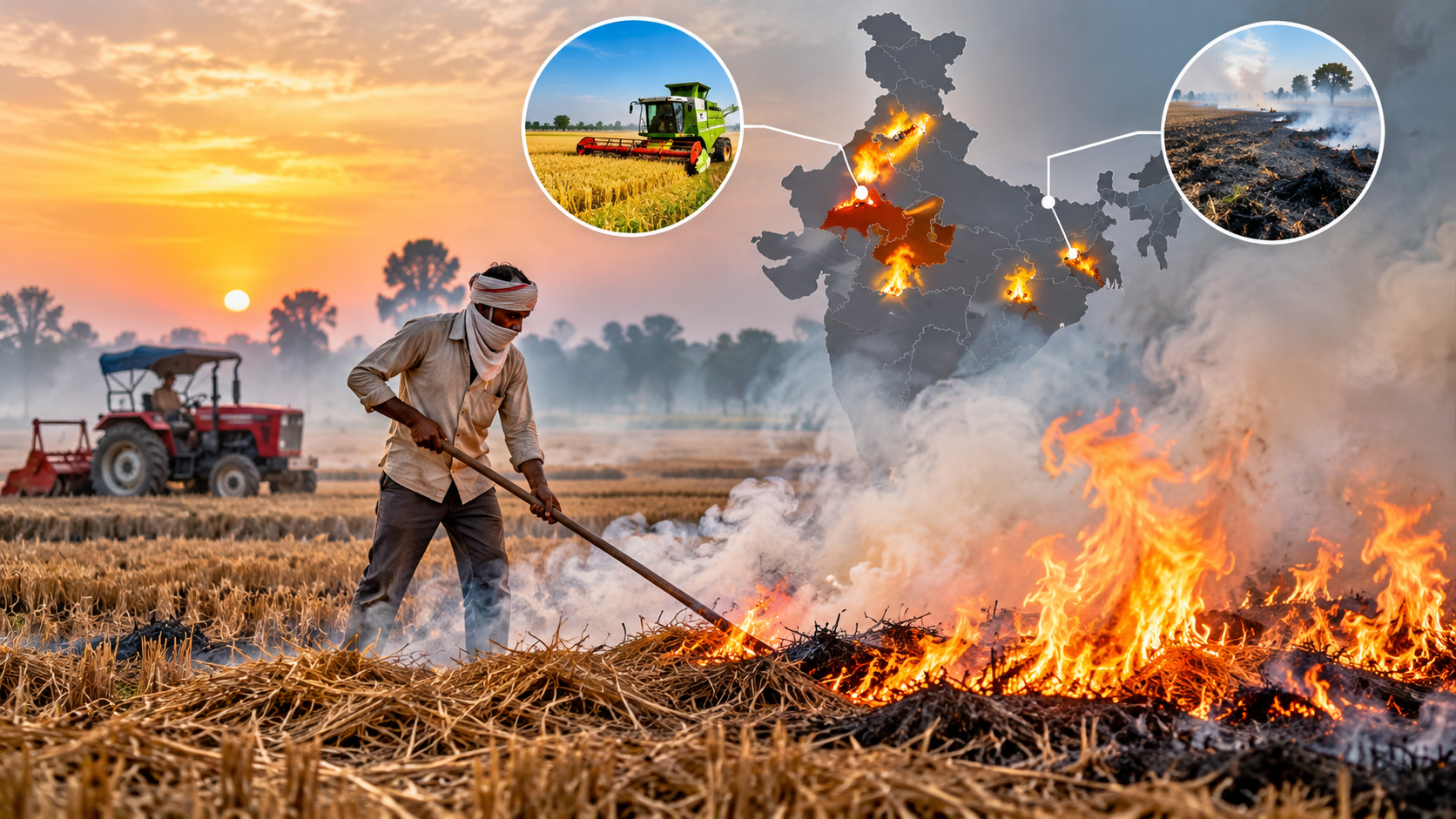
Stubble burning incidents across seven states increased 9.5% to 793 between September 15 and October 15, 2026, with Madhya Pradesh recording the highest number of farm fires.
Highlights
- Madhya Pradesh recorded 350 stubble burning incidents, up 153.6% year-on-year.
- Total farm fires across seven states rose 9.5% to 793.
- Haryana recorded a 68% decline, with incidents falling from 25 to 8.
- Uttar Pradesh saw a 50.6% drop, reporting 134 incidents.
Madhya Pradesh Tops Stubble Burning Cases as Farm Fires Rise 153%; Haryana, UP See Sharp Decline
Madhya Pradesh has emerged as India’s leading state in stubble burning incidents during the current paddy harvesting season, recording a sharp increase of more than 153% compared with the previous year.
According to data from the Indian Agricultural Research Institute’s (IARI) Consortium for Research on Agroecosystem Monitoring and Modelling from Space (CREAMS), a total of 793 crop residue burning incidents were recorded across seven states between September 15 and October 15, 2026.
This represents a 9.5% increase from 724 incidents reported during the corresponding period last year.
Madhya Pradesh Records Highest Farm Fires
Madhya Pradesh reported 350 stubble burning incidents during the period, compared with 138 cases in 2025.
The increase of 153.6% makes it the largest contributor to farm fires among the seven monitored states.
Rajasthan also witnessed a significant rise, with incidents increasing 32% from 75 to 99.
Punjab recorded 185 cases, slightly higher than the 176 incidents reported last year, representing a 5.1% increase.
Haryana and Uttar Pradesh See Major Decline
While Madhya Pradesh reported a sharp rise, Haryana and Uttar Pradesh recorded substantial reductions in stubble burning incidents.
Haryana reported just eight incidents, compared with 25 during the corresponding period last year, marking a 68% decline.
Uttar Pradesh recorded 134 cases, down from 271 in 2025, representing a 50.6% reduction.
Uttarakhand also saw incidents decline from 36 to 16, while Delhi recorded one case compared with three last year.
State-Wise Stubble Burning Incidents
September 15–October 15 | Source: IARI-CREAMS, as reported
| State | 2025 | 2026 | Change |
|---|---|---|---|
| Madhya Pradesh | 138 | 350 | +153.6% |
| Punjab | 176 | 185 | +5.1% |
| Uttar Pradesh | 271 | 134 | −50.6% |
| Rajasthan | 75 | 99 | +32.0% |
| Haryana | 25 | 8 | −68.0% |
| Uttarakhand | 36 | 16 | −55.6% |
| Delhi | 3 | 1 | −66.7% |
| Total | 724 | 793 | +9.5% |
Delayed Harvesting Could Affect Stubble Burning Trends
Experts have warned that the current decline in some states may not reflect the final picture for the harvesting season.
Paddy harvesting has been delayed in parts of Uttar Pradesh due to September rainfall and subsequent flooding.
The timing of harvesting plays an important role in stubble burning, as farmers often burn crop residue to prepare fields quickly for the next crop.
With wheat sowing approaching in November, incidents could increase as farmers face pressure to clear agricultural land.
Centre Asks States to Strengthen Monitoring
Union Agriculture Minister Shivraj Singh Chouhan has expressed concern over rising stubble burning incidents in Madhya Pradesh and Rajasthan.
On October 13, he directed both states to identify affected districts and villages and implement special action plans immediately.
He also emphasised that states which have successfully reduced incidents must maintain strict monitoring throughout the harvesting season.
Over 3.54 Lakh Crop Residue Machines Provided
The central government has supported states with more than 3.54 lakh crop residue management machines, including 26,109 provided during the current financial year.
These machines are intended to help farmers manage agricultural waste without burning it.
However, the rise in farm fires in Madhya Pradesh and Rajasthan highlights the continuing challenge of controlling crop residue burning.
With the harvesting season still underway, authorities will need to maintain surveillance and ensure that farmers have access to effective alternatives.