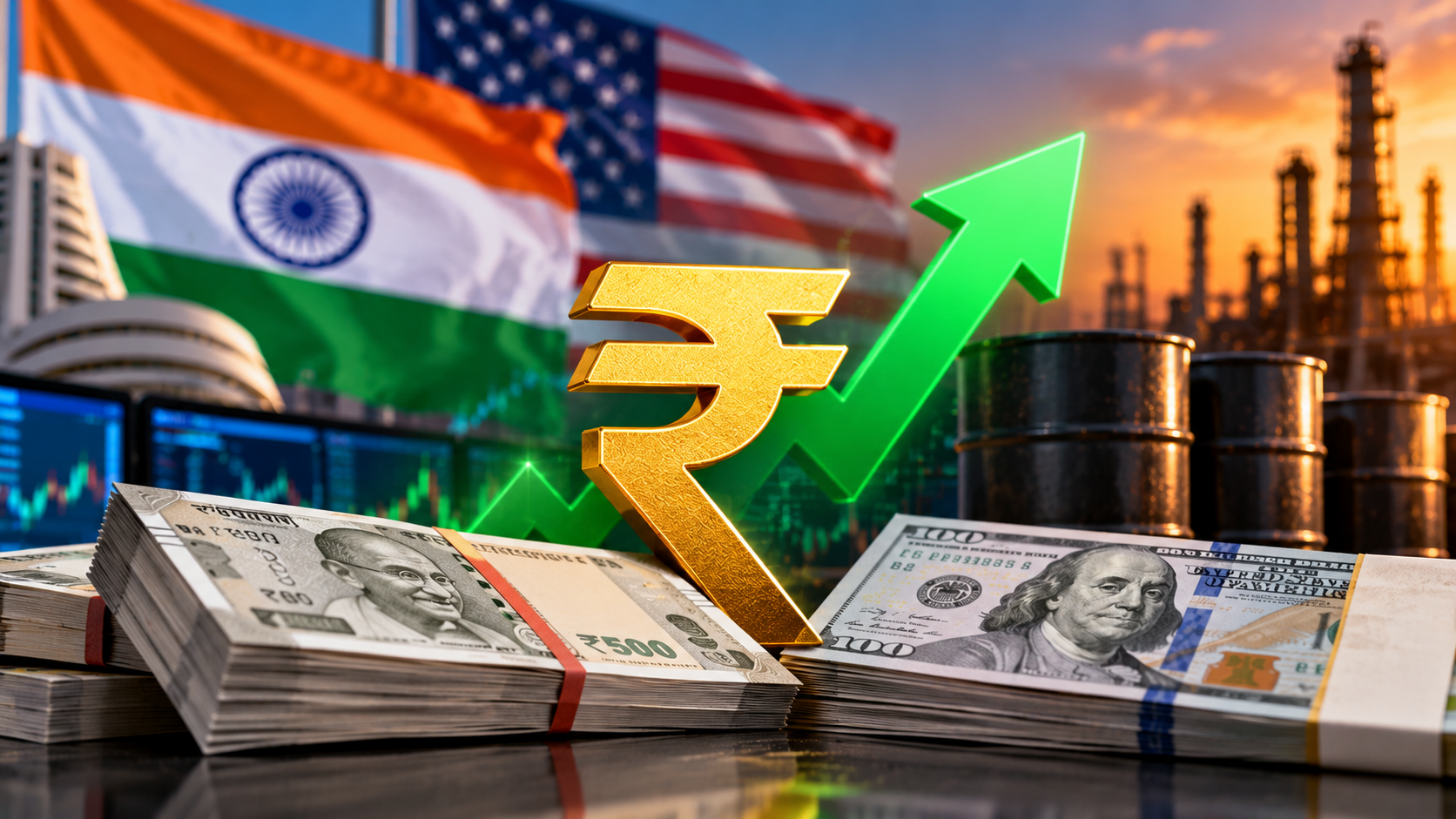
The Indian rupee strengthened 46 paise to 94.45 against the US dollar on Wednesday, supported by optimism over a possible India-US trade deal and RBI measures, although high crude oil prices capped further gains.
Mumbai, October 21 — The Indian rupee gained 46 paise, or 0.44%, to close at 94.45 against the US dollar, supported by growing expectations that India and the United States could soon conclude a trade agreement.
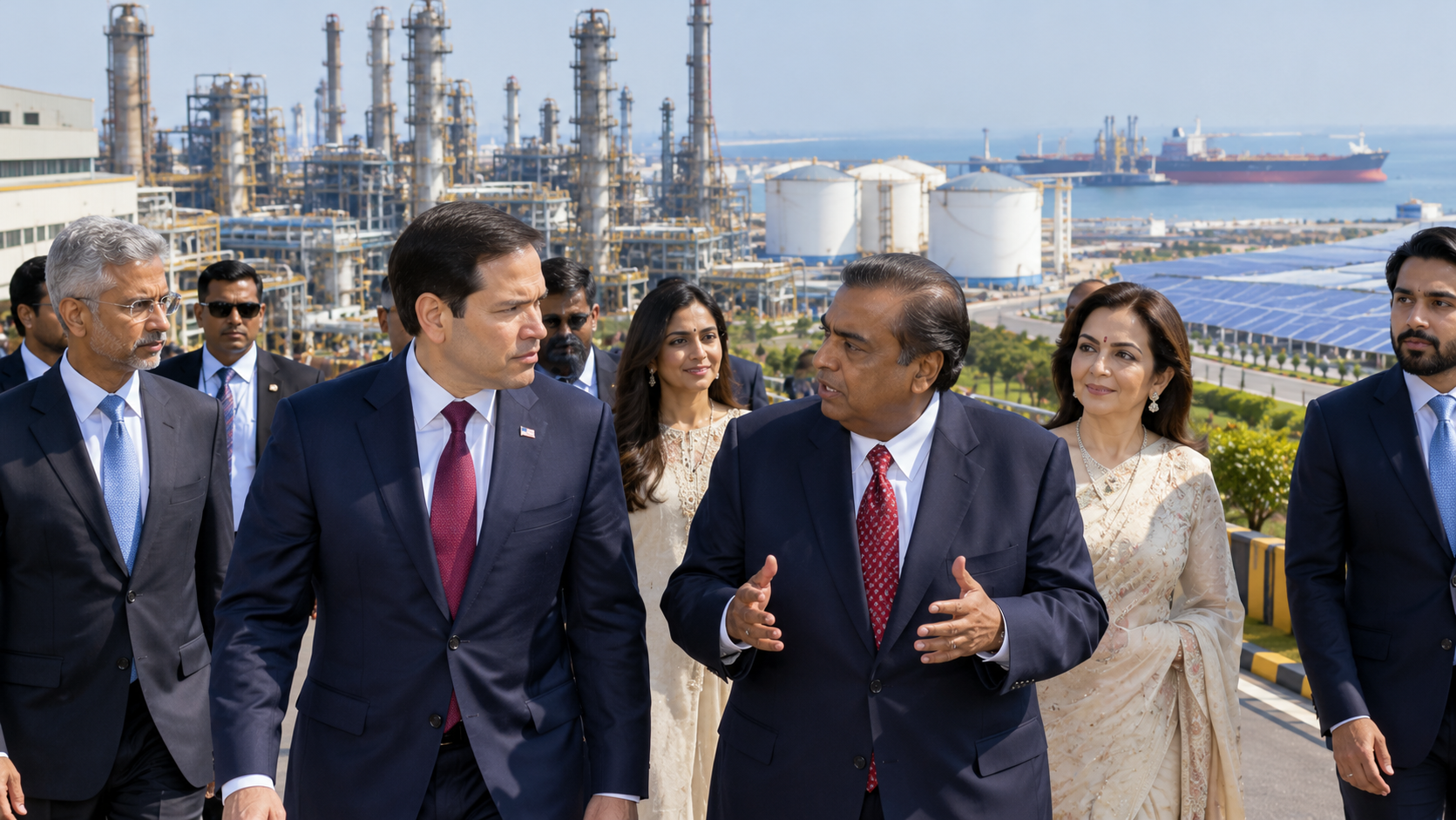
Market sentiment improved after US President Donald Trump indicated that a trade deal with India could be announced soon, while ongoing diplomatic engagement between the two countries also helped the domestic currency.
Measures taken by the Reserve Bank of India to manage dollar demand have provided additional support.
These include dedicated banking arrangements aimed at regulating dollar purchases by oil marketing companies, helping reduce sudden pressure in the foreign exchange market.
However, elevated crude oil prices limited the rupee’s appreciation.
Brent crude remained above $110 per barrel, keeping concerns alive over India’s oil import bill and inflation.
India imports a large share of its crude oil requirements, meaning any sustained rise in global oil prices increases demand for dollars and can put renewed pressure on the rupee.
LKP Securities Vice-President and Research Analyst Jateen Trivedi said the rupee could face resistance in the 94.25-94.40 range.
Despite the recent recovery, the currency continues to face structural pressure from foreign portfolio outflows and tighter global financial conditions.
India’s current account deficit has narrowed substantially to around 0.5% of GDP, compared with approximately 2.5% three years ago.
However, the improvement has not been enough to fully offset external pressures on the currency.
The rupee has depreciated about 5% so far in 2026 and remains among the weaker-performing Asian currencies this year.
According to Bloomberg data cited in the report, the rupee is the fourth-worst-performing currency in Asia.
The Indonesian rupiah has declined 7.3%, while the South Korean won has gained 8.5% and the Chinese yuan has appreciated 4.6%.
Domestic equity markets also remained under pressure.
The Nifty 50 fell 77.60 points, or 0.34%, to 22,811.35, extending losses for a second consecutive session.
The Nifty Smallcap 100 declined 2.37%, while the Nifty Midcap 100 fell 1.58%.
Information technology was the major exception, with the sector gaining 2.88%.
The rupee’s near-term direction is likely to remain sensitive to progress on the India-US trade agreement, crude oil prices, foreign investment flows and RBI intervention.