Sub-Headline: India received 76.8 cm of rainfall during the June–September monsoon season, with major deficits in northeastern and northern states despite excess rainfall in central and southern regions.
Highlights
- India recorded 76.8 cm rainfall during the southwest monsoon season.
- Rainfall was 15% below the long-period average of 90 cm.
- Goa received the highest rainfall at 196.68 cm, while Punjab recorded the lowest at 28 cm.
- Punjab, Haryana and Rajasthan reported rainfall deficits of 37%, 21% and 24%, respectively.
- Assam, Bihar and Meghalaya recorded rainfall shortages of 29%, 32% and 40%, respectively.
- Central India received 6% excess rainfall, while southern India recorded 23% above-normal rainfall.
- Northeast India recorded the highest regional deficit at 61% below normal.
Southwest Monsoon Withdraws With 15% Rainfall Deficit, Northeast India Worst Affected
India’s southwest monsoon has officially withdrawn from the country, leaving behind a rainfall deficit of 15% during the June–September season.
According to data from the India Meteorological Department (IMD), the country received 76.8 centimetres of rainfall during the four-month monsoon period, compared with the long-period average of approximately 90 cm.
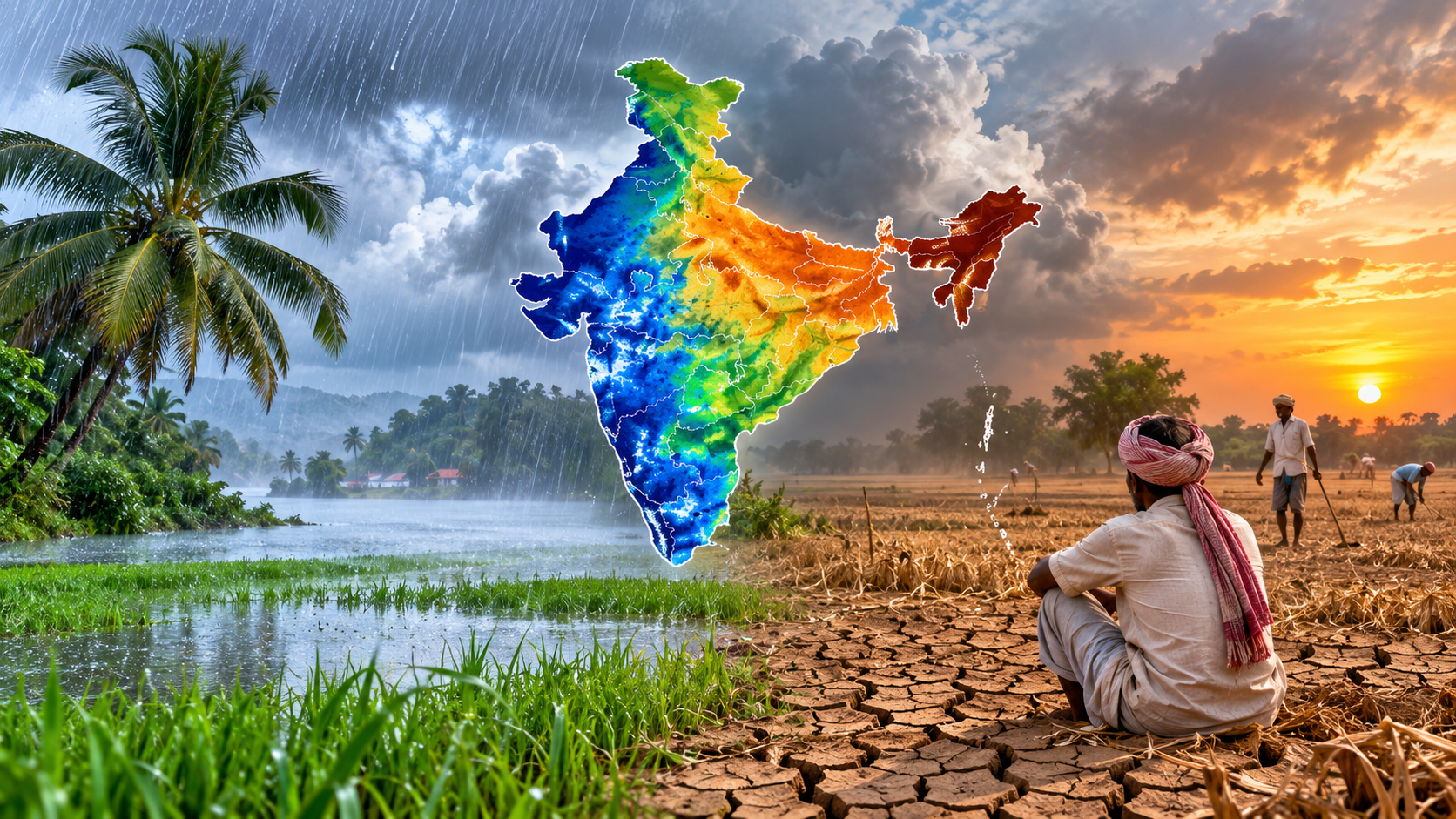
The monsoon showed significant regional variations, with some states experiencing heavy rainfall while others faced severe shortages.
Goa Records Highest Rainfall, Punjab Lowest
Goa received the highest rainfall in the country at 196.68 cm during the monsoon season.
Punjab, meanwhile, recorded the lowest rainfall at just 28 cm.
The uneven distribution of rainfall highlights the contrasting weather conditions experienced across different parts of India.
Although several regions received above-normal rainfall, large deficits in northern and northeastern states affected the national average.
Punjab, Haryana and Rajasthan Face Rainfall Shortages
Northern India witnessed significant rainfall shortages during the southwest monsoon.
Punjab recorded a rainfall deficit of 37%, while Haryana received 21% less rainfall than normal.
Rajasthan also experienced a 24% shortfall.
These deficits could affect agricultural activities, particularly in regions dependent on seasonal rainfall for irrigation and crop development.
Northeast India Records Severe Deficit
The northeastern region emerged as the worst affected, recording rainfall 61% below normal.
Among individual states, Meghalaya reported a 40% deficit, while Assam received 29% less rainfall than normal.
Bihar also experienced a substantial shortfall of 32%.
The lower rainfall across these regions raises concerns about agricultural productivity, groundwater recharge and water availability.
Central and Southern India Receive Excess Rainfall
In contrast, central and southern India received above-normal rainfall during the season.
Central India recorded 6% excess rainfall, while the southern region received 23% more rainfall than normal.
Odisha recorded 23% excess rainfall, while Maharashtra received 7% above-normal rainfall.
Chhattisgarh and Madhya Pradesh also reported rainfall above their seasonal averages.
These regional differences demonstrate how monsoon performance varied significantly across the country.
IMD Confirms Complete Monsoon Withdrawal
The India Meteorological Department confirmed that the southwest monsoon has withdrawn from the entire country.
The withdrawal marks the end of the main rainy season, which plays a crucial role in India’s agricultural production and water resources.
The monsoon supplies a substantial share of the country’s annual rainfall and supports farming activities across several states.
With the season now over, attention will shift towards the northeast monsoon and its potential impact on southern India.