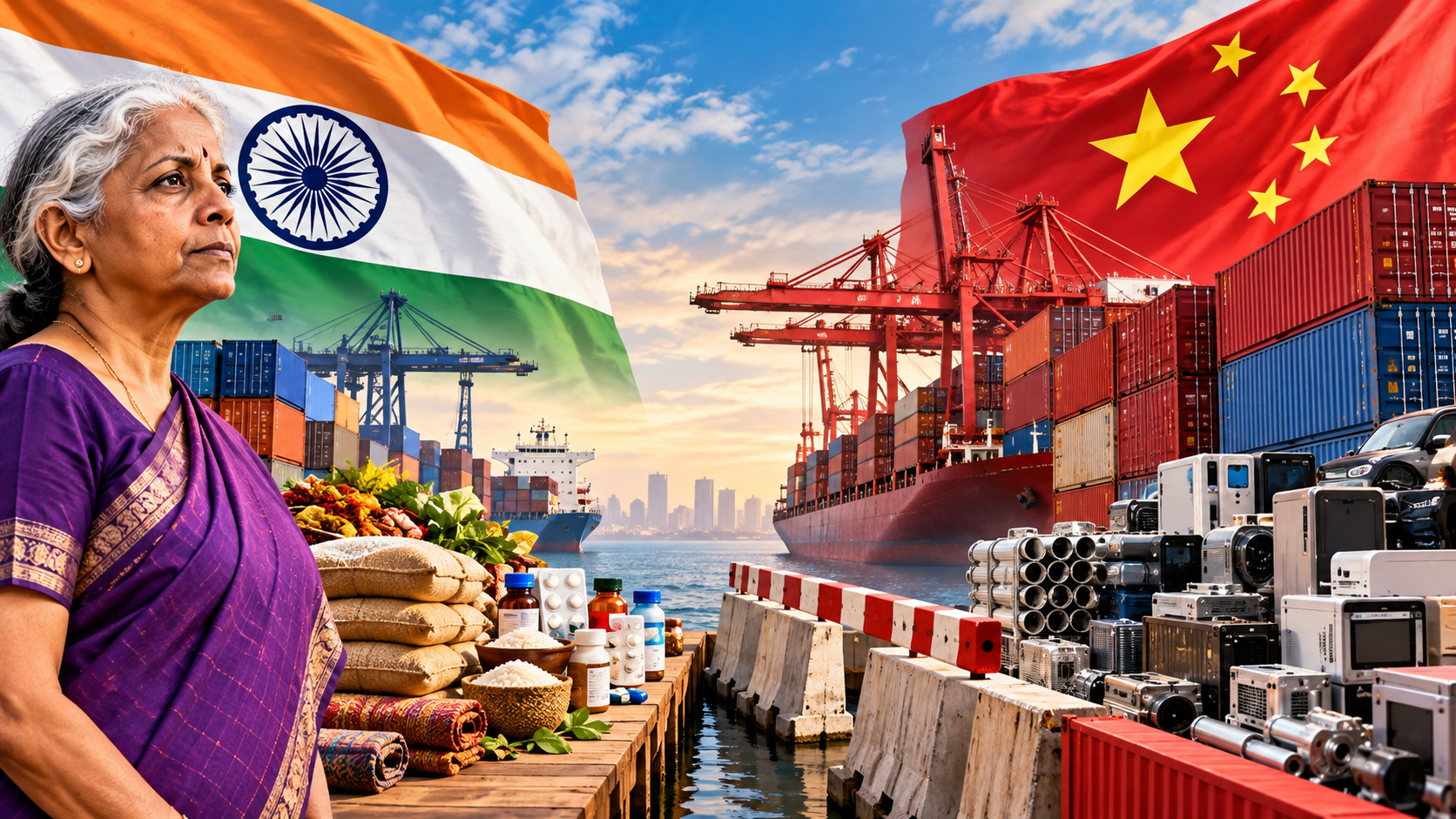
Finance Minister Nirmala Sitharaman says China must address persistent non-tariff barriers that restrict Indian exports, as the bilateral merchandise trade deficit continues to rise.
Highlights
- India’s trade deficit with China reached $112.1 billion in FY26.
- Indian exports to China stood at $19.5 billion, while imports reached $131.6 billion.
- Finance Minister Nirmala Sitharaman raised concerns over China’s non-tariff trade barriers.
- India seeks greater market access for medicines, agricultural products and other goods.
India’s Trade Deficit With China Widens as Sitharaman Calls for Removal of Non-Tariff Barriers
India has raised concerns over China’s persistent non-tariff trade barriers, which continue to restrict Indian exports despite growing bilateral trade between the two countries.
Finance Minister Nirmala Sitharaman said China must address market access restrictions that prevent Indian companies from taking advantage of opportunities in the Chinese market.
Speaking at an interactive session organised by the Atlantic Council on the sidelines of the International Monetary Fund (IMF) and World Bank Annual Meetings in Bangkok, Sitharaman highlighted the need for fairer trade conditions between the two countries.
India-China Trade Deficit Reaches $112.1 Billion
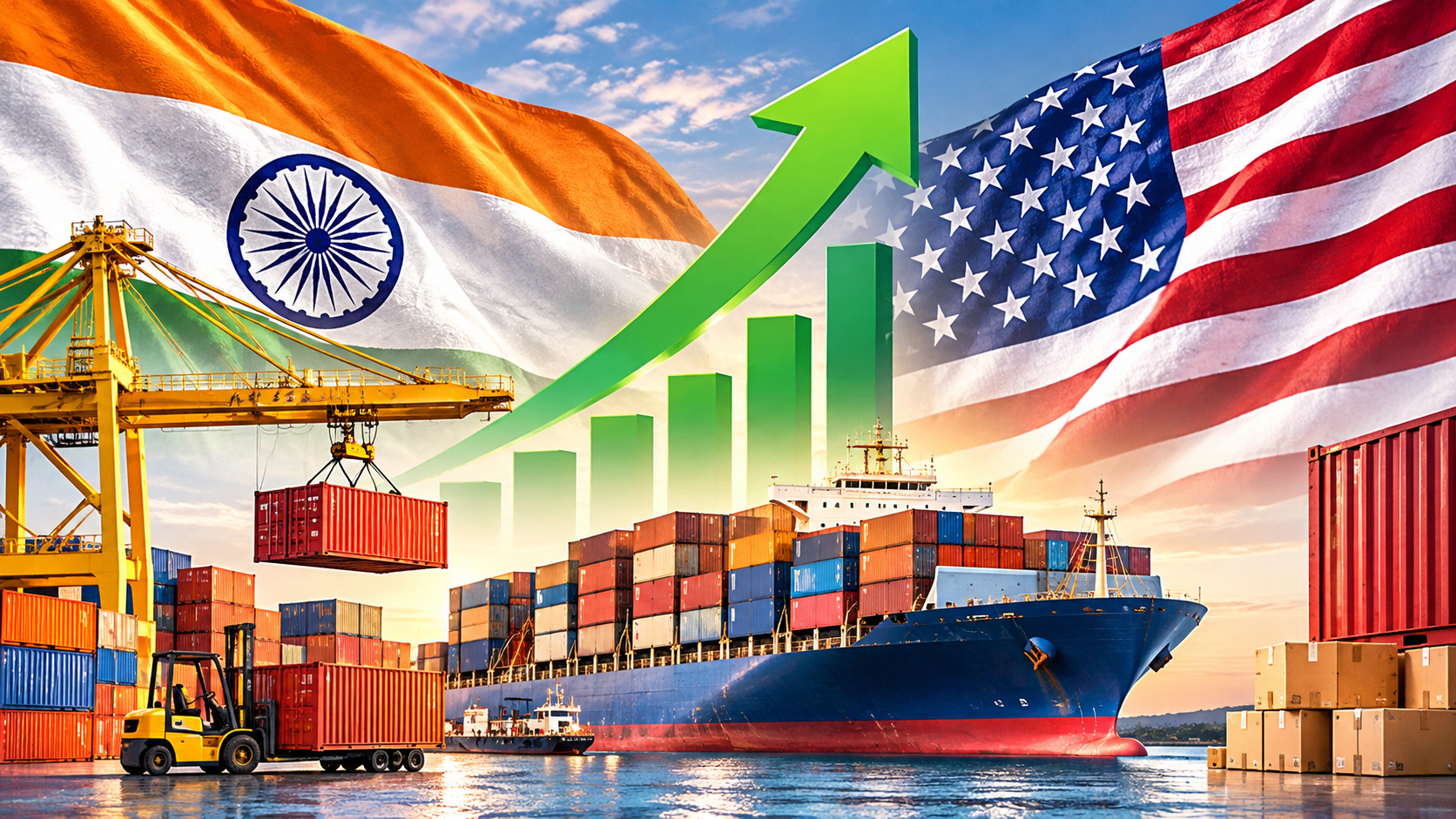
India’s merchandise trade deficit with China stood at $112.1 billion during the financial year 2025-26.
Indian exports to China were valued at $19.5 billion, while imports from China reached $131.6 billion.
The gap highlights India’s continued dependence on Chinese products, particularly industrial inputs, machinery and other manufactured goods.
During the first half of FY27, India’s trade deficit with China stood at $68.9 billion, with exports of $11.4 billion and imports of $80.3 billion.
China’s Non-Tariff Barriers Remain a Major Concern
Sitharaman said Indian businesses face significant difficulties accessing the Chinese market, even in sectors where they have strong export potential.
She pointed out that non-tariff barriers have prevented Indian companies from expanding their presence in China.
Indian exporters have repeatedly sought improved access for products such as generic medicines, agricultural goods, bovine meat and other perishable products.
According to Sitharaman, addressing these barriers is essential to creating a more balanced bilateral trading relationship.
India Seeks Greater Market Access
The Finance Minister said India has been discussing the trade imbalance with China for several years.
She stressed that Indian products should receive fair opportunities in the Chinese market.
India believes that removing unnecessary restrictions could help increase exports and reduce the widening trade deficit.
However, market access remains a major challenge for several Indian industries.
India Looks to Reduce Dependence on Chinese Imports
Sitharaman also highlighted India’s efforts to reduce its dependence on imported industrial materials and critical minerals.
She said India is working to strengthen domestic manufacturing and improve supply-chain resilience.
The government wants to ensure that emerging industries have adequate access to essential inputs without depending excessively on a single country.
India is also exploring technology partnerships and investments to support domestic manufacturing capabilities.
Trade Imbalance Remains a Key Challenge
The widening trade deficit reflects the structural imbalance in India-China merchandise trade.
While India imports large quantities of manufactured products and industrial inputs from China, its exports remain comparatively limited.
The government is seeking a combination of improved market access, stronger domestic manufacturing and diversified supply chains to address the issue.
Sitharaman’s remarks underline India’s demand for more balanced trade relations and the removal of barriers affecting Indian exporters.