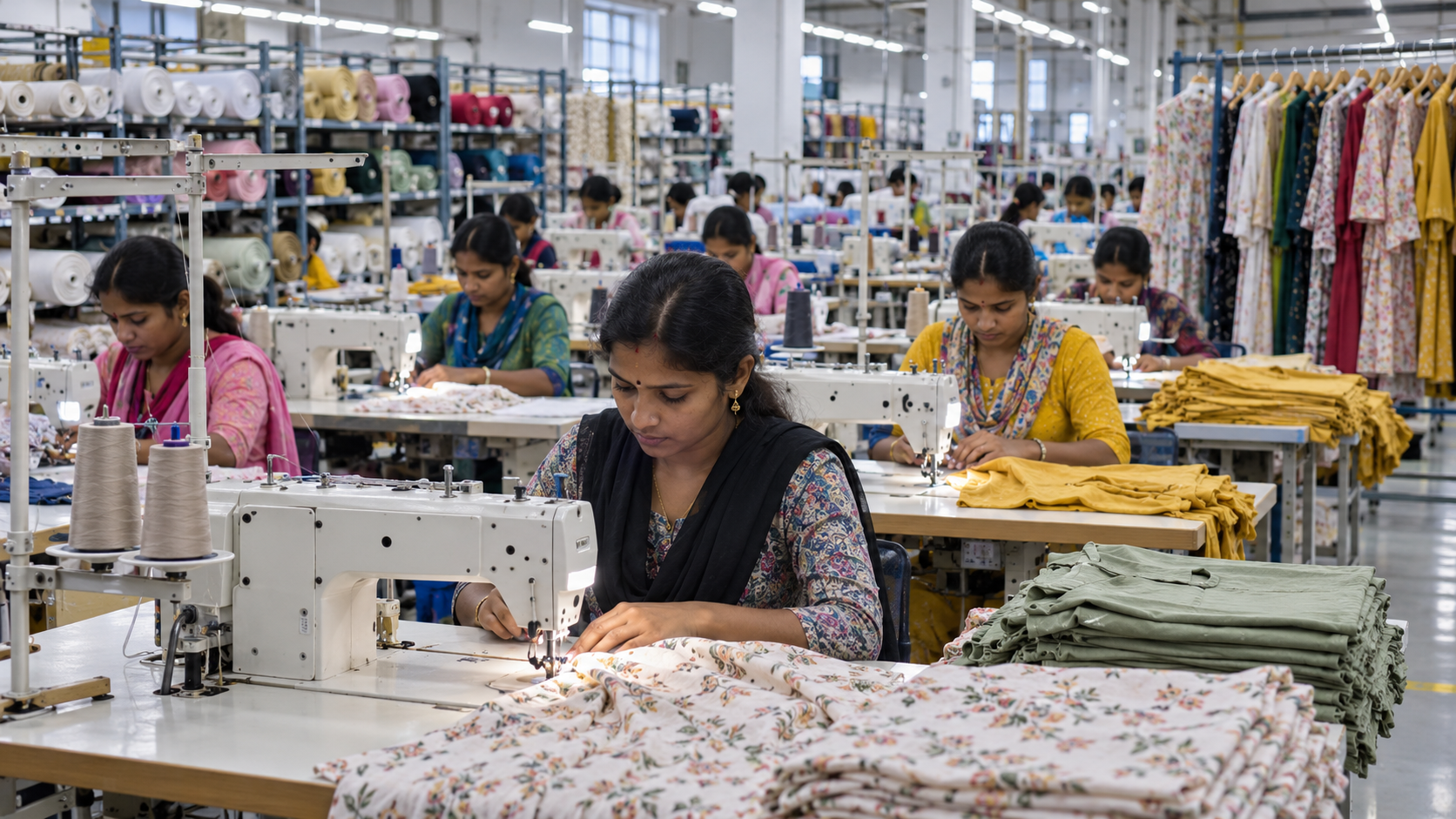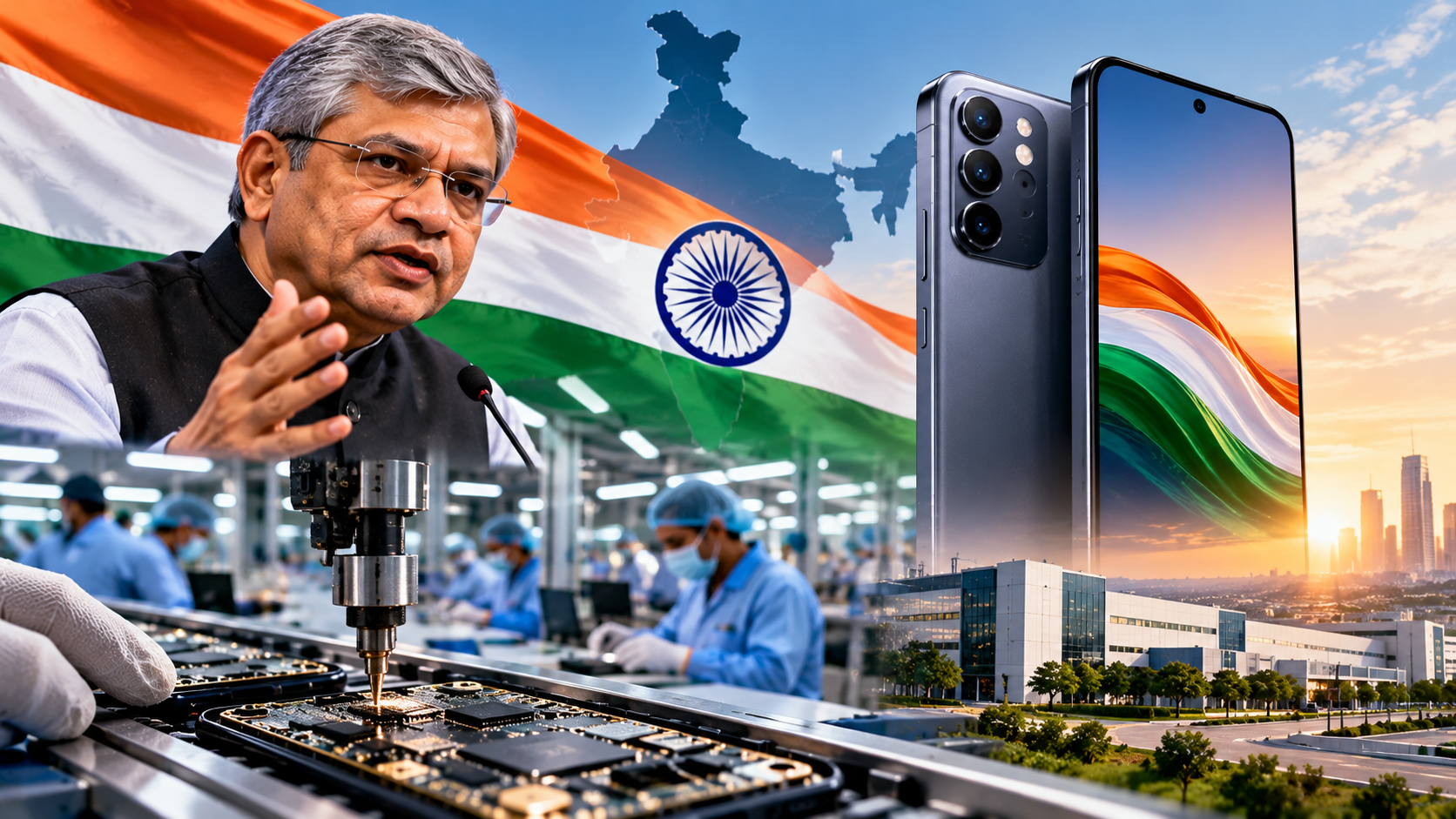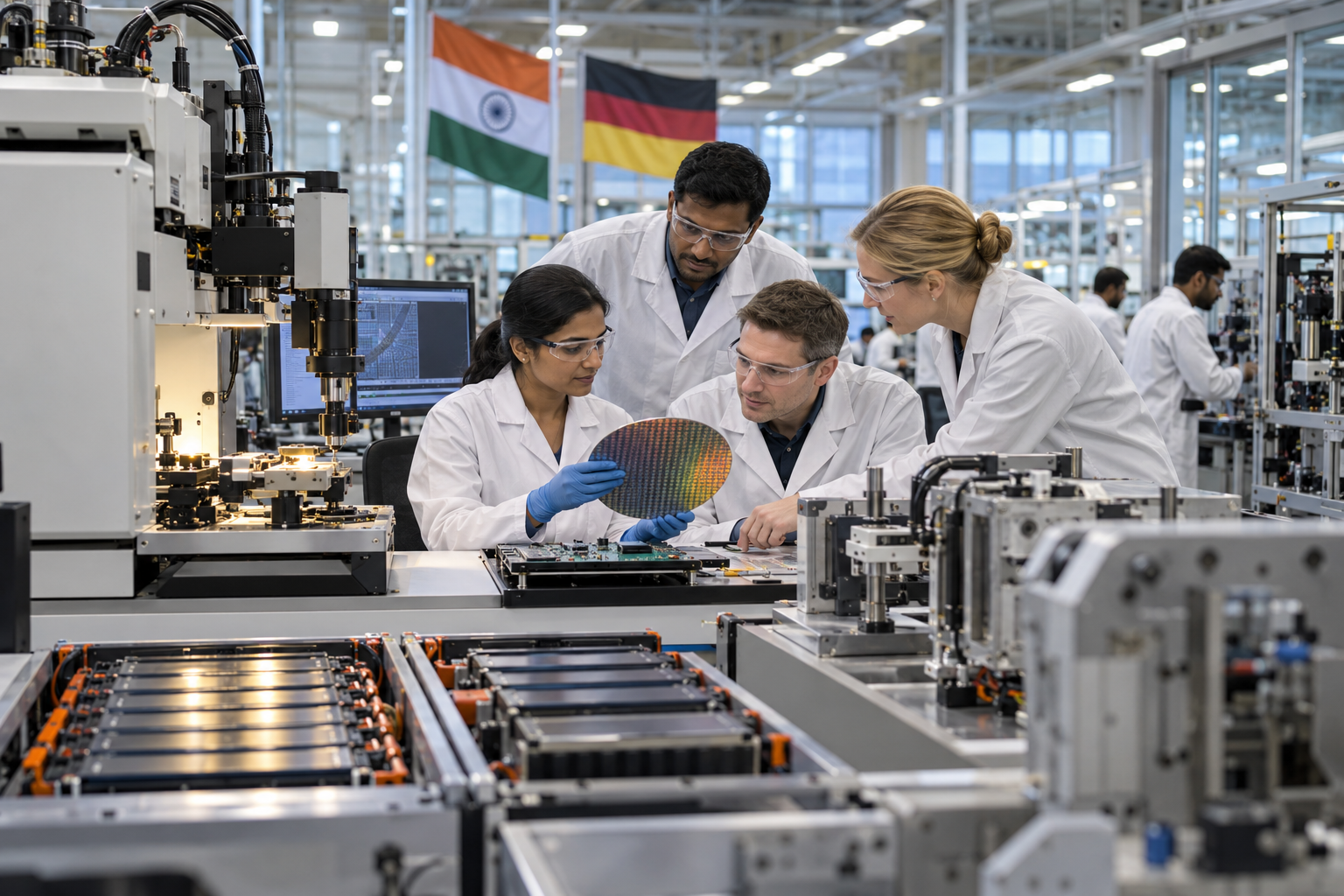
India and Germany are exploring deeper cooperation across six industrial technology areas, including microelectronics, power electronics, battery technologies and smart manufacturing. The discussions took place during Commerce and Industry Minister Piyush Goyal’s two-day visit to Germany, as both countries look to expand business partnerships, research collaboration and advanced manufacturing capabilities.
Goyal concluded his visit to Berlin on October 23 after meeting German government officials, business leaders and representatives of industrial research institutions. The engagements focused on strengthening bilateral trade, investment, innovation and cooperation between companies and research organisations.
A key part of the visit was a roundtable with heads of selected Fraunhofer Institutes, Germany’s industrial research network. Discussions covered microelectronics, power electronics, logistics, smart manufacturing, industrial innovation and battery technologies. These areas are increasingly important for semiconductor development, modern industrial production, electric mobility and resilient supply chains.
The talks also explored opportunities to strengthen partnerships between universities, research institutions and businesses in India and Germany. Closer collaboration could help connect German industrial research expertise with India’s engineering workforce, manufacturing base and growing technology sector. However, the discussions did not result in any publicly announced project-specific investment commitments or formal agreements.
During the visit, Goyal also met senior executives from Siemens Healthineers, Bertelsmann Investments and the Volkswagen–Škoda group. The meetings examined opportunities to expand industrial cooperation, investment and business partnerships. Members of the accompanying Indian business delegation also participated in sectoral roundtables with German industry representatives.
The minister separately met Levin Holle, an economic and financial policy adviser and G7/G20 Sherpa at the German Federal Chancellery. Their discussions covered bilateral economic cooperation and opportunities to strengthen trade and investment ties.
The technology discussions build on the wider India–Germany Strategic Partnership, which includes cooperation in advanced manufacturing, science, digitalisation and emerging technologies. The two countries have also identified semiconductors, critical minerals and industrial innovation as important areas for collaboration.
For Indian businesses, closer engagement with German research institutions could create opportunities in engineering, electronics, battery development, industrial automation and technology-enabled manufacturing. The next step will be translating the discussions into research partnerships, commercial projects and measurable investment.