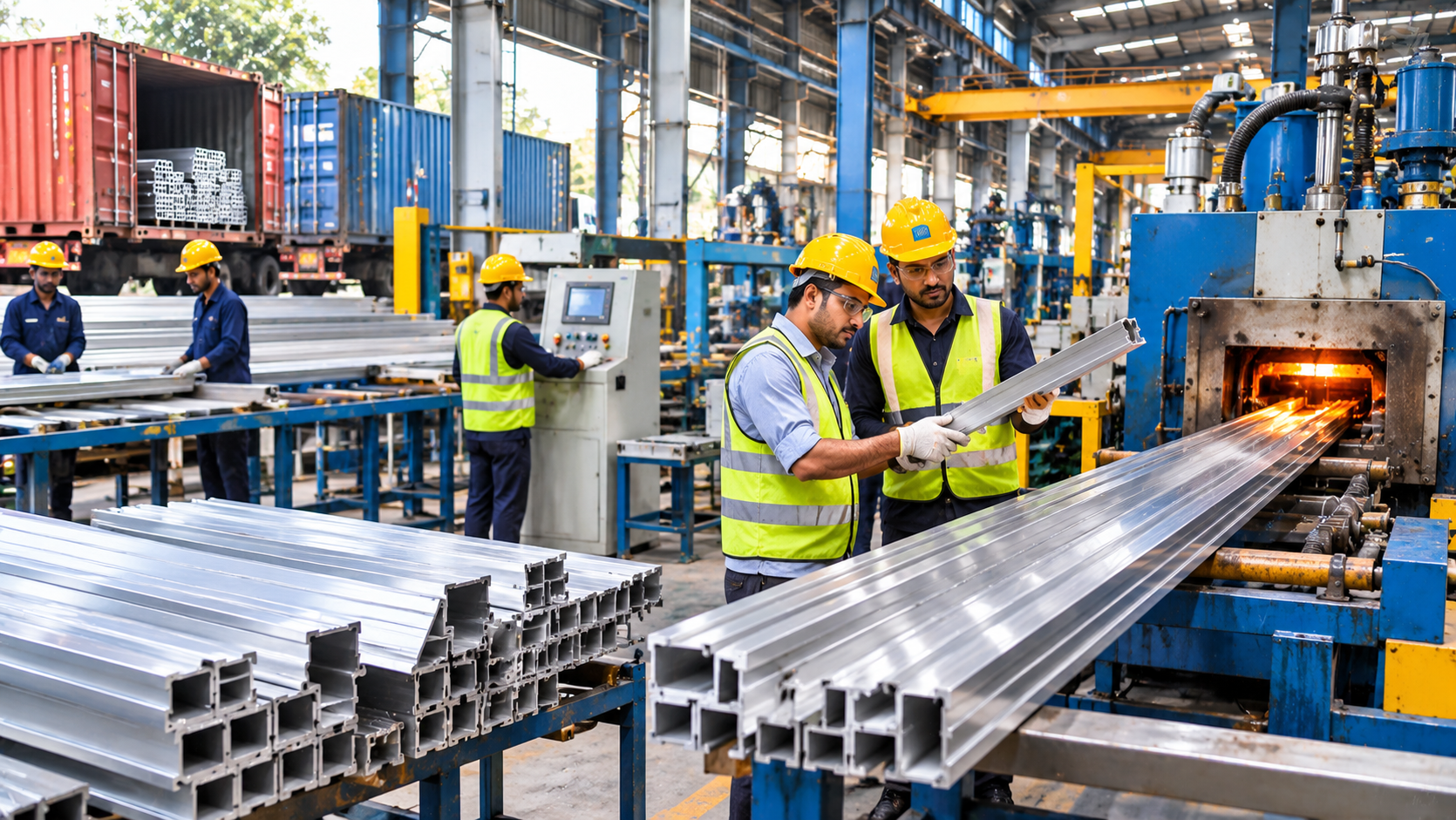
India’s aluminium extrusion industry is facing severe pressure from cheap imports, with around 20 factories shutting down and an estimated 50,000 jobs lost over the past three years. Industry body ALEMAI estimates that factory closures and low capacity utilisation have resulted in annual revenue losses of up to ₹14,700 crore.
New Delhi, November 13 — Domestic aluminium extrusion manufacturers have suffered estimated annual revenue losses of up to ₹14,700 crore as cheap imports and declining capacity utilisation put pressure on the industry, according to the Aluminium Extrusion Manufacturers Association of India (ALEMAI).
The industry body said around 20 factories have shut down over the past three years, while an estimated 50,000 jobs have been lost as operations became increasingly unviable.
Capacity utilisation falls to 30-40%
India’s aluminium extrusion industry has an installed capacity of approximately 3 million tonnes.
However, industry estimates indicate that capacity utilisation has fallen to just 30-40%.
ALEMAI said the combination of factory closures and reduced utilisation has resulted in annual revenue losses of up to ₹14,700 crore.
The decline is putting particular pressure on micro, small and medium enterprises (MSMEs), affecting their ability to continue operations, retain workers and compete in domestic and international markets.
Cheap imports emerge as major challenge
ALEMAI identified the growing inflow of low-priced aluminium extrusion products as a key challenge for domestic manufacturers.
This includes imports entering India through preferential trade arrangements such as the India-ASEAN Free Trade Agreement.
The association welcomed the government’s decision to initiate an anti-dumping investigation into aluminium extrusion imports from Malaysia, Vietnam and Thailand.
However, it said trade-remedial measures alone would not resolve the structural cost disadvantages facing Indian manufacturers.
Industry seeks cut in aluminium import duty
ALEMAI has urged the government to rationalise the existing 8.25% import duty on primary aluminium.
The industry body argued that the duty, combined with India’s import-parity pricing mechanism, creates a major structural cost burden for downstream aluminium manufacturers.
ALEMAI President Jitendra Chopra said the policy makes finished Indian aluminium products less competitive both domestically and internationally.
ALEMAI seeks 10-year duty relief
The association has called for a 10-year period of duty relief to help downstream manufacturers improve cost competitiveness and provide policy certainty for fresh investments.
ALEMAI General Secretary Ankur Aggarwal said India has already made significant progress in developing primary aluminium production capacity and should now focus on strengthening downstream manufacturing.
The association believes rationalising duties could help protect MSME-led manufacturing, attract investments, preserve jobs and strengthen India’s domestic aluminium value chain.