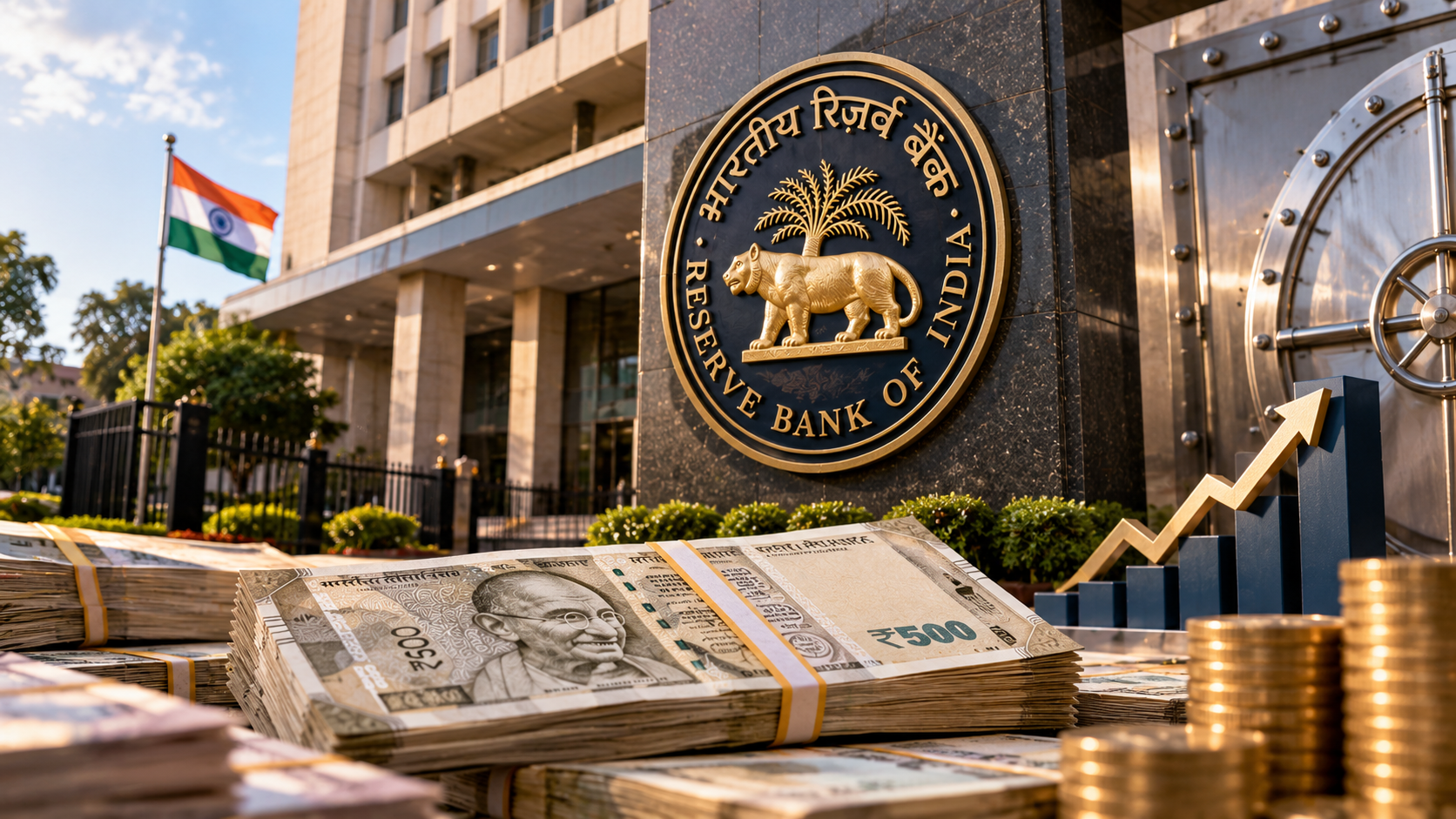
The Reserve Bank of India has increased the minimum daily maintenance requirement for the cash reserve ratio to 99% from 90%, effective from the fortnight beginning October 16, as it moves to absorb excess liquidity from the banking system.
Mumbai, October 10 — The Reserve Bank of India has tightened its daily cash reserve ratio requirement for scheduled banks, raising the minimum daily maintenance level to 99% of the prescribed CRR from the current 90%. The change will take effect from the fortnight beginning October 16, 2026.
Under the existing framework, scheduled banks are required to maintain at least 90% of their prescribed CRR on every day of a reporting fortnight, while ensuring that the average daily CRR does not fall below the level mandated by the central bank. The RBI has now raised that minimum daily threshold to 99%.
The decision follows a review of liquidity conditions in the banking system. According to the report, system liquidity was in a surplus of around ₹3.88 lakh crore as of October 8, prompting the central bank to take additional steps to absorb excess funds.
The RBI has already been using several liquidity-management tools over the past two months, including Variable Rate Reverse Repo auctions and open market operations, to manage the large surplus in the banking system.
Governor Sanjay Malhotra had earlier said that the current excess liquidity is not expected to persist beyond the end of FY27, although he had indicated that raising the CRR would be among the least-preferred options for draining liquidity.
The recent liquidity surplus has been partly driven by large inflows into FCNR(B) deposits. These foreign currency deposits brought additional funds into the banking system, while subsequent swaps with the RBI created rupee liquidity for banks. Month-end government spending, including salary and pension payments, also added to the liquidity surplus.
The higher daily CRR maintenance requirement will reduce the flexibility banks have in managing their reserve balances on individual days and is expected to help the RBI tighten its control over short-term liquidity conditions.