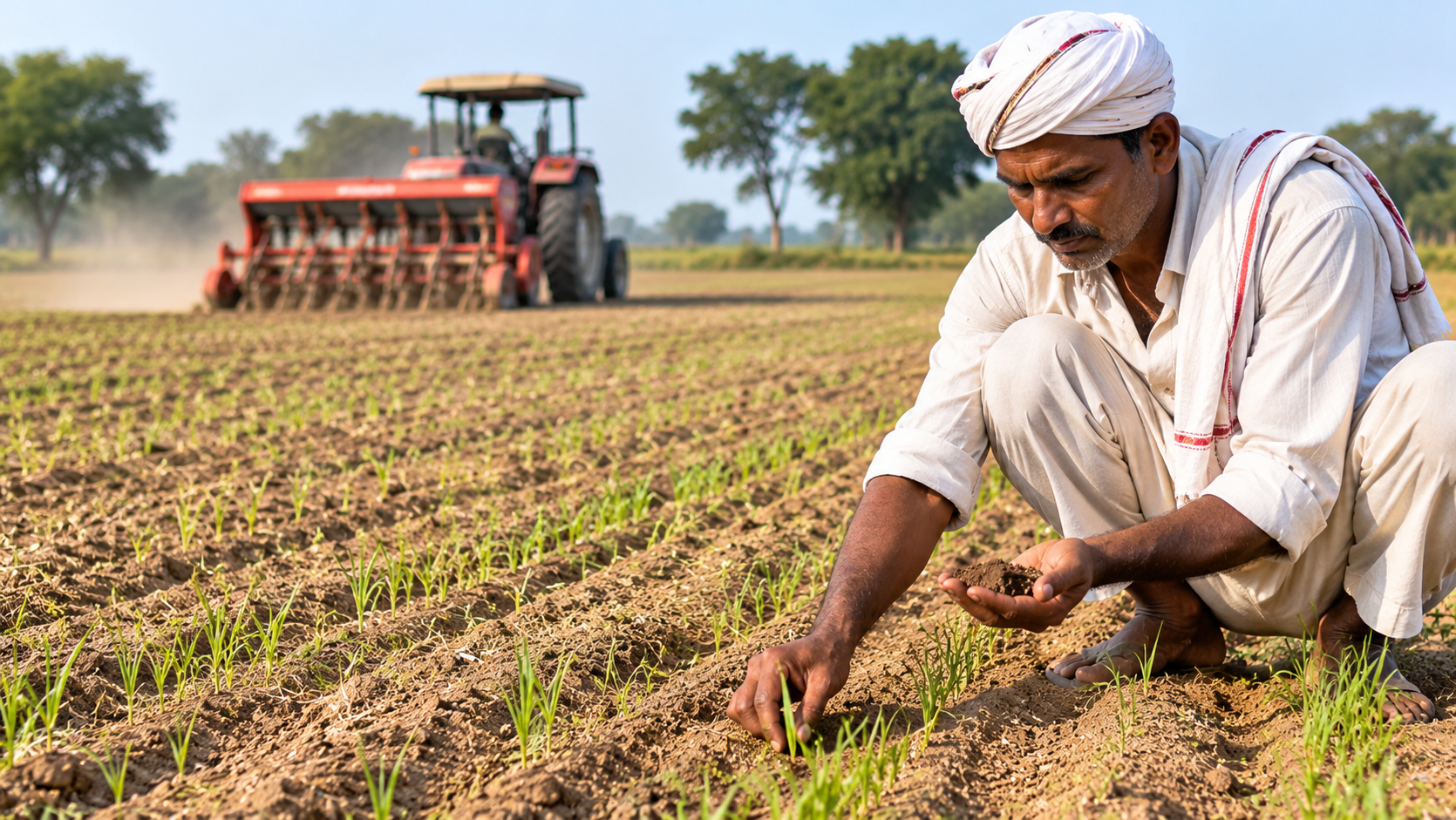
India’s rabi crop sowing has fallen sharply behind last year, with the total area covered down 46% to 37.56 lakh hectares as of October 30. Lower soil moisture following a deficient monsoon has particularly affected wheat, pulses and oilseeds.
New Delhi, November 3 — Sowing of India’s rabi crops, including wheat, pulses and oilseeds, has declined sharply this season, as insufficient soil moisture and lower irrigation availability delay planting.
According to data from the Union Agriculture Ministry, the total area under rabi crops stood at 37.56 lakh hectares as of October 30, down around 46% from 69.02 lakh hectares during the corresponding period last year.
The impact is particularly visible in wheat, India’s principal rabi crop.
Wheat had been planted over only 19,000 hectares, compared with 3.34 lakh hectares at the same stage last year. Wheat is generally sown during October-November and harvested between March and April.
In the 2025-26 crop year, the country’s total wheat acreage stood at 336 lakh hectares.
Sowing of pulses has also slowed substantially.
The area under pulses stood at 9.45 lakh hectares, against 19.56 lakh hectares a year earlier. Within this, gram acreage declined to 5.90 lakh hectares from 14.35 lakh hectares.
Oilseed sowing fell to 20.97 lakh hectares from 38.62 lakh hectares.
Rapeseed and mustard accounted for 20.50 lakh hectares, compared with 38.07 lakh hectares in the year-ago period.
Coarse cereals covered 3.78 lakh hectares, while winter paddy acreage stood at 3.16 lakh hectares.
Experts attributed the delay mainly to the 13% deficient June-September monsoon, which reduced residual soil moisture available when the rabi planting season began.
Lower reservoir and canal water availability in important wheat-producing states has added to the problem, as wheat requires multiple rounds of irrigation after sowing.
Union Agriculture Minister Shivraj Singh Chouhan, while reviewing the situation, directed officials to accelerate sowing immediately after the kharif harvest and make optimum use of available residual moisture.
Farmers facing limited irrigation availability are being encouraged to consider crops requiring less water and lower input costs, including chana, mustard, masoor and millets.
The minister also directed officials to ensure availability of climate-resilient and heat-tolerant seeds amid fluctuations in temperature.
The Agriculture Ministry said adequate stocks of urea, DAP, MOP, NPK and certified seeds are available for the rabi season.