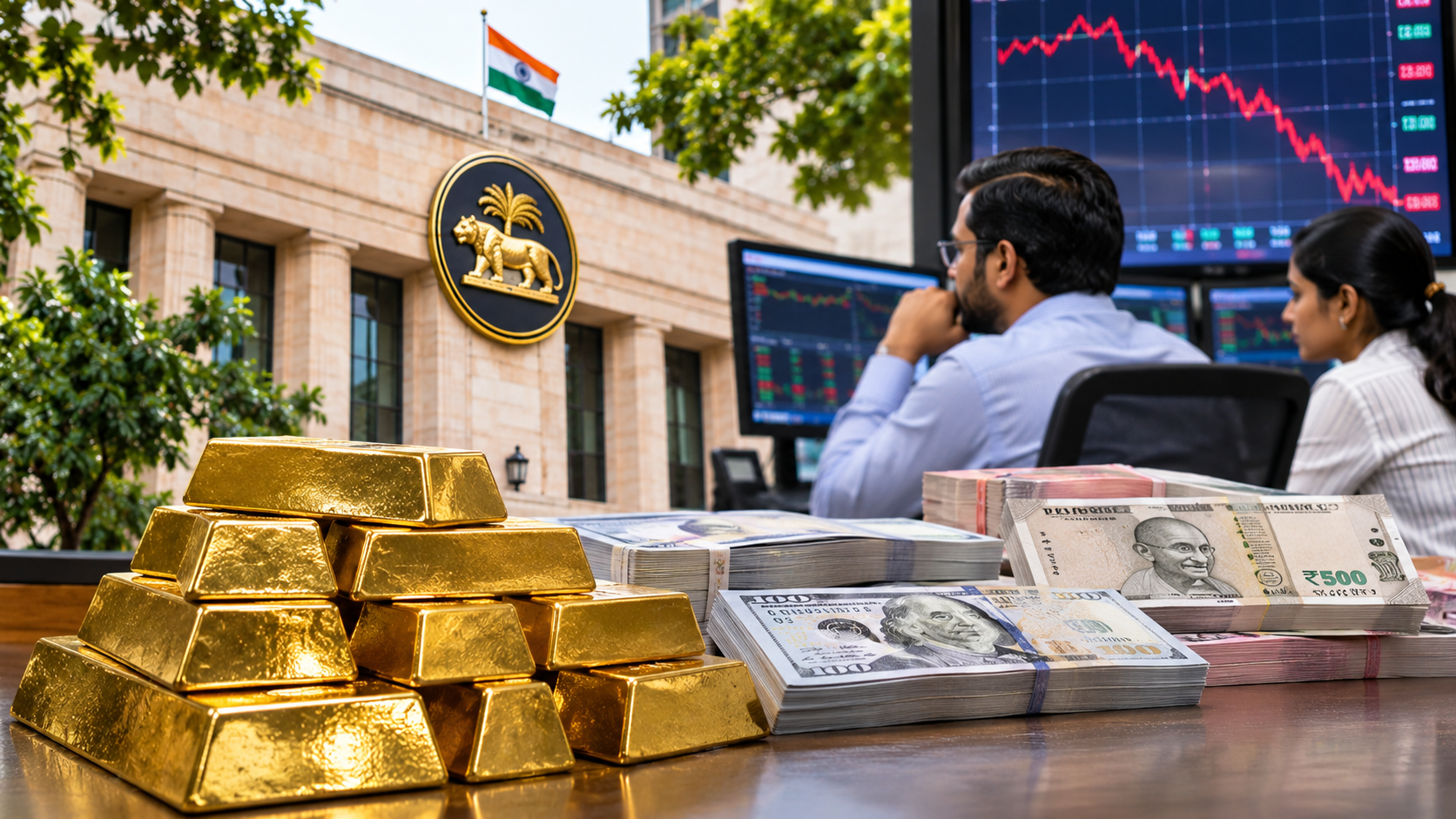
India’s foreign exchange reserves declined by $2.691 billion to $717.056 billion in the week ended October 30, according to RBI data. Foreign currency assets and gold reserves both registered declines during the week.
Mumbai, November 6 — India’s foreign exchange reserves fell by $2.691 billion to $717.056 billion during the week ended October 30, according to data released by the Reserve Bank of India (RBI).
This marked another weekly decline in the country’s forex kitty. In the previous week, reserves had fallen by $1.269 billion to $719.748 billion.
India’s forex reserves had touched an all-time high of $785.706 billion during the week ended September 4.
According to the source, the record level was supported by a large flow of foreign currency linked to a special concessional swap for deposits from the Indian diaspora, through which banks raised a record $133 billion.
However, foreign exchange reserves have been declining since then.
Experts have attributed the fall partly to the deployment of FCNR(B) resources and the RBI’s intervention in the foreign exchange market through dollar sales to support the currency.
Foreign currency assets fall $2.09 billion
During the week ended October 30, foreign currency assets (FCAs), the largest component of India’s forex reserves, declined by $2.088 billion to $591.118 billion.
Foreign currency assets are expressed in dollar terms but also reflect changes in the value of non-US currencies such as the euro, pound and yen held in India’s foreign exchange reserves.
Changes in global exchange rates can therefore influence the dollar value of these assets even without direct purchases or sales.
Gold reserves decline
The value of India’s gold reserves decreased by $559 million to $102.591 billion during the week.
Meanwhile, the country’s Special Drawing Rights (SDRs) with the International Monetary Fund declined by $47 million to $18.558 billion.
India’s reserve position with the IMF, however, increased marginally by $3 million to $4.79 billion.
Foreign exchange reserves provide an important financial buffer for the economy and can be used by the central bank to manage periods of external volatility.
They also provide the RBI with resources to intervene in the foreign exchange market when required.
The latest data shows that while India’s reserves remain substantial, they have moved lower from the record level reached in early September.