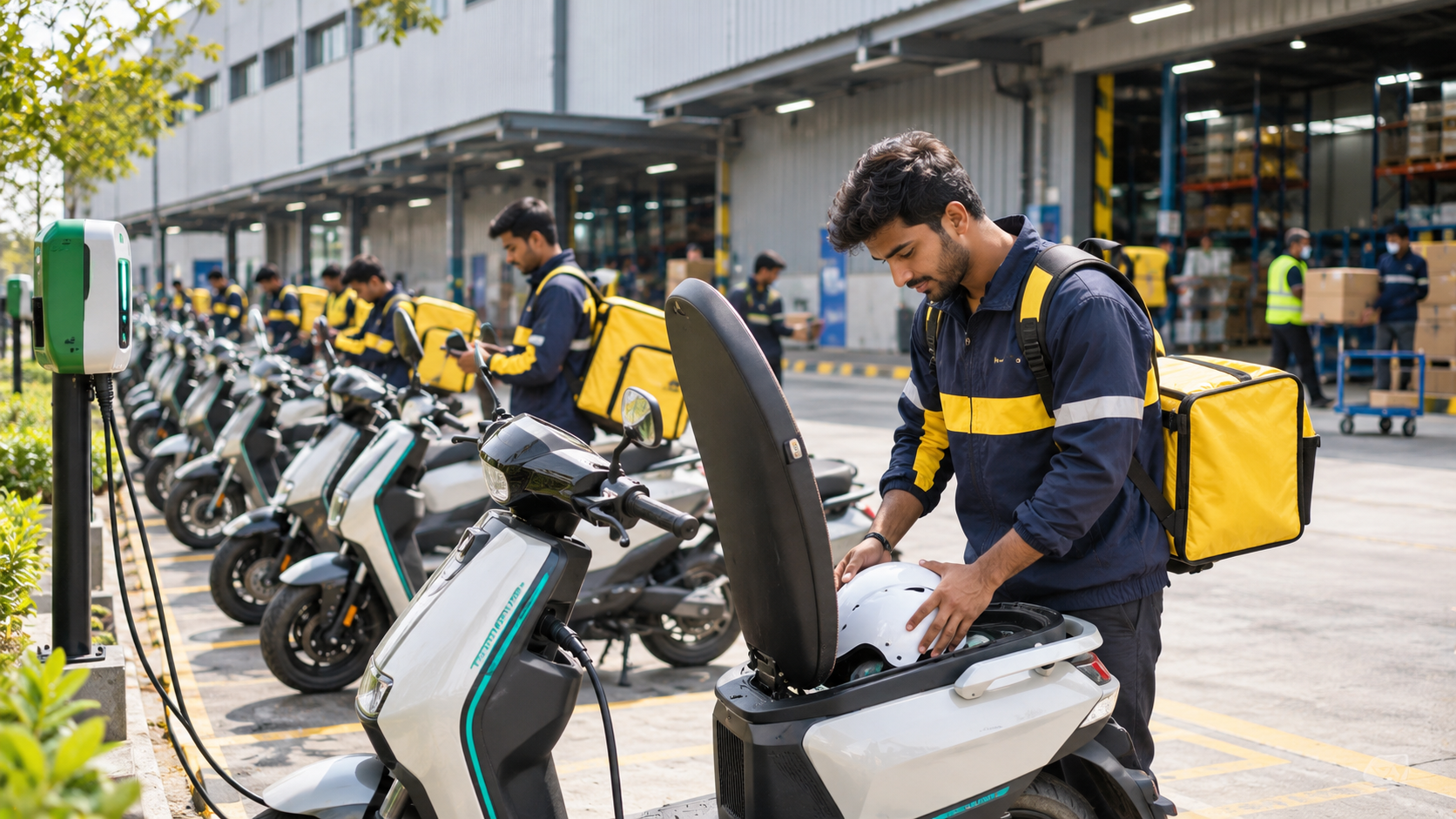
The e-commerce company expands its last-mile electric vehicle network during the festive season as it works towards a fully electric delivery fleet by 2030.
E-commerce major Flipkart has doubled its last-mile electric vehicle (EV) fleet to 42,000 during the 2026 festive season, compared with more than 20,000 vehicles in 2025.
The expansion is part of the company’s commitment to transition towards a fully electric delivery fleet by 2030 under the Climate Group’s EV100 initiative.
The company said the increased deployment of electric vehicles is aimed at strengthening its last-mile delivery network while supporting its broader sustainability goals.
Flipkart Minutes Accounts for Major Share
According to the company, electric two-wheelers serving Flipkart Minutes account for approximately 77% of its electric vehicle fleet.
Another 20% of the fleet operates across the company’s remaining delivery network.
The expansion has been particularly significant in Bengaluru, Mumbai, Chennai, Pune and Gurugram, where the company recorded its highest growth in electric vehicle deployment.
Survey Highlights Growing Interest in EV Adoption
Flipkart also shared findings from a survey involving more than 9,400 delivery partners, known as Wishmasters. The survey covered delivery partners using both electric vehicles and internal combustion engine (ICE) vehicles.
The findings indicated that the intention to switch to an electric vehicle was nearly four times higher among respondents who had already experienced riding one.
This suggests that direct experience with electric vehicles could play an important role in encouraging adoption among delivery partners.
Cost Savings Encourage Electric Vehicle Use
Among delivery partners already using electric vehicles, 59% identified cost savings as a key motivation for making the switch.
However, access to charging infrastructure remains an important operational requirement for EV users.
The survey also highlighted the financial considerations influencing delivery partners who continue to use conventional vehicles.
Around 55% of ICE vehicle users said financial assistance would encourage them to transition to electric vehicles. Suggested support included EMI-based loans, down-payment assistance and daily EMI payment options.
Push Towards a Fully Electric Delivery Network
Flipkart’s expansion reflects the growing role of electric two-wheelers in India’s e-commerce delivery operations.
The company is working towards its 2030 fleet electrification target through increased EV deployment across major cities and its delivery network.
The survey findings also indicate that charging access, operating costs and financial support will remain important factors in encouraging wider adoption among delivery partners.