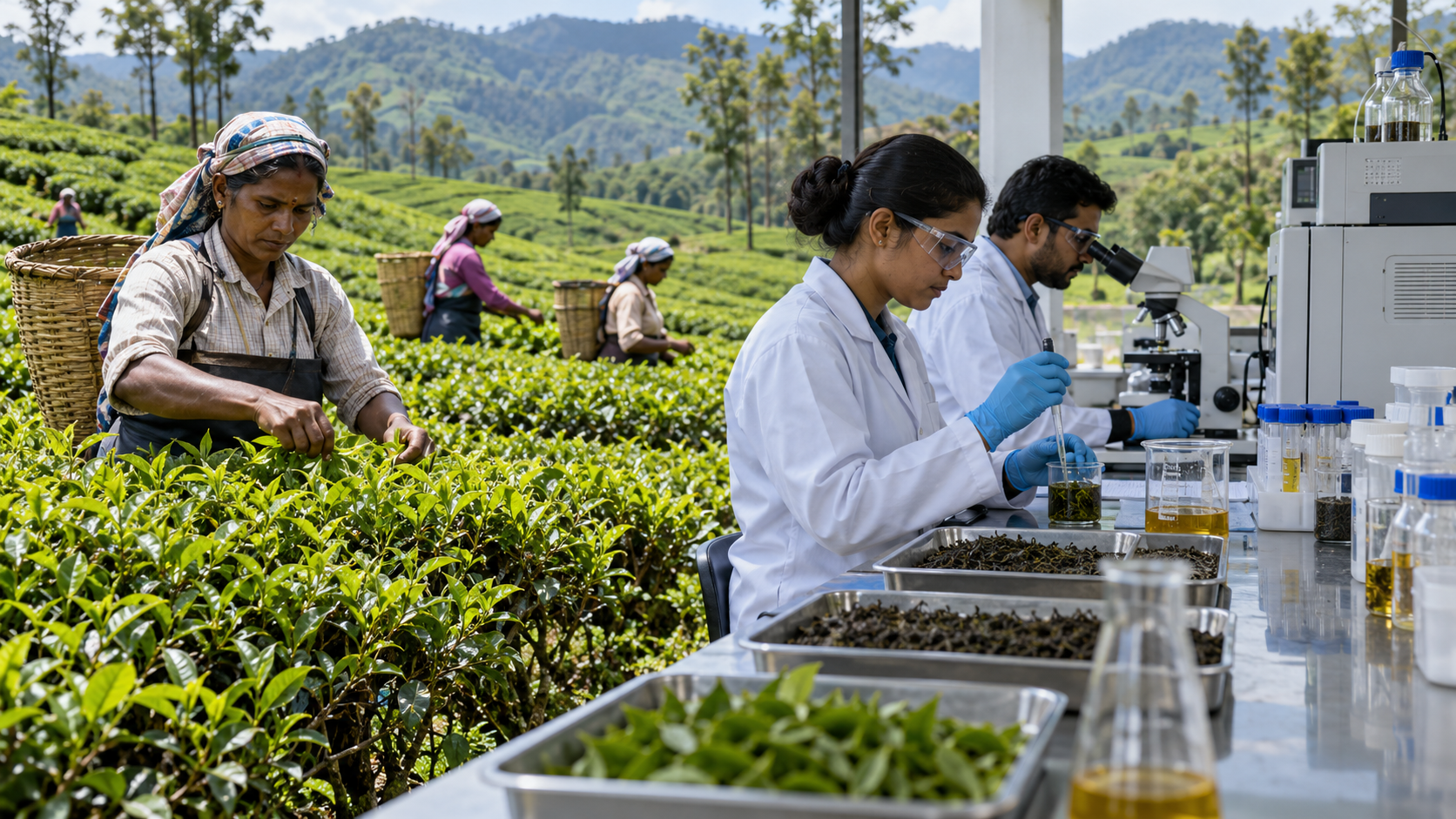
Food regulator FSSAI has proposed maximum residue limits for Acetamiprid and Imidacloprid in tea, aiming to balance crop protection needs with consumer safety and provide clearer compliance standards for the tea industry.
New Delhi, October 17 — The Food Safety and Standards Authority of India (FSSAI) has proposed maximum residue limits for two pesticides — Acetamiprid and Imidacloprid — in tea, as part of its efforts to strengthen science-based food safety regulation.
According to the Health Ministry, the regulator has notified draft amendments to the Food Safety and Standards (Contaminants, Toxins and Residues) Regulations proposing specific limits for both pesticides.
The draft proposes a maximum residue limit of 20 mg/kg, or 20 ppm, for Acetamiprid and 50 mg/kg, or 50 ppm, for Imidacloprid in tea.
FSSAI said the proposed limits are intended to create clearly defined regulatory benchmarks for pesticide residues, helping improve compliance, testing, monitoring and enforcement.
The move is also expected to give greater regulatory clarity to tea growers, processors, food businesses, testing laboratories and enforcement authorities.
Maximum Residue Limits, or MRLs, specify the highest legally permitted concentration of pesticide residues that may remain in a food commodity.
These limits are decided on the basis of scientific assessments that take into account pesticide residue data, dietary exposure and safety considerations.
The ministry said the proposed 20 ppm limit for Acetamiprid is lower than the corresponding standard of 30 ppm in Japan and 50 ppm in the United States.
For Imidacloprid, FSSAI said the proposed level has been developed with reference to international Codex standards.
The latest proposal is part of FSSAI’s broader effort to periodically review and revise pesticide residue standards based on scientific data and global regulatory practices.
Earlier amendments in 2024 also reviewed MRLs, while previous regulatory action included the delisting of 13 pesticides identified as having higher toxicity.
The ministry also stressed that pesticides remain important for crop protection when used appropriately and according to prescribed agricultural practices. They can help farmers control pests, reduce crop losses and maintain productivity.
India’s average pesticide use is less than 0.5 kg per hectare, significantly below the global average of 2.38 kg per hectare, according to the ministry.
The draft regulations will be finalised after the consultation and regulatory process is completed.