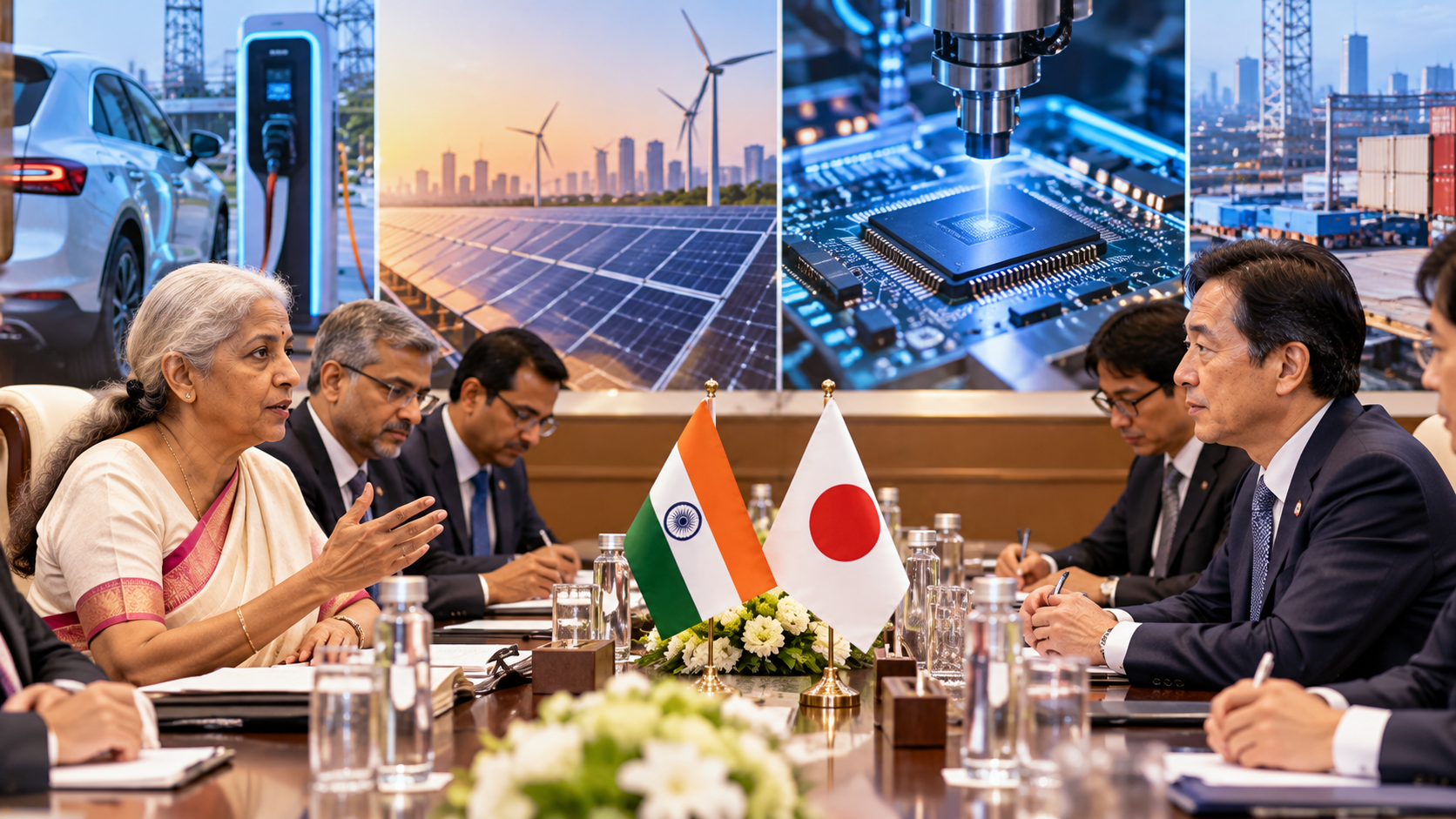
Finance Minister Nirmala Sitharaman met Japan Bank for International Cooperation Governor Kazuhiko Amakawa and discussed expanding India-Japan cooperation in clean energy, semiconductors, critical minerals, electric mobility and resilient supply chains.
New Delhi, October 16 — Finance Minister Nirmala Sitharaman on Friday met Kazuhiko Amakawa, Governor of the Japan Bank for International Cooperation, and discussed ways to deepen economic and investment cooperation between India and Japan.
The meeting took place on the sidelines of the World Bank-IMF Annual Meetings in Bangkok.
According to the Finance Ministry, discussions focused on expanding cooperation in clean energy, energy transition, advanced manufacturing, semiconductors, critical minerals, electric mobility and resilient supply chains.
The two sides also discussed cooperation through the $600 million India-Japan Fund and greater Japanese participation in the National Investment and Infrastructure Fund.
Amakawa highlighted the performance of the India-Japan Fund, which has invested in areas such as electric mobility and bioethanol, and expressed hope for the creation of a follow-on fund.
He also pointed to JBIC’s stake in the National Industrial Corridor Development Corporation and growing Japanese investor interest in India’s semiconductor sector, including opportunities in Dholera.
Artificial intelligence and data centres were also discussed as emerging areas of cooperation.
Sitharaman encouraged Japanese investors to explore opportunities in the data centre sector in Tier 2 and Tier 3 cities, including Visakhapatnam, as part of efforts to promote more balanced urban and economic development.
Both sides agreed that there is further scope to strengthen India-Japan economic and financial ties and benefit from each other’s experience in infrastructure, technology and industrial development.
Separately, Sitharaman also met Bhutan’s Finance Minister Lyonpo Lekey Dorji and discussed ways to strengthen bilateral economic cooperation.
The talks covered GIFT City, energy collaboration, trade, connectivity and financial integration, while India reiterated its commitment to supporting Bhutan’s development priorities.
The two ministers also discussed the possibility of expanding INR-denominated payments and settlements, along with measures to improve energy cooperation and bilateral trade facilitation.