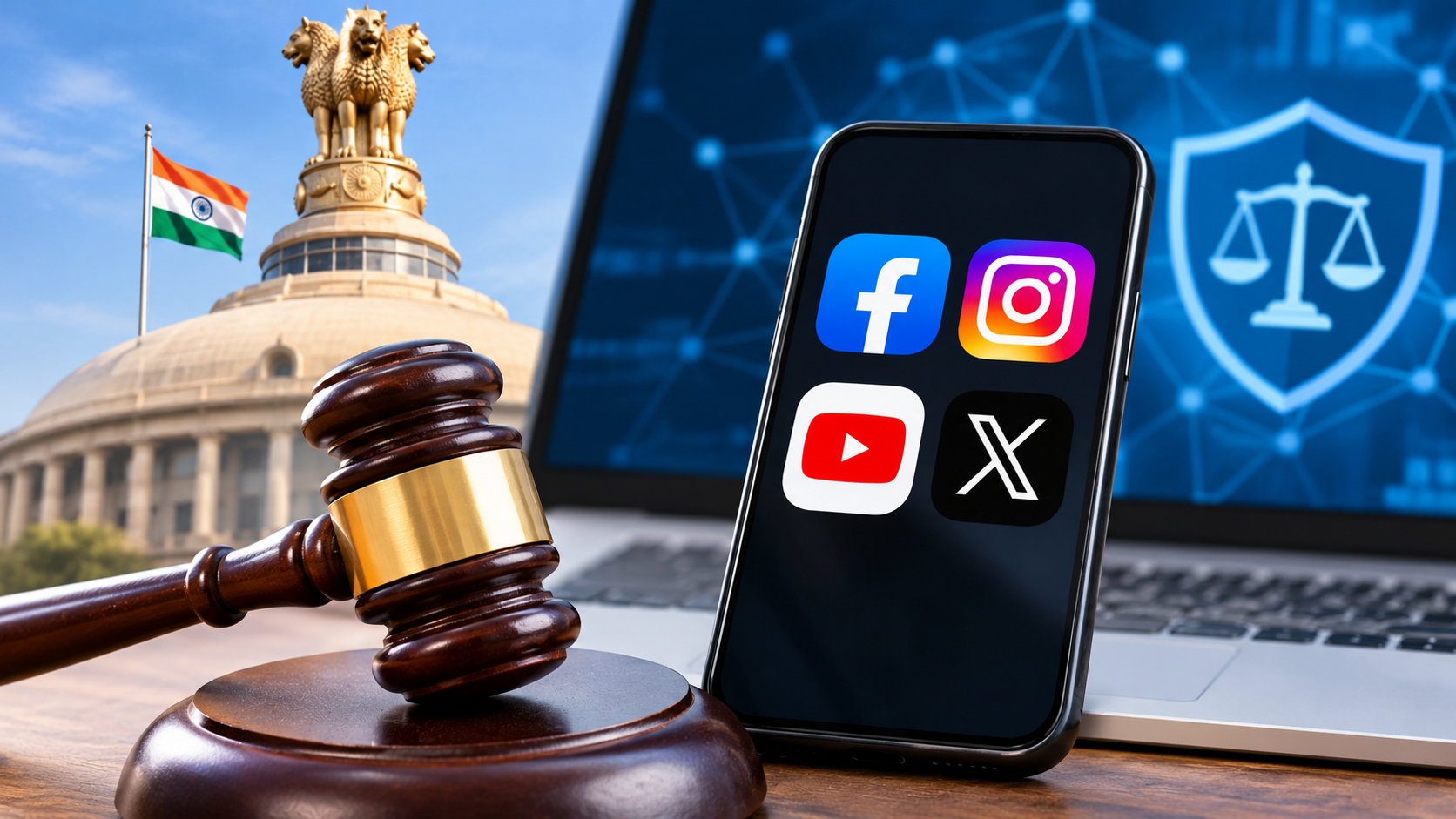
The proposed changes could make social media companies legally accountable for content promoted through their algorithms, while strengthening safeguards against deepfakes and harmful online material.
Highlights
- Government considering changes to Section 79 of the Information Technology Act, 2000.
- Facebook, Instagram and other social media platforms could face greater legal liability.
- Algorithm-driven ranking, promotion and suppression of content are under scrutiny.
- Platforms may lose blanket protection for certain user-generated content.
- Peer-to-peer messaging services could remain exempt under the proposed approach.
- Changes could strengthen accountability for harmful and manipulated online content.
India May Remove Blanket Legal Protection for Social Media Platforms, Algorithm-Driven Content Under Scrutiny
New Delhi, November 5: The Indian government is considering a major overhaul of the legal protections currently available to social media companies, potentially making platforms such as Facebook, Instagram and other digital services more accountable for user-generated content promoted through their algorithms.
According to a Business Standard report, the government is examining whether to withdraw blanket safe harbour protection granted to online intermediaries under Section 79 of the Information Technology Act, 2000.
The proposed changes could significantly alter how social media companies operate in India, particularly platforms that use algorithms to determine which posts, videos and other content appear prominently in users’ feeds.
Why Is the Government Reviewing Safe Harbour Protection?
Under the existing legal framework, Section 79 provides conditional protection to intermediaries against liability for third-party information, data and communication hosted or transmitted through their services.
However, government officials reportedly believe that social media platforms using algorithms to rank, recommend, promote or suppress content play a more active role than traditional intermediaries.
A senior government official cited in the report argued that platforms influencing the visibility and distribution of user-generated content should not automatically receive blanket protection from legal liability.
Facebook, Instagram and Other Platforms Could Be Affected
If implemented, the changes could have significant implications for major social media companies, including Meta-owned Facebook and Instagram, as well as other algorithm-driven platforms.
Companies may face increased scrutiny over how their recommendation systems amplify content and whether they should bear responsibility for material actively promoted through those systems.
However, the government has not announced a final decision, and the precise scope of any proposed legal amendments remains unclear.
Messaging Platforms May Receive Exemption
The reported proposal also distinguishes between social media platforms that actively influence content distribution and services that simply transmit messages between users.
According to the report, peer-to-peer messaging platforms that do not interfere with the content exchanged between users could retain safe harbour protection.
The distinction could become important in determining how different categories of digital services are regulated.
What Does This Mean for Social Media Users?
The proposed changes could lead to stricter content moderation practices and greater accountability for algorithmic recommendations.
The report also indicates that the broader regulatory discussion includes faster removal of deepfakes and non-consensual images.
However, the exact mechanisms for reporting and removing such material have not been detailed in the available information.
For now, Section 79 protections remain in place, subject to existing legal conditions. Any changes would require further government action.
Source: Business Standard, November 4, 2026.