Doctor or Economist? The unfathomable Covid-19 dilemma

• Countries across the world face a Hobson’s choice today – to keep their economies humming or break the chain of the Covid-19 pandemic.
• Deaths from the virus are worrying, but countries like India are more concerned with how a potential stage 3 could overwhelm their healthcare system.
• India is trying to ramp up its capacity of medical equipment, quarantine centres, testing capabilities, etc, even as it hopes the lockdown will keep the numbers manageable.
• Considering that a vaccine for the virus could take at least 1-2 years, and the difficulties with rising critical cases (as evidenced from countries like Italy & US), the lockdown is unavoidable, despite the imminent economic misery that will follow.

Over much of the last week, the Donald Trump administration in the US has been assertive on its view that the country needs to open soon. From preventing deaths, to breaking the curve of the virus to saving the American healthcare system from possible disaster, the American government has been equally expressing concern over limiting the economic toll. On Sunday, Trump made it clear when he said, “We cannot let the cure be worse than the problem itself.” He seemed quite firm on his stance in a news conference on Monday, that America would soon be open for business, citing Easter or April 12 as the possible date.

But soon enough, with the inputs of health experts, Trump has decided to carry on with the lockdown and extend it to April 30. From a possible 2.2 million deaths if no lockdown was carried out, Trump’s health experts have acceded that the lockdown could bring the toll due to Covid-19 in US down to between 100,000 to 200,000. The US President has been forced to admit now that with the growing number of deaths, the coming weeks could be very painful for the country.

Trump’s dilemma is shared by the leaders of every country tacking the Covid-19 crisis today – essentially a debate between the doctor and the economist, who are bound to differ on their prescriptions. In India itself, the Covid-19 pandemic is expected to cause terrible economic devastation that’s hard to measure currently. Whether it’s scenes of migrant workers forced to leave cities to concerned businesses who are now exploring and trying to push the limits on the ‘remote economy’ framework while helplessly absorbing business losses, the prognosis is dire to say the least. The impact of the current lockdown of over 3 weeks itself will continue to be felt for a very long time.

Nevertheless, several variables would be playing on the government’s mind when it took this decision for the entire country. The first is of course the pace at which the Covid-19 virus is known to spread, which makes the potential size of the problem a big mystery. The second is the high improbability of people being able to practise social distancing en masse on the basis of a medical advisory in a business-as-usual scenario. And the third is the healthcare ecosystem itself. With the benefit of hindsight on how Covid-19 is stumping some of the most developed countries, India is right in being extra cautious in Stage 2.

For in a pandemic such as this, it’s not just the deaths that are worrying. In fact a new study just puts the Covid-19 death rate at just 1.38% amongst confirmed cases in the epicentre of Wuhan. But treating the growing number of cases, quarantining people and regions and carrying out tests require a quick ramp up of healthcare facilities. A lockdown gives India limited time to prepare for the dreaded stage 3 if it indeed does arrive. But it is invaluable nevertheless.

In this regard, comparisons are often drawn with China. Sure enough, its healthcare infrastructure is much more advanced. India has around 0.7 beds per 1,000 population compared to 4.2 for China, according to latest available World Bank data. Similarly, China has 1.8 physicians per 1,000 population compared to 0.8 for India. Medical infrastructure also varies state by state in India. Delhi, for instance, has 1.05 beds per 1,000 population, West Bengal has 2.25 beds, while Bihar has just 0.11.

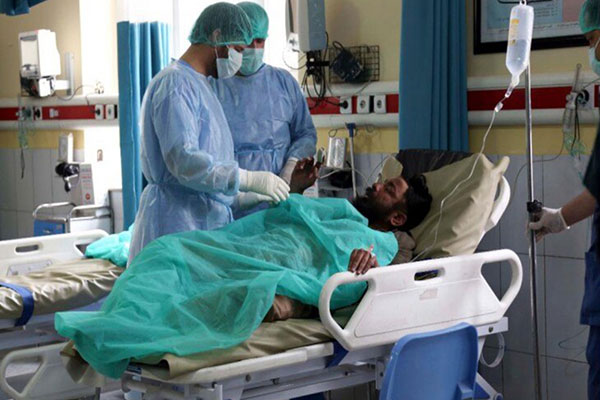
Given the limited hospital infrastructure, the problem is not just cases, it is the number of critical cases that would require hospitalisation. According to a calculation, if India touched an estimated 2.2 million cases of Covid-19, it would require around 110,000 to 220,000 ventilators (assuming 10% critical cases), and India is estimated to have only around 17,850 to 25,556 ventilators.

While the Indian Council of Medical Research refutes aspersions on community transmission, India is already in preparation mode for the beginning of Stage 3. Technically, a community spread is when there is no history of travel or direct contact to diagnosed cases. This is when numbers could rise exponentially, and will be a prelude to Stage 3. This is when the source of the infection is not known for a majority of cases and new cases cannot be linked to previously diagnosed ones.

India has already made preparations to expand its testing capacity with the inclusion  of private laboratories. There is little time to boost the network of hospitals and essential medical equipment and devices. The government has decided to source 10,000 ventilators from China and has given orders for domestic production of 40,000 more units. The shortage of ventilators in particular compelled countries like Italy take tough decisions like choosing young people and those more likely to be saved. Further, the government has placed orders for 21 lakh personal protection equipment coveralls with 11 domestic manufacturers.

Besides this, there is the tough job of building hospital capacity, where again, the private sector is being roped in at a brisk pace. Quarantine facilities are another challenge, if patients start spiking up in huge numbers. Some improvisation is already being done in this regard. The Railways is preparing 20,000 coaches. Private hospitals like Apollo and even hotel aggregator OYO are offering quarantine facilities, and the army, religious institutions, etc are also pitching in. The migrant problem, while not unexpected in hindsight, is just one example of how the situation can get more complex. That necessitates further contingency measures like utilisation of the Jawaharlal Nehru Stadium in New Delhi.

So as a country, from government to public/private institutions to companies and civic bodies and the citizens under lockdown; everyone is facing untold hardship to control the Covid-19 outbreak. Whether it will be enough, no one can tell for sure. The basics are clear – urgently track, test, quarantine and treat Covid-19 positive patients; ramp up on healthcare facilities and medical supplies; ensure that lockdown is followed well and ensure that people are not devoid of necessity. In the midst of this, it is urgent to also make sure that the people on the ground, be they healthcare workers or food delivery people, follow proper hygiene standards and are given the necessary equipment to stay safe. All this while, one hopes that the number of critical cases stays well under control so that India does not have to make painful choices like Italy.

However, India has the benefit of hindsight as well as lessons from China’s experience in particular. It has already taken lessons with a tough lockdown, hopefully well in time. China used a technology-based risk assessment model, wherein it asked citizens to give details on prevailing symptoms, travel history, contact with people from the epicentre Wuhan, etc. They were graded as per risk assessment into green (travel freely), yellow (1-week isolation) and red (2-weeks isolation). India may have to do something similar once it progressively eases the lockdown. This may happen state by state considering the trend where some states (like Maharashtra and Kerala) are emerging as major hot spots compared to the likes of West Bengal and Odisha. At the same time, however, it must be noted that new hotspots are emerging everyday. And the exodus of migrants has complicated the issue, both in terms of undermining the purpose of the lockdown and putting additional burden on healthcare facilities in the hinterland.

So ultimately, given the manner in which the rising critical cases have rendered healthcare systems in even more mature countries helpless, the lockdown is apt and would save many lives. In this black swan event, economic pain is evident, but necessary to give the government precious time to both break the chain of Covid-19 and prepare for a possible Stage 3. It is India’s first brush with such a pandemic in the present milieu (compared to countries that have experienced epidemics like SARs and MERs), and there will be hard learned lessons to learn for such events in the future. But that is a deliberation for another day.

Previous Post
Next Post

Most Recent Posts

  • All Post
  • 8th Pay Commission
  • Aadhar
  • Aditya Birla Capital
  • Advertising Standards
  • Affordable Housing
  • Agriculture
  • Agriculture & Food
  • AI in Healthcare
  • AI Technology
  • Airlines
  • alcohol industry
  • Android
  • APEDA
  • Apple
  • Artificial Intelligence
  • Ashwini Vaishnaw
  • asian para games
  • Asset Management
  • Atmanirbhar Bharat
  • Audio Devices
  • Audio Products
  • Auto Industry
  • Automobile
  • Automobiles
  • Automotive
  • Automotive Industry
  • Aviation
  • Bain Healthcare Report 2026
  • Bank
  • Banking
  • Banking Technology
  • Battery Industry
  • Beverage Industry
  • Beverages
  • Bihar
  • biotechnology
  • Bitcoin
  • BMW Group India
  • Brand Insight
  • BRICS
  • Bullion Market
  • Business
  • Business & Economy
  • Business & Trade
  • Business Leadership Post COVID-19
  • Business News
  • Business Terminology
  • Business Utilities
  • Buyback
  • Capital Goods
  • Capital Markets
  • CarsBusiness
  • CBIC
  • CCI
  • chemicals
  • Child Investment
  • China
  • China technology news
  • Citizen Services
  • Clean Energy
  • Clean Technology
  • Cloud Computing
  • coal
  • Commerce
  • Commerce and Industry
  • Commercial Real Estate
  • Commercial Vehicles
  • Commodities
  • Communications
  • Companies
  • Competition Law
  • Compliance
  • Computer Accessories
  • connected cars
  • Consumer
  • Consumer Affairs
  • Consumer Electronics
  • Consumer Finance
  • Consumer Goods
  • Consumer Health
  • Consumer Markets
  • Consumer News
  • Consumer Protection,
  • Consumer Rights
  • Consumer Spending
  • Consumer Trends
  • Content Creation
  • Copper
  • Corporate
  • corporate affairs
  • Corporate Earnings
  • Corporate Governance
  • Corporate News
  • Corporate Social Responsibility
  • Cost of Living
  • Country
  • CRED
  • Credit Cards
  • CREDIT RATING
  • crime
  • Crude Oil
  • Cryptocurrency
  • CSR
  • Culture
  • Currency
  • Customs Duty
  • Cyber Security
  • Cybersecurity
  • Dairy Industry
  • Data & Analytics
  • Defence
  • Delhi Government
  • Delhi-NCR
  • Demographics
  • Derivatives
  • DGCA
  • DGFT
  • DigiLocker
  • Digital Assets
  • Digital Economy
  • Digital Health India
  • Digital Identity
  • Digital India
  • Digital Infrastructure
  • Digital passport for robots
  • Digital Payments
  • Digital Platforms
  • digital services
  • Diplomacy
  • Dixon Technologies
  • DPIIT
  • E Commerce
  • E-commerce
  • E-Governance
  • Ease of Doing Business
  • Economic Growth
  • Economy
  • Edible Oil Industry
  • Editor Choice
  • EdTech
  • Education
  • Electric Mobility
  • Electric Vehicles
  • Electronics
  • Employment
  • ENERGY
  • Engineering
  • Entertainment
  • Environment
  • EPFO
  • Ethanol Economy
  • EV Industry
  • EV Technology
  • Exports
  • EXTER
  • Farmers
  • Fashion
  • festive offers
  • FINANCE
  • Finance Ministry,
  • Financial Marketing
  • Financial Markets
  • Financial News
  • Financial Planning
  • Financial Results
  • Financial Services
  • Fintech
  • FnTech
  • Food & Beverage
  • Food & Beverages
  • Food Exports
  • Food Industry
  • Food Manufacturing
  • Food Processing
  • Food Regulations
  • food safety
  • Foreign Exchange
  • Foreign Investment
  • Foreign Policy
  • Foreign Trade
  • Forex Reserves
  • fssai
  • FTA
  • Fuel
  • Fuel Prices
  • Future Energy
  • Gadgets
  • Gadgets & Apps
  • Gaming
  • GDP
  • Generative AI Healthcare
  • Geopolitics
  • GI Products
  • Global Brand Alliance
  • Global Economy
  • Global Markets
  • Global Politics
  • Global Tech
  • Global Trade Policy
  • Global Trends\
  • Gold
  • Gold Market
  • Gold Prices
  • Gols & Silver
  • Government
  • Government & Policy
  • Government Affairs
  • Government Bonds
  • Government Data
  • Government Initiatives
  • Government Policy
  • Government Policy & Regulation
  • Government Scheme
  • Government Schemes
  • Government Services
  • Green Energy
  • Green Mobility
  • GroupGlobal
  • GST
  • GST Council
  • GST Counsil
  • Hair Care
  • Hardware
  • Hatchback Segment
  • Health Supplements,
  • Horticulture
  • Housing
  • HSBC
  • Human Resources
  • humanoid robot market
  • Hyundai
  • IBT Infographics
  • iinvestment
  • Imports & Exports
  • Income Tax
  • India
  • India Auto Market
  • India Business News
  • India Inc
  • India News
  • India Retail
  • India-Canada Relations
  • India-China
  • India-Japan Relations
  • India-Russia Relations
  • India-South Korea Relations
  • India-US Relations
  • Indian Economy
  • Indian Navy
  • Industrial Pollution
  • Inflation
  • Infra
  • Infrastructure
  • Innovation
  • Instagram
  • Insurance
  • international
  • International Affairs
  • International Cooperation
  • International Relations
  • International Trade
  • Internet & Connectivity
  • Internet Policy
  • Internet Regulation
  • Interview
  • Investing
  • Investment News
  • Investments
  • iPhone News
  • IPO
  • IT Industry
  • Jewellery
  • Jio Platforms
  • JioBlackRock
  • Jobs & Careers
  • Joint Ventures
  • Kim Kardashian
  • Labour
  • Latest
  • Launches
  • Leadership
  • Leaderspeak
  • Lending
  • Lifestyle
  • Lifestyle Tech
  • List
  • Loans & Credit
  • Local News
  • Logistics
  • LPG
  • Luxury Cars
  • Machinery
  • Macroeconomics
  • Macroeconomy
  • maharashtra
  • Maharashtra News
  • Make in India
  • Makhana
  • Manufacturing
  • Market Outlook
  • Markets
  • Maruti Suzuki
  • Mergers & Acquisitions
  • Meta
  • Microsoft
  • Middle East
  • Mobile Apps
  • Mobile Industry
  • Mobile Launch
  • Mobility
  • Monetary Policy
  • Monsoon
  • MoSPI
  • MSME
  • Mutual Funds
  • Nano Tech
  • National
  • National news
  • NEET 2026
  • NewsElectric
  • NewsTata
  • NPCI
  • NPS Vatsalya
  • Office Market
  • Oil & Gas
  • Oil and Gas
  • Others
  • OTT
  • Packaged Drinking Water
  • Packaged Foods
  • Packaging Industry
  • Packaging Innovation
  • para archery
  • Passenger Vehicles
  • Paytm
  • Pension & Retirement
  • Pensions
  • Personal Care
  • Personal Finance
  • Perspectives
  • Petroleum
  • PFRDA
  • Pharmaceuticals
  • PM Modi
  • PMAY-G
  • PMAY-U
  • PMAY,
  • PMI
  • policy
  • Population
  • PORTS
  • Positive News
  • PPF
  • Precious Metals
  • Pricing
  • Product Labeling
  • Product Labelling
  • Product Launch
  • Property Market
  • PSU
  • PSU Banks
  • Public Health
  • Public Policy
  • Public Safety
  • Public Sector
  • Public Services
  • Public Welfare
  • Quarterly Results
  • Railways
  • Rajasthan
  • Raksha Bandhan
  • Raksha Bandhan Gifts
  • Rare Earths
  • RBI
  • Real Estate & Realty Sector
  • Recycling
  • Regulation
  • Regulatory Action
  • Regulatory Affairs
  • Regulatory Updates
  • REIT
  • Reliance Industries
  • Renewable Energy
  • RERA
  • Research
  • Retail
  • Retirement Planning
  • Road Infrastructure
  • Robotics & Automation
  • robotics standards
  • Rupee
  • Rural Development
  • Rural Housing
  • SAIL
  • Salaries
  • Samsung
  • Savings
  • Science & Technology
  • Sebi
  • Security
  • Semiconductor
  • Services Sector,
  • SHIPPING
  • Silver Prices
  • Skill Development
  • Skills Development
  • Small Business
  • Smart Devices
  • Smart Home
  • Smart Mobility
  • Smartphones
  • Social Impact
  • Social Media
  • Society
  • Software Development
  • Solar Energy
  • Space Technology
  • sports
  • Startups
  • Statistics
  • Steel Industry
  • Stock Market
  • stocks
  • streaming
  • Sugar Industry
  • Sukanya Samriddhi Yojana
  • Sustainability
  • SUV
  • Tamil Nadu Pollution Board
  • Tariffs
  • Tariffs & Duties
  • Tata Group
  • Tata Motors
  • Tata Sons
  • Tax Planning
  • Taxation
  • Tech
  • Tech Branding
  • Technology
  • Telecom & Technology
  • Telecom Industry
  • television
  • Top Story
  • Tourism
  • Trade
  • Trade Agreement
  • Trade Basket
  • Trade Partner
  • Trade Policy,
  • Transportation
  • Travel
  • Trending
  • Two-Wheelers
  • UIDAI
  • UPI
  • Urban Development
  • US-Iran Conflict Economic Impact
  • US–India Relations
  • Uttar Pradesh
  • VehiclesLuxury
  • vivo
  • Wastewater Management
  • Water Quality,
  • Wealth Management
  • Wearables
  • Wellness
  • WhatsApp
  • Wheat
  • Workplace
  • World
  • World News
  • Worldview
  • Yamaha
  • zLead Slider
    •   Back
    • Healthcare
    • Auto
    • Fmcg
    • Hospitality
    •   Back
    • Cash Crop
    • Organic
    • New Era Agri
    • Processed Food
    •   Back
    • Construction
    • Power
    • Mining
    • Telecom
    •   Back
    • ENERGY
    •   Back
    • Export/Import
    • Trade Deal
    • Trade Fair
    •   Back
    • Policies
    • Industry
    • Finance
    •   Back
    • Others technology
    • Mobile phone
    • Gadgets
    •   Back
    • Manufacturing
    • Services
    • Startup

India Business & Trade is a national media platform decoding the ideas, decisions and shifts shaping India’s growth story—across plicy, business, global commerce and a rapidly evolving marketplace.

Reach Us

India Business & Trade
M-62, Saket, New Delhi-110064, India

Subscribe To Newsletter

Stay ahead in the dynamic world of trade and commerce with India Business & Trade’s weekly newsletter.

Copyright © 2026 India Business & Trade. All Rights Reserved