

27 Kg Gold Seized Key Highlights New Delhi: The Directorate of Revenue Intelligence (DRI) has intensified its nationwide crackdown on organised gold smuggling networks, seizing more than 27 kg of foreign-origin gold and arresting 12 people in a series of intelligence-led operations across India. Investigators uncovered several sophisticated smuggling techniques, including gold hidden inside aircraft lavatory ceiling panels, specially designed vehicle cavities, modified utensils, handbags, waist belts, and body concealment. One of the biggest operations took place at Mumbai Airport, where DRI officers intercepted three passengers arriving from Addis Ababa. After a detailed aircraft inspection, officials recovered 12 kg of gold bars concealed inside the ceiling panels of the aircraft’s rear lavatory. Investigations revealed that the passengers had hidden the gold for later retrieval by airport staff. In another operation in Uttar Pradesh, officials intercepted a woman travelling on the Brahmaputra Mail and seized 5 kg of foreign-origin gold bars concealed inside a specially designed waist belt and her handbag. She admitted that the gold had been smuggled into India through Bangladesh. A separate investigation at Mumbai Airport exposed another smuggling racket involving 3.7 kg of gold dust in wax form, which was hidden inside an aircraft lavatory and later collected by cleaning staff. Five people, including handlers and airport workers, were arrested in the operation. At Kolkata Railway Station, DRI officers recovered 4.6 kg of smuggled gold concealed inside specially fabricated utensils. The investigation found that the consignment had entered India through Myanmar. Additional operations at Cochin Airport and Guwahati resulted in the seizure of around 2 kg of gold concealed inside a passenger’s body and a specially modified car, respectively. The DRI stated that these coordinated operations demonstrate the growing sophistication of organised gold smuggling syndicates and reaffirm the agency’s commitment to dismantling illegal cross-border smuggling networks across the country.

India Israel FTA Advances
Second Round Ends Key Highlights New Delhi: India and Israel have successfully concluded the second round of negotiations for their proposed Free Trade Agreement (FTA), marking another step toward strengthening bilateral economic ties. The negotiations, held in New Delhi from July 20 to July 23, included detailed discussions on trade in goods and services, rules of origin, sanitary and phytosanitary measures, technical barriers to trade, intellectual property rights, customs procedures, trade facilitation, and broader economic cooperation. According to the Commerce Ministry, both delegations engaged in constructive and forward-looking discussions aimed at reducing differences and identifying common ground across multiple negotiating chapters. Officials said both countries remain committed to concluding a balanced, comprehensive, and mutually beneficial agreement that will expand trade, investment, and economic cooperation. India and Israel enjoy complementary strengths across several sectors, and policymakers believe the proposed FTA will create new opportunities for businesses and enhance bilateral trade. Merchandise trade between the two countries stood at approximately USD 3.93 billion during FY2025-26.
Experts Back Safer Roads
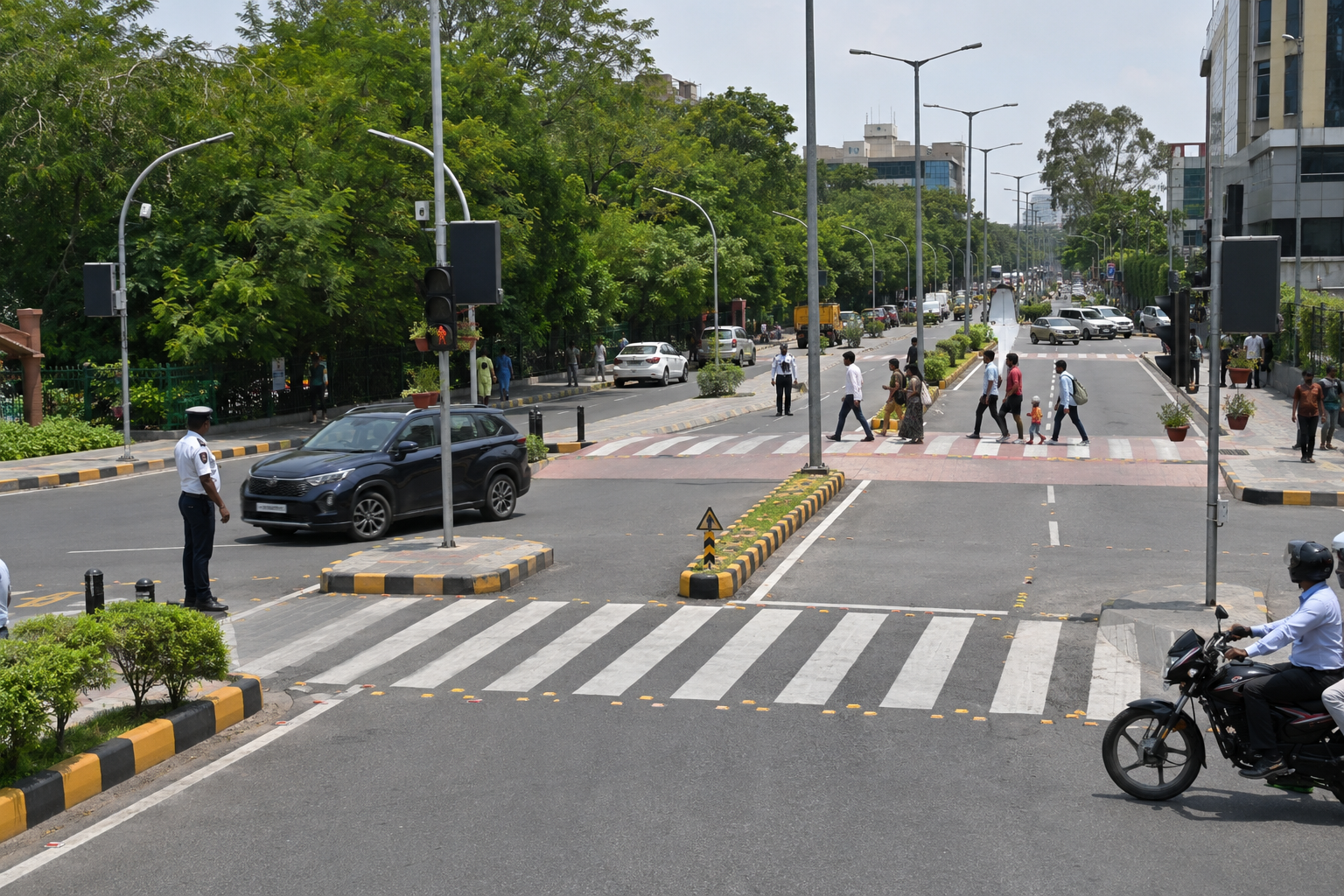
Low-Cost Measures Urged Key Highlights New Delhi: Road safety experts have urged authorities to adopt practical, affordable, and evidence-based measures to reduce India’s rising number of road accidents. Speaking at a conference organised by the India chapter of the International Road Federation (IRF), experts highlighted that simple engineering improvements can dramatically improve road safety without requiring massive infrastructure investments. Professor Emeritus Geetam Tiwari of IIT Delhi said enhanced road markings for better night-time visibility can significantly improve safety in urban areas. IRF President Emeritus K.K. Kapila said most urban crashes occur because of everyday design flaws on regular roads. He noted that low-cost interventions such as raised pedestrian crossings, roundabouts, improved street lighting, traffic calming measures, and safer junction designs have been proven globally to reduce accidents by 20% to 80%. Experts also stressed the importance of adopting international best practices while leveraging new technologies to improve traffic management and road user safety.

Tata Consumer Q1 Profit Up
Revenue Grows 12% Key Highlights New Delhi: Tata Consumer Products Ltd (TCPL) reported a strong start to FY27, posting a 28.77% rise in consolidated net profit to ₹427.19 crore for the June quarter compared with ₹331.75 crore in the same period last year. Revenue from operations climbed 12% year-on-year to ₹5,348.88 crore, supported by healthy volume growth across its domestic branded portfolio. Total income rose 12.46% to ₹5,420.82 crore, while total expenses increased 10.9% to ₹4,828.61 crore. The company’s branded business delivered revenue growth of 14.3%, led by tea, coffee, packaged foods, and beverages. India’s branded business expanded 13.26%, while international branded revenue increased 17.25%, driven by strong demand in the US and continued market share gains in the UK. Coffee sales grew 24%, Tata Sampann recorded an impressive 58% revenue growth, and the Ready-to-Drink portfolio, including Tata Gluco+, Tata Copper+, and Himalayan Natural Mineral Water, grew 41%. Acquired brands Capital Foods and Organic India also continued their strong momentum, posting revenue growth of 40% and 27%, respectively. Tata Starbucks, the company’s joint venture with Starbucks Corporation, reported 11% revenue growth and expanded its footprint to 498 stores across India. Managing Director & CEO Sunil D’Souza said the company delivered another quarter of double-digit revenue growth, translating into nearly 29% growth in consolidated net profit.

Gmail Introduces Selfie Login
Password-Free Access Arrives Key Highlights New Delhi: Google has unveiled a new Selfie Video Sign-in feature for Gmail and Google Accounts, introducing an additional identity verification method that can help users access their accounts even if they forget their password or lose their primary device. The new feature allows users to register a short selfie video during setup. While enabling the feature, users will be asked to look into the device’s camera and move their head in different directions, similar to the facial enrollment process used by modern smartphones. When signing in, users can choose the Selfie Video Sign-in option, where the system captures a new live video and compares it with the previously registered facial data. The verification process also includes live facial movement checks to ensure that the person attempting to log in is physically present, helping prevent spoofing attempts using AI-generated images or deepfake videos. The feature is expected to improve account recovery, especially in situations where users have forgotten their password, changed devices, or lost access to their registered phone. Once authenticated, users can regain access to Gmail and other Google services more easily without relying solely on traditional recovery methods. Google says the selfie video is encrypted and stored securely, with users retaining full control over their biometric data. According to the company, the stored video is used only for identity verification unless users explicitly choose otherwise, and it can be deleted from the Google Account settings at any time. The Selfie Video Sign-in feature will roll out gradually through the Security & Sign-in section of Google Accounts, offering users an additional layer of convenience and security for accessing their accounts.

KENT Launches Smart RO
IoT Water Purifier Debuts Key Highlights New Delhi, July 24: KENT RO Systems has expanded its smart home appliance portfolio with the launch of the KENT Sapphire IoT, a next-generation connected water purifier designed to offer intelligent monitoring, app-based control, and advanced purification for Indian households. The new purifier integrates IoT technology, allowing users to monitor water quality, purifier performance, filter life, and maintenance requirements directly through a connected digital platform. It also automatically registers service requests in case of technical issues and sends timely alerts for filter and membrane replacement. The purifier features an advanced digital display that provides real-time information on water purity, mineral content, and filter status, giving users complete visibility into the purification process. At the core of the KENT Sapphire IoT is a multi-stage purification system comprising RO, UV, UF, TDS Control, Alkaline and Active Copper technologies. The system removes harmful contaminants such as heavy metals, fluoride, arsenic, pesticides, bacteria and viruses while retaining essential minerals in drinking water. The purifier also produces alkaline water with a pH above 8.0, enriched with copper, while a built-in UV LED storage tank disinfection system helps keep stored water safe over time. Designed for families with higher daily water consumption, the Sapphire IoT offers a purification capacity of up to 20 litres per hour. KENT is offering the purifier with a one-year warranty and three years of extended free service, supported by its nationwide service network. The product is certified by NSF (USA) and BIS (India), ensuring compliance with international and domestic quality standards. Priced at an MRP of ₹28,000, the KENT Sapphire IoT is aimed at consumers looking for a premium, connected, and health-focused water purification solution.

Lava Launches Virat Series
5G Phone Starts ₹11,999 Key Highlights New Delhi, July 24: Indian smartphone maker Lava International has expanded its smartphone portfolio with the launch of the Lava Virat V1 5G and Lava Virat V1, marking its strategic push into the online smartphone market through a partnership with Flipkart. Targeted at students, young professionals, homemakers and value-conscious buyers, the new Virat series combines Made-in-India manufacturing with a clean Android experience, durable design and competitive pricing. The Lava Virat V1 5G comes with an introductory launch price of ₹11,999, while the Virat V1 is available at ₹8,999 on the first day of sale. From the second day onwards, the prices will increase to ₹12,999 and ₹9,999, respectively. Both smartphones will go on sale from July 31, 2026, at 12 PM via Flipkart and Lava’s official website. The Virat V1 5G is powered by the UNISOC T8200 processor and features a 6.75-inch HD+ display with a 120Hz refresh rate, 6000mAh battery, 4GB RAM with up to 4GB virtual RAM, 64GB storage, 13MP AI dual rear camera, 5MP front camera, IP64 dust and water resistance, and Android 16 out of the box. Meanwhile, the Lava Virat V1 is designed for everyday users and packs a 5000mAh battery, 6.75-inch HD+ display, UNISOC SC9863A processor, 4GB RAM, 64GB storage, 13MP AI dual rear camera, 5MP selfie camera, and IP64 protection. Commenting on the launch, Lava Managing Director Sunil Raina said the Virat series reflects the company’s commitment to delivering dependable performance, refined design and meaningful innovation for India’s growing digital-first consumers. Flipkart also highlighted that its Open Box Delivery service and nationwide reach will help customers purchase the smartphones with greater confidence. Lava has also bundled its Free Service@Home facility with both smartphones, allowing customers to access after-sales support without visiting a service centre.

Government Backs E20 Fuel
No Return To Pure Petrol Key Highlights The Central Government has clarified in Parliament that there is no proposal to reintroduce regular pure petrol (E0) or E10 fuel at petrol pumps. The government also confirmed that it has not taken any decision to increase ethanol blending beyond the current 20% (E20), putting an end to speculation over higher ethanol blends. According to the Ministry of Petroleum and Natural Gas, the nationwide rollout of E20 fuel was carried out after extensive scientific studies, technical evaluations and consultations with automobile manufacturers and other stakeholders. Officials said any future move to increase ethanol content beyond 20% will only be considered after fresh research and industry-wide discussions. The government also clarified that premium petrol sold by public sector oil marketing companies will continue to remain outside the Ethanol Blended Petrol (EBP) programme, allowing customers who prefer premium-grade fuel to access ethanol-free petrol. However, regular petrol available across the country will continue to follow the E20 blending policy. Responding to concerns raised by some vehicle owners, the Centre stated that it has not received any widespread or verified complaints of engine damage, breakdowns or reduced vehicle life due to E20 fuel. Data collected from scientific institutions and automobile manufacturers indicates that E20 is safe for use in compatible vehicles and does not pose significant mechanical risks. The government acknowledged that vehicles originally designed for E10 petrol may experience a marginal fuel efficiency reduction of around 3–5% when running on E20. However, it maintained that this decrease is limited and does not translate into engine damage or major performance issues. Officials reiterated that the ethanol blending programme is part of India’s long-term strategy to reduce dependence on imported crude oil, lower carbon emissions, support domestic biofuel production and improve energy security. They added that the current policy balances environmental goals with vehicle compatibility and fuel supply logistics while ensuring a stable transition to cleaner fuels.

Government Eases FDI Rules for E-commerce Exports
Inventory-based e-commerce model now allowed for exports of India-made products; move aims to accelerate cross-border online trade and boost MSME exports. Key Highlights In a significant policy move to strengthen India’s export ecosystem, the Government of India has allowed Foreign Direct Investment (FDI) in the inventory-based e-commerce model exclusively for export purposes. The decision is expected to help Indian manufacturers and exporters access international markets more efficiently while ensuring that domestic retail regulations remain unchanged. The Department for Promotion of Industry and Internal Trade (DPIIT) announced that the restrictions applicable to inventory-based e-commerce businesses will no longer apply when companies export products that are manufactured or produced in India. However, the existing ban on FDI in inventory-based e-commerce for domestic business-to-consumer (B2C) retail continues to remain in force. Under the revised policy, e-commerce companies receiving foreign investment can own inventory only for exporting Indian-made products in accordance with the Foreign Trade Policy 2023 and the Foreign Exchange Management (Export of Goods & Services) Regulations, 2015. The move follows recommendations from the Directorate General of Foreign Trade (DGFT) and industry stakeholders, who have been advocating policy reforms to unlock India’s potential in cross-border digital commerce. India’s e-commerce exports currently stand at around USD 2 billion, significantly lower than China’s USD 350 billion. With global e-commerce trade estimated at nearly USD 800 billion and projected to touch USD 2 trillion by 2030, the government aims to position India as a stronger player in the international digital trade ecosystem. Officials believe the policy will particularly benefit MSMEs, manufacturers and exporters, enabling them to directly serve overseas customers through online platforms. It is also expected to complement the government’s ongoing efforts to establish e-commerce export hubs and simplify export procedures. Industry experts view the decision as a major step towards increasing India’s share in global e-commerce exports without affecting the interests of domestic retailers, as the relaxation is limited solely to export activities.

Aadhaar App Crosses 4 Crore Downloads
Aadhaar App surpasses 40 million downloads, enabling millions of residents to update personal details, manage biometrics and access digital identity services from home. Key Highlights New Delhi: The Aadhaar App has crossed a major milestone of 4 crore (40 million) downloads, reflecting the growing adoption of digital identity services across the country. Developed to provide Aadhaar-related services through smartphones, the app has become a convenient platform for residents to manage and update their Aadhaar details without visiting physical centres. According to the Unique Identification Authority of India (UIDAI), nearly 49 lakh residents have updated their mobile numbers through the app, while 11.65 lakh users have completed address updates directly from their homes. Since the introduction of the email update feature on July 1, 2026, around 12.5 lakh email addresses have been added or updated through the Aadhaar App. UIDAI has also made this service free of cost until December 31, 2026, compared to the earlier fee of ₹75, encouraging more residents to keep their contact details updated. The app’s security features have also witnessed strong adoption. Residents have used the Biometric Lock/Unlock facility more than 1.91 crore times, allowing Aadhaar holders to instantly lock or unlock their biometric data for enhanced privacy and protection against misuse. In addition to updating personal information, the Aadhaar App enables users to download e-Aadhaar, securely share and verify identity, and access multiple Aadhaar-related services from a single platform. The initiative supports the Government’s Digital India Mission by making identity management more accessible, secure and convenient for citizens across the country.
