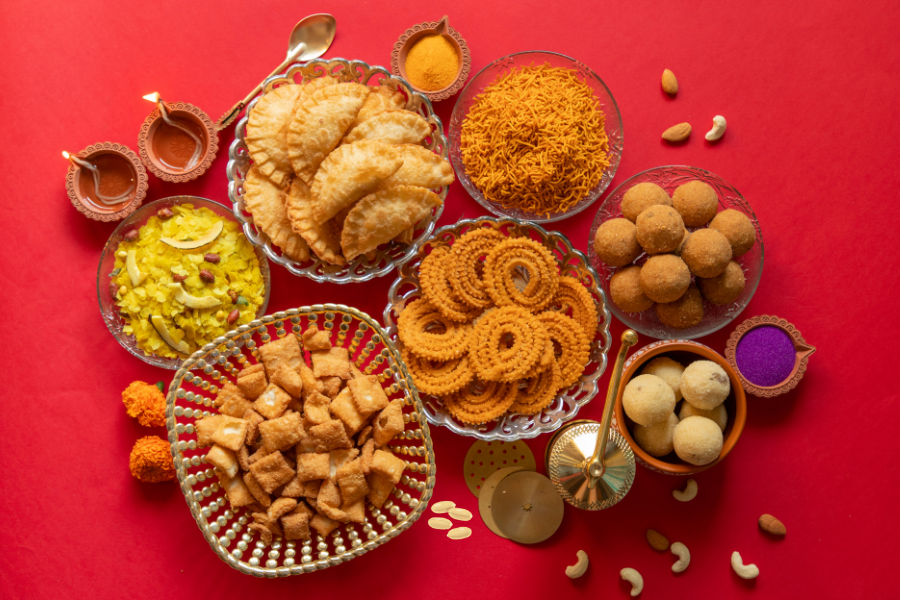
India’s snacks industry, celebrated for its remarkable diversity—from traditional namkeens and bhujias to modern chips, extruded snacks, and baked innovations—is fast emerging as a global powerhouse. Once rooted mainly in domestic consumption, the category now spans a wide range of formats and flavors, catering to both traditional and contemporary palates.
Backed by India’s rich culinary heritage and a rapidly expanding processed food sector, Indian snack exports are steadily making their mark worldwide. In FY 2024–25, India’s agricultural and processed food exports touched US$ 49.4 billion, with processed foods contributing 20.4%—a sharp rise from 13.7% in earlier years. With global consumers increasingly seeking exotic, convenient, and health-oriented indulgences, Indian snacks are well-positioned to capture a growing share of the multi-billion-dollar global snacking market.
Within this larger segment, ethnic snacks—such as sev, gathiya, chakli, murukku, and banana chips—remain a compelling growth driver. The Indian ethnic snacks market was valued at US$ 5.18 billion in 2024 and is projected to reach US$ 17.5 billion by 2033, growing at a robust CAGR of 14.5%. While domestic demand continues to fuel expansion, rising exports to diaspora-rich and adventurous international markets signal the growing global fascination with authentic Indian flavours.
The global snacks food market is witnessing steady expansion, driven by urbanization, rising disposable incomes, and a preference for convenient, on-the-go snacking options. As illustrated in the line graph below, global imports of snacks food have climbed from US$ 67 billion in 2019 to US$ 93 billion in 2024, marking a five-year CAGR of approximately 6.8%. This upward trajectory, with a notable recovery post-2020 pandemic disruptions, highlights the sector’s resilience and the increasing appetite for diverse, ethnic-inspired products worldwide.
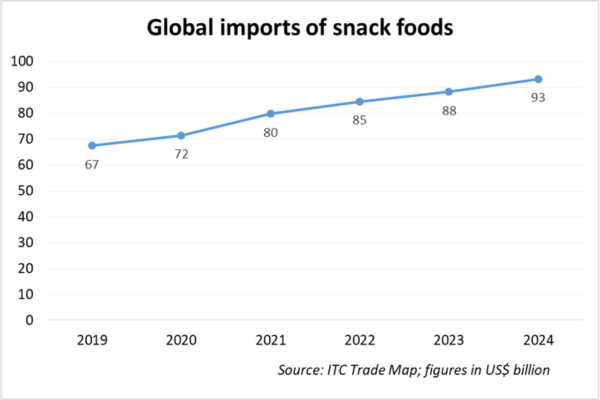
The dip to US$ 67 billion in 2019 followed by a steady rise through 2024 underscores how consumer shifts toward healthier and fusion snacks are fueling import volumes, particularly in developed markets where e-commerce and retail channels have accelerated penetration.
Key markets for snack foods
The snacks food import landscape is dominated by a handful of key markets, with the top importers collectively commanding a significant portion of the global pie. The US holds the lion’s share at 13%, driven by its vast consumer base and multicultural demographics. China follows with 8%, reflecting rapid urbanization and a growing demand for convenient indulgences.
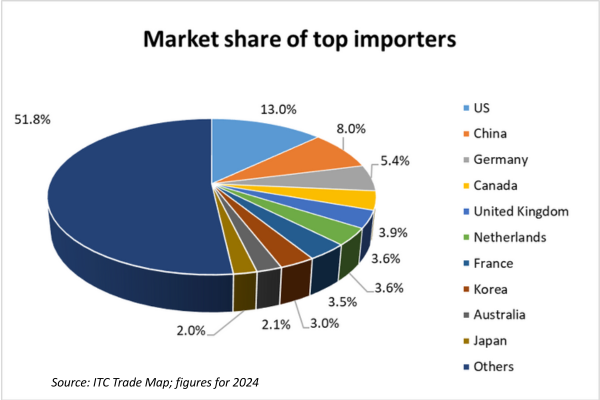
Together, advanced economies across North America and Europe capture a substantial share of global imports, underscoring mature markets’ appetite for premium, innovative, and health-oriented snacks. Meanwhile, Asia’s evolving dietary preferences signal rising opportunities for ethnic and fusion varieties such as Indian namkeens and ready-to-eat products.
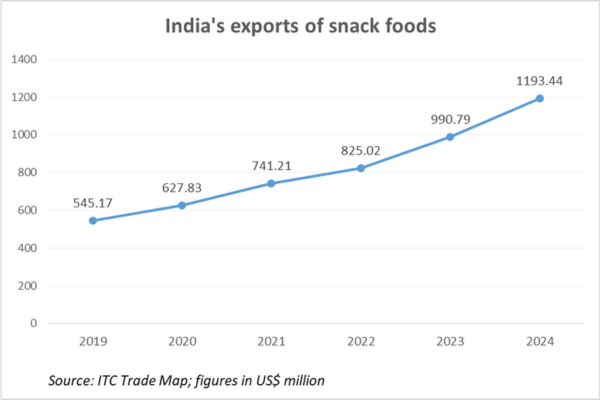
India’s position among the world’s top snack exporters has strengthened remarkably over the past five years, transitioning from a modest player to a competitive force in the global arena. The line graph below compares India’s performance against the top five exporters—US, Germany, China, Netherlands, and Singapore—revealing India’s exports surging from US$ 0.54 billion in 2019 to US$ 1.2 billion in 2024, achieving a five-year CAGR of over 17%.
This trajectory has elevated India to the 21st position globally among snack exporters, steadily closing the gap with mid-tier players like the Netherlands. The rise is driven by advances in processing and packaging technologies, as well as growing global demand for ethnic and authentic snack varieties, positioning Indian snacks as a high-growth category amid diversification from traditional suppliers.
India’s export performance and potential
Indian snacks have found fertile ground in select international markets, where both diaspora communities and adventurous local consumers drive demand for authentic flavors. The pie chart below highlights the top export destinations in 2024, with the US leading at 23.9% of India’s snacks exports, supported by its 4.5 million-strong Indian diaspora and growing mainstream adoption in retail chains. The UAE follows closely at 10%, benefiting from geographic proximity and strong trade ties.
Canada (6.2%), Australia (5.9%), and the Netherlands (4.8%) present opportunities for growth through targeted marketing strategies. Meanwhile, rising shares in the Middle East and Southeast Asia point to pathways for broader mainstream acceptance, signaling significant potential for expanding India’s global snack footprint.
Indian snacks are well poised to capitalise on emerging trends in the global market. First, the shift toward healthier options is paramount. Consumers worldwide are gravitating toward low-fat, multigrain, and baked variants, prompting Indian brands to innovate with millets, legumes, and whole grains in extruded snacks.
The India healthy snacks market alone was valued at US$ 4.12 billion in 2024 and is expected to double to US$ 8.2 billion by 2033. This aligns with global wellness movements, where Indian super foods like ragi chips and quinoa-infused namkeens are gaining traction.
Second, fusion flavors are bridging cultural gaps. Blends of traditional Indian spices with international tastes—such as masala-flavored tortilla chips or tandoori peri-peri puffs—are captivating younger demographics in the West. Partnerships like PepsiCo and Tata Consumer Products’ January 2025 collaboration to launch fusion ethnic snacks exemplify this trend.
Sustainability and clean labeling are also rising priorities. Extrusion processes enable preservative-free products with extended shelf life, complying with stringent regulations like EU and US FDA standards. Portion-controlled, single-serve packaging further caters to on-the-go lifestyles, boosting export viability in markets like the UAE and UK.
Opportunities: Untapped markets and strategic pathways
The global Indian diaspora—over 32 million strong—presents a ready market for traditional snacks, but the opportunity extends well beyond ethnic consumption to mainstream adoption across Europe, the Middle East, and Southeast Asia. Key destinations include the US (the top importer), followed by the UK, Canada, Australia, and the UAE, where Indian snacks command premium pricing due to their authenticity. Emerging markets such as the Netherlands and Malaysia also offer strong growth prospects, driven by trade agreements and the rising popularity of multicultural cuisines.
Product innovation remains the key gateway to global expansion. Plant-based, gluten-free, and vegan adaptations can effectively tap into the rapidly growing global snacks market. Events like Indusfood further highlight these opportunities, showcasing MSME innovations to international buyers and strengthening India’s visibility on the global stage.
Meanwhile, e-commerce platforms and private labels offer low-barrier entry routes for exporters, while globally recognized certifications such as FSSAI and HACCP ensure compliance and help address technical challenges, including concerns around food authenticity and safety in developed markets.
Challenges and the road ahead
Despite strong optimism, hurdles persist. Stringent import regulations, supply chain volatilities, and stiff competition from local brands/large MNCs in target markets necessitate robust quality controls and adaptive strategies. Although headline consumer inflation remains subdued in India, packaged-snack manufacturers continue to face input-cost pressures (for example in oils, grains and contract manufacturing).
At the same time, the domestic market shows signs of consumption plateauing after years of growth. Together, these factors could moderate growth momentum in the snack segment. Yet, with focused R&D, policy support, and industry collaboration, these challenges are navigable.
The untapped potential for Indian snack exports remains vast, with opportunities for diversification into emerging markets across Africa and Latin America, where demand for affordable ethnic snacks continues to surge. Domestically, per-capita consumption—still below global averages—could expand significantly with urbanization and premium product growth, further strengthening export supply chains.
A strategic emphasis on sustainability, including millet-based innovations, zero-waste extrusion, and digital trade platforms, positions India to challenge established exporters like the US and the Netherlands. Ultimately, blending traditional flavors with modern trends in health and fusion snacks can propel the category as a flagship of India’s growing food export ambitions.
Read more:
India identifies 26 countries to grow rice export footprint
Sixfold in five years: India’s frozen potato export surge
From setback to springboard: India’s shrimp export opportunity
FAQ:
What is driving the growth of India’s snack industry?
India’s snack industry is expanding due to rising urbanization, higher disposable incomes, and evolving consumer preferences for convenient and healthy snacking options. The fusion of traditional recipes with modern formats and packaging innovations has also widened global appeal.
How much is India’s snack market worth?
The Indian ethnic snacks market was valued at US$ 5.18 billion in 2024 and is projected to reach US$ 17.5 billion by 2033, growing at a CAGR of 14.5%, supported by both domestic demand and increasing exports.
What are the most popular Indian snacks exported globally?
Top exported snacks include namkeen, bhujia, sev, gathiya, chakli, murukku, banana chips, and baked extruded snacks. Many brands are now launching millet- and legume-based variants to cater to global health-conscious consumers.
How has India’s snack export performance evolved in recent years?
India’s snack exports surged from US$ 0.54 billion in 2019 to US$ 1.2 billion in 2024, achieving a five-year CAGR of over 17%, driven by improved processing technologies, better cold chain logistics, and growing global demand for ethnic foods.
What challenges do Indian snack exporters face?
Exporters face challenges such as stringent import regulations, supply chain disruptions, input-cost pressures, and competition from multinational brands. Adhering to certifications like FSSAI, HACCP, and FDA standards is crucial for smooth market entry.