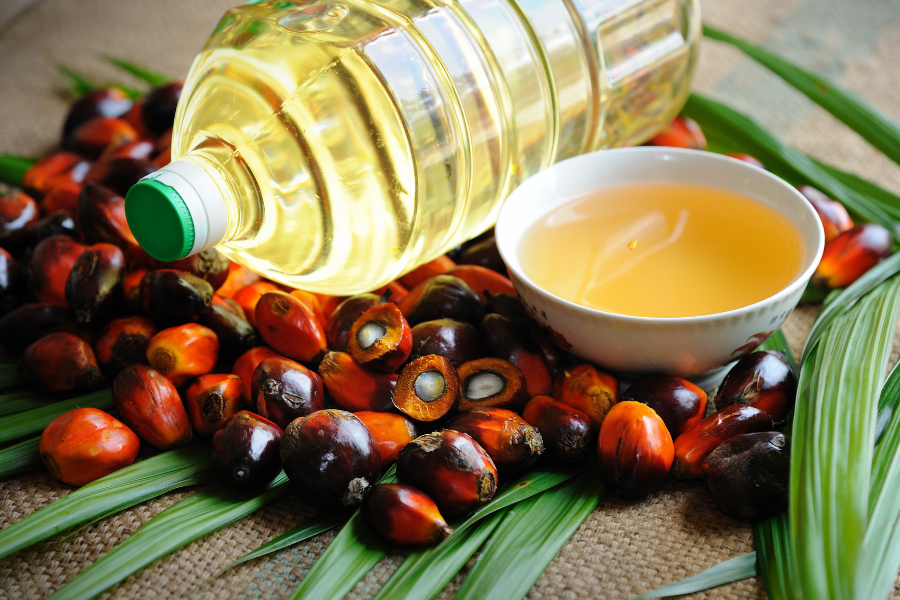
The biodiesel equation: Palm oil, mandates and global implications

The global drive to decarbonize transportation has placed biodiesel at the center of clean-fuel strategies. It promises lower emissions and easy integration with existing engines, but rapid biodiesel expansion has triggered difficult questions around food security, land pressure, subsidies, and environmental risk. When edible oils power vehicles as well as kitchens, energy policy becomes a delicate balancing act.

Indonesia’s shift toward higher palm oil–based blends, now moving from B40 to B50, is the most significant real-world test of this challenge. The program has improved energy self-sufficiency, yet has also tightened edible oil supplies, increased fiscal burdens, and amplified concerns about deforestation and climate-driven yield volatility.

For India, which imports most of its edible oils while advancing its own biofuel mandate, Indonesia’s experience is both a warning and a guide. This article examines the global context, Indonesia’s approach, and the key lessons India must adopt to ensure clean energy progress does not compromise food and economic security.
Palm oil_TPCI

The rising global demand for cleaner and more sustainable fuels is accelerating the shift toward biofuels over the past few years. Broadly, biofuels are renewable fuels derived from biomass and are being increasingly adopted as a key measure to curb carbon emissions, combat climate change, and enhance energy security. They are primarily produced in two forms—ethanol and biodiesel. While ethanol is made from sugar- and starch-rich crops like cereals, biodiesel is produced mainly from oilseed crops such as palm, rapeseed, sunflower, and soybean.

Biodiesel’s ability to ensure complete combustion significantly reduces greenhouse gas (GHG) emissions, making it a preferred alternative to fossil fuels. High compatibility with existing diesel engines further strengthens its appeal, while expanding vehicle ownership and industrial applications continue to drive consumption worldwide. It is gaining traction in the automotive sector for its lower emission profile. Emerging economies such as India, China, Brazil, and several EU nations have also announced targets to substitute 10–20% of fossil-based fuels in transportation with biodiesel. As nations pursue decarbonization goals, the challenge lies in advancing biodiesel growth without compromising global food security.

Biodiesel production has been inextricably connected to the “food versus fuel” debate, raising concerns about global food security with the diversion of agricultural land and resources toward its production. As more cropland gets redirected for fuel production, the availability of land for food cultivation shrinks, potentially affecting food supplies and prices. With a growing global population and increasing food demand, balancing energy generation with food production has become essential. Poorly designed incentive structures for biodiesel adoption could unintentionally worsen food insecurity and contribute to price volatility in global food and edible oil markets.
Global biodiesel market_TPCI


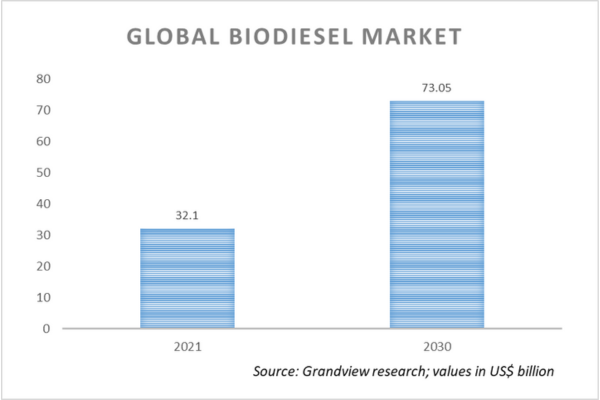
The global biodiesel market, valued at US$ 32.1 billion in 2021, is expected to grow at a CAGR of 10% from 2022 to 2030, reaching an estimated value of US$ 73 billion by the end of the decade. Among the various feedstocks available for biodiesel production, palm oil stands out due to its high oil yield, efficiency, and cost-effectiveness. Mature oil palm plantations can produce around 3 tons of oil per hectare annually—far exceeding the output of other major oilseeds such as soy, rapeseed, and sunflower. This high productivity is particularly valuable in a world where arable land is limited, yet the demand for renewable energy sources continues to grow.

Oil palm’s biological advantages further enhance its appeal. As a perennial crop, it begins bearing fruit within 3–4 years of planting and remains productive for up to 25-30 years, providing a steady oil supply with relatively low replanting needs. Moreover, both the fruit’s mesocarp and kernel yield valuable oils, further boosting output per hectare.

The dominance of palm oil in the biodiesel industry presents significant environmental challenges. While it offers a renewable fuel alternative, the cultivation of oil palm is closely linked to large-scale deforestation, biodiversity loss, and increased carbon emissions from land-use changes. The conversion of tropical forests and peatlands for plantations releases vast amounts of stored carbon—often outweighing the emission savings from biodiesel use.

Additionally, peatland drainage emits carbon dioxide and methane for decades, while fertilizer application, energy-intensive processing, and methane from palm oil mill effluent further add to its carbon footprint, undermining the climate benefits it seeks to achieve.

Beyond emissions, the expansion of palm oil plantations threatens vital ecosystems, endangering species such as orangutans and tigers, depleting water resources, and contaminating soil and water through chemical runoff. While sustainable practices like methane capture, organic fertilizers, and certification schemes such as Roundtable on Sustainable Palm Oil (RSPO) and Indonesian Sustainable Palm Oil (ISPO) offer pathways to reduce these impacts, ensuring genuinely sustainable palm-based biodiesel remains one of the most pressing global environmental challenges.

Global production and demand

To promote biodiesel production, many countries have implemented public support policies aimed at developing and sustaining biodiesel markets. This approach comes from the fact that biodiesel production costs remain higher than those of fossil fuels, despite recent improvements in efficiency. One of the most common forms of policy support is the introduction of blending or use mandates, which require a minimum share of biodiesel content in diesel—primarily in the transportation sector, though these requirements are sometimes extended to industrial and agricultural uses as well.

Globally, biodiesel blending mandates vary widely. The United States blends biodiesel at around 2.5%, while Brazil maintains a B10 mandate. In the European Union, biodiesel blending is set at B7, whereas China’s biodiesel admixture remains low at about 0.2% due to limited enforcement. India keeps the target of blending at 5%.

Among the leading biofuel-producing nations, Indonesia stands out for its ambitious blending targets and rapid policy-driven expansion. The country leads globally with the highest mandate at B40, with plans to raise it to B50, which was was successfully implemented by March 2025 after a technical transition period. It’s government has positioned palm oil as a central biofuel feedstock. The program has performed beyond government projections, with demand already exceeding the 2025 target of 15.6 million kiloliters and additional requests for 100,000–200,000 kiloliters expected before the end of the year.

This strong domestic consumption has created a structural tightening in Indonesia’s export supply, carrying significant consequences for global market dynamics. As of 2021, Indonesia and Malaysia together contributed nearly 85% of global palm oil output, with Indonesia alone producing about 50 million metric tons annually (Ritchie, 2022). Industry estimates indicate that achieving a B50 blend would require around 20 million metric tons of biodiesel, demanding roughly 2 million more tons of crude palm oil than current B40 levels.

The economic rationale behind Indonesia’s aggressive biofuel expansion raises several concerns. While the B40 and upcoming B50 programs aim to enhance energy self-sufficiency, their long-term financial sustainability remains uncertain. The government is projected to spend 35.5 trillion Indonesian rupiah (approximately US$ 2.1 billion) on biodiesel subsidies in 2025 alone—nearly double the amount allocated in 2023. If subsidy expenditures begin to exceed tax revenues, Indonesia could face growing fiscal pressure.

To sustain the program, the government enforces a Domestic Market Obligation (DMO), requiring producers to sell a fixed portion of their output domestically at a capped price in exchange for export permits. While intended to secure domestic supply, this policy can distort market dynamics, particularly when international prices diverge from domestic benchmarks. High global crude palm oil (CPO) prices often incentivize producers to limit local sales or bypass the DMO, tightening domestic supply and increasing fiscal vulnerability.

The plan to further raise the biodiesel blend rate also risks intensifying competition between energy and food sectors. Meeting the B40 mandate could already push Indonesia toward a palm oil supply deficit by 2026, leading to raw material shortages and price surges across food industries. Past domestic cooking oil crises have shown how quickly such imbalances can fuel inflation. Moreover, over-reliance on biofuels—whose production is sensitive to climatic fluctuations—could undermine Indonesia’s broader energy security, as seen in 2024 when plantation yields were significantly affected by weather variations.

While Indonesia’s biodiesel expansion underscores the country’s commitment to cleaner energy, it also highlights the delicate balance between economic ambition, fiscal sustainability, and food security.

Transitioning to higher biodiesel mandates also presents multiple challenges, as reflected in Indonesia’s B50 experience. Below are the challenges which Indonesia faces in transitioning to B50 mandate.

Technical implementation hurdles: Indonesia’s delay in rolling out B50 underscores the technical challenges of adopting higher biodiesel blends. The government has yet to complete road tests and feasibility studies, casting doubt on meeting the initial timeline. Concerns over engine performance, especially in heavy-duty sectors like mining and agriculture, remain key obstacles. Although existing capacity of around 19.6 million kiloliters could support B50, infrastructure and blending logistics pose practical hurdles. As a result, a phased transition, with B45 as an interim step, is being considered to enable further testing and smoother implementation.

Economic feasibility and subsidy requirements: The economic sustainability of Indonesia’s higher biodiesel mandates is increasingly uncertain under current market conditions. The Palm Oil Plantation Fund Management Agency (BPDPKS) is expected to spend Rp 51 trillion (US$ 3.1 billion) on B40 subsidies in 2025, far exceeding the government’s initial estimate of Rp 35.5 trillion. The energy ministry’s request for an additional Rp 16 trillion to cover unpaid 2024 subsidies further underscores the program’s rising fiscal strain.

Learnings for India

India stands at a decisive moment in its clean-energy transition. Biofuels will play a vital role in reducing emissions and enhancing energy security, but Indonesia’s experience shows what happens when the push for greener fuels collides head-on with national food needs and fiscal realities. With high dependence on imported edible oils, India cannot afford to route scarce food resources into fuel production. The country’s biodiesel future must therefore be rooted in non-edible and waste-based feedstocks such as used cooking oil, agri-residues, and algae. Alongside this, robust sustainability norms, transparent traceability systems, and prudent subsidy frameworks are essential to prevent land-use conflicts, price shocks, and environmental damage.


By focusing on innovation that advances second-generation biofuels, building resilient supply chains beyond a single crop, and ensuring that energy policies safeguard food security, India can pursue its decarbonisation ambitions responsibly. The lesson is clear. India should leapfrog the first-generation pitfalls seen elsewhere and scale biofuels in a way that supports climate goals without compromising the plates or pockets of its citizens.


Read more

India reopens de-oiled rice bran exports after two years

Soyoil demand soars in India as palm oil loses ground

From kitchen essential to premium commodity: The coconut oil story


FAQs

1. What is biodiesel?
Biodiesel is a renewable fuel made from vegetable oils or animal fats that can replace regular diesel with lower emissions.

2. Why is palm oil used for biodiesel?
Palm oil is cheap and high-yielding, making it an efficient feedstock—but it often causes deforestation and habitat loss.

3. What do B20, B40, or B50 mean?
They show the blend of biodiesel with fossil diesel—B40 means 40% biodiesel and 60% regular diesel.

4. Why is Indonesia’s biodiesel policy important?
It’s the world’s biggest palm-based biodiesel program and a key test for balancing clean energy with food and land use.

5. How does biodiesel affect food prices?
Using edible oils for fuel reduces food availability, pushing up cooking oil and food prices.

Previous Post
Next Post

Most Recent Posts

  • All Post
  • 8th Pay Commission
  • Aadhar
  • Aditya Birla Capital
  • Advertising Standards
  • Affordable Housing
  • Agriculture
  • Agriculture & Food
  • AI in Healthcare
  • AI Technology
  • Airlines
  • alcohol industry
  • Android
  • APEDA
  • Apple
  • Artificial Intelligence
  • Ashwini Vaishnaw
  • Asset Management
  • Atmanirbhar Bharat
  • Audio Devices
  • Audio Products
  • Auto Industry
  • Automobile
  • Automobiles
  • Automotive
  • Automotive Industry
  • Aviation
  • Bain Healthcare Report 2026
  • Bank
  • Banking
  • Banking Technology
  • Battery Industry
  • Beverage Industry
  • Beverages
  • Bihar
  • biotechnology
  • Bitcoin
  • BMW Group India
  • Brand Insight
  • BRICS
  • Bullion Market
  • Business
  • Business & Economy
  • Business & Trade
  • Business Leadership Post COVID-19
  • Business News
  • Business Terminology
  • Business Utilities
  • Buyback
  • Capital Goods
  • Capital Markets
  • CarsBusiness
  • CBIC
  • CCI
  • chemicals
  • Child Investment
  • China
  • China technology news
  • Citizen Services
  • Clean Energy
  • Clean Technology
  • Cloud Computing
  • coal
  • Commerce
  • Commerce and Industry
  • Commercial Real Estate
  • Commercial Vehicles
  • Commodities
  • Communications
  • Companies
  • Competition Law
  • Compliance
  • Computer Accessories
  • connected cars
  • Consumer
  • Consumer Affairs
  • Consumer Electronics
  • Consumer Finance
  • Consumer Goods
  • Consumer Health
  • Consumer Markets
  • Consumer News
  • Consumer Protection,
  • Consumer Rights
  • Consumer Spending
  • Consumer Trends
  • Content Creation
  • Copper
  • Corporate
  • corporate affairs
  • Corporate Earnings
  • Corporate Governance
  • Corporate News
  • Corporate Social Responsibility
  • Cost of Living
  • Country
  • CRED
  • Credit Cards
  • CREDIT RATING
  • Crude Oil
  • Cryptocurrency
  • CSR
  • Culture
  • Currency
  • Customs Duty
  • Cyber Security
  • Cybersecurity
  • Dairy Industry
  • Data & Analytics
  • Defence
  • Delhi Government
  • Delhi-NCR
  • Demographics
  • Derivatives
  • DGCA
  • DGFT
  • DigiLocker
  • Digital Assets
  • Digital Economy
  • Digital Health India
  • Digital Identity
  • Digital India
  • Digital Infrastructure
  • Digital passport for robots
  • Digital Payments
  • Digital Platforms
  • digital services
  • Diplomacy
  • Dixon Technologies
  • DPIIT
  • E Commerce
  • E-commerce
  • E-Governance
  • Ease of Doing Business
  • Economic Growth
  • Economy
  • Edible Oil Industry
  • Editor Choice
  • EdTech
  • Education
  • Electric Mobility
  • Electric Vehicles
  • Electronics
  • Employment
  • ENERGY
  • Engineering
  • Entertainment
  • Environment
  • EPFO
  • Ethanol Economy
  • EV Industry
  • EV Technology
  • Exports
  • EXTER
  • Farmers
  • Fashion
  • FINANCE
  • Finance Ministry,
  • Financial Marketing
  • Financial Markets
  • Financial News
  • Financial Planning
  • Financial Results
  • Financial Services
  • Fintech
  • FnTech
  • Food & Beverage
  • Food & Beverages
  • Food Exports
  • Food Industry
  • Food Manufacturing
  • Food Processing
  • Food Regulations
  • food safety
  • Foreign Exchange
  • Foreign Investment
  • Foreign Policy
  • Foreign Trade
  • Forex Reserves
  • fssai
  • FTA
  • Fuel
  • Fuel Prices
  • Future Energy
  • Gadgets
  • Gadgets & Apps
  • Gaming
  • GDP
  • Generative AI Healthcare
  • Geopolitics
  • GI Products
  • Global Brand Alliance
  • Global Economy
  • Global Markets
  • Global Politics
  • Global Tech
  • Global Trade Policy
  • Global Trends\
  • Gold
  • Gold Market
  • Gold Prices
  • Gols & Silver
  • Government
  • Government & Policy
  • Government Affairs
  • Government Bonds
  • Government Data
  • Government Initiatives
  • Government Policy
  • Government Policy & Regulation
  • Government Scheme
  • Government Schemes
  • Government Services
  • Green Energy
  • Green Mobility
  • GroupGlobal
  • GST
  • GST Council
  • GST Counsil
  • Hair Care
  • Hardware
  • Hatchback Segment
  • Health Supplements,
  • Horticulture
  • Housing
  • HSBC
  • Human Resources
  • humanoid robot market
  • Hyundai
  • IBT Infographics
  • iinvestment
  • Imports & Exports
  • Income Tax
  • India
  • India Auto Market
  • India Business News
  • India Inc
  • India News
  • India Retail
  • India-Canada Relations
  • India-China
  • India-Japan Relations
  • India-Russia Relations
  • India-South Korea Relations
  • India-US Relations
  • Indian Economy
  • Indian Navy
  • Industrial Pollution
  • Inflation
  • Infra
  • Infrastructure
  • Innovation
  • Instagram
  • Insurance
  • international
  • International Affairs
  • International Cooperation
  • International Relations
  • International Trade
  • Internet & Connectivity
  • Internet Policy
  • Internet Regulation
  • Interview
  • Investing
  • Investment News
  • Investments
  • iPhone News
  • IPO
  • IT Industry
  • Jewellery
  • Jio Platforms
  • JioBlackRock
  • Jobs & Careers
  • Joint Ventures
  • Kim Kardashian
  • Labour
  • Latest
  • Launches
  • Leadership
  • Leaderspeak
  • Lending
  • Lifestyle
  • Lifestyle Tech
  • List
  • Loans & Credit
  • Local News
  • Logistics
  • LPG
  • Luxury Cars
  • Machinery
  • Macroeconomics
  • Macroeconomy
  • maharashtra
  • Maharashtra News
  • Make in India
  • Makhana
  • Manufacturing
  • Market Outlook
  • Markets
  • Maruti Suzuki
  • Mergers & Acquisitions
  • Meta
  • Microsoft
  • Middle East
  • Mobile Apps
  • Mobile Industry
  • Mobile Launch
  • Mobility
  • Monetary Policy
  • Monsoon
  • MoSPI
  • MSME
  • Mutual Funds
  • Nano Tech
  • National
  • National news
  • NEET 2026
  • NewsElectric
  • NewsTata
  • NPCI
  • NPS Vatsalya
  • Office Market
  • Oil & Gas
  • Oil and Gas
  • Others
  • OTT
  • Packaged Drinking Water
  • Packaged Foods
  • Packaging Industry
  • Packaging Innovation
  • Passenger Vehicles
  • Paytm
  • Pension & Retirement
  • Pensions
  • Personal Care
  • Personal Finance
  • Perspectives
  • Petroleum
  • PFRDA
  • Pharmaceuticals
  • PM Modi
  • PMAY-G
  • PMAY-U
  • PMAY,
  • PMI
  • policy
  • Population
  • PORTS
  • Positive News
  • PPF
  • Precious Metals
  • Pricing
  • Product Labeling
  • Product Labelling
  • Product Launch
  • Property Market
  • PSU
  • PSU Banks
  • Public Health
  • Public Policy
  • Public Safety
  • Public Sector
  • Public Services
  • Public Welfare
  • Quarterly Results
  • Railways
  • Rajasthan
  • Raksha Bandhan
  • Raksha Bandhan Gifts
  • Rare Earths
  • RBI
  • Real Estate & Realty Sector
  • Recycling
  • Regulation
  • Regulatory Action
  • Regulatory Affairs
  • Regulatory Updates
  • REIT
  • Reliance Industries
  • Renewable Energy
  • RERA
  • Research
  • Retail
  • Retirement Planning
  • Road Infrastructure
  • Robotics & Automation
  • robotics standards
  • Rupee
  • Rural Development
  • Rural Housing
  • SAIL
  • Salaries
  • Samsung
  • Savings
  • Science & Technology
  • Sebi
  • Security
  • Semiconductor
  • Services Sector,
  • SHIPPING
  • Silver Prices
  • Skill Development
  • Skills Development
  • Small Business
  • Smart Devices
  • Smart Home
  • Smart Mobility
  • Smartphones
  • Social Impact
  • Social Media
  • Society
  • Software Development
  • Solar Energy
  • Space Technology
  • Startups
  • Statistics
  • Steel Industry
  • Stock Market
  • stocks
  • streaming
  • Sugar Industry
  • Sukanya Samriddhi Yojana
  • Sustainability
  • SUV
  • Tamil Nadu Pollution Board
  • Tariffs
  • Tariffs & Duties
  • Tata Group
  • Tata Motors
  • Tata Sons
  • Tax Planning
  • Taxation
  • Tech
  • Tech Branding
  • Technology
  • Telecom & Technology
  • Telecom Industry
  • Top Story
  • Tourism
  • Trade
  • Trade Agreement
  • Trade Basket
  • Trade Partner
  • Trade Policy,
  • Transportation
  • Travel
  • Trending
  • Two-Wheelers
  • UIDAI
  • UPI
  • Urban Development
  • US-Iran Conflict Economic Impact
  • US–India Relations
  • Uttar Pradesh
  • VehiclesLuxury
  • vivo
  • Wastewater Management
  • Water Quality,
  • Wealth Management
  • Wearables
  • Wellness
  • WhatsApp
  • Wheat
  • Workplace
  • World
  • World News
  • Worldview
  • Yamaha
  • zLead Slider
    •   Back
    • Healthcare
    • Auto
    • Fmcg
    • Hospitality
    •   Back
    • Cash Crop
    • Organic
    • New Era Agri
    • Processed Food
    •   Back
    • Construction
    • Power
    • Mining
    • Telecom
    •   Back
    • ENERGY
    •   Back
    • Export/Import
    • Trade Deal
    • Trade Fair
    •   Back
    • Policies
    • Industry
    • Finance
    •   Back
    • Others technology
    • Mobile phone
    • Gadgets
    •   Back
    • Manufacturing
    • Services
    • Startup

India Business & Trade is a national media platform decoding the ideas, decisions and shifts shaping India’s growth story—across plicy, business, global commerce and a rapidly evolving marketplace.

Reach Us

India Business & Trade
M-62, Saket, New Delhi-110064, India

Subscribe To Newsletter

Stay ahead in the dynamic world of trade and commerce with India Business & Trade’s weekly newsletter.

Copyright © 2026 India Business & Trade. All Rights Reserved