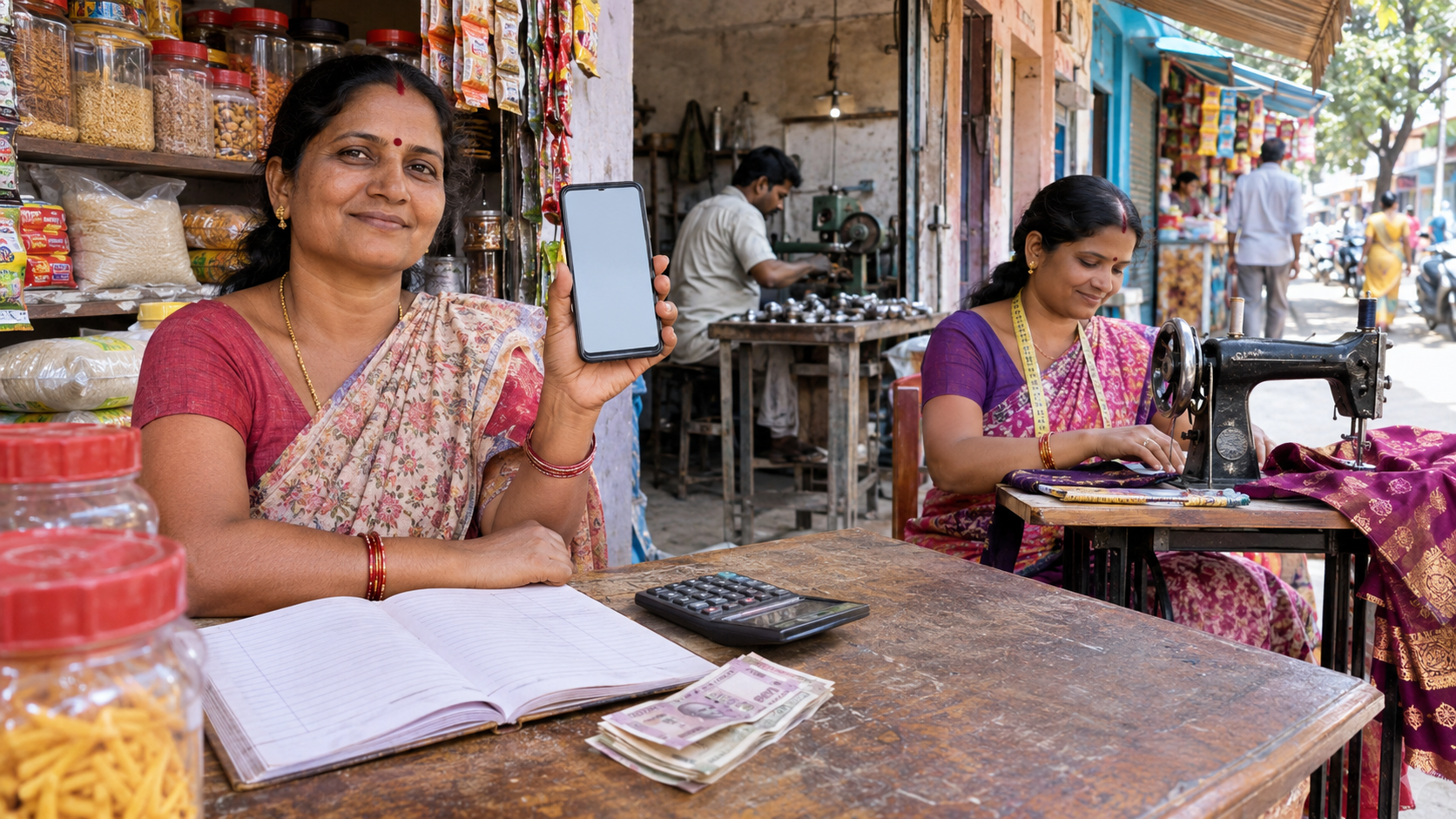
Micro entrepreneurs account for nearly half of India’s commercial credit portfolio, but strong individual credit scores have yet to translate into enterprise credit visibility for millions.
Highlights:
- Credit to micro business entrepreneurs reached ₹29.6 trillion in June 2026.
- The segment represents nearly 50% of India’s commercial credit portfolio.
- Delinquency declined from 3% to 1.9% over three years.
- Around 3.9 crore individuals remain credit invisible as enterprises.
- Of these, 63% have CIBIL scores above 730.
- The figures highlight a gap between individual creditworthiness and enterprise credit access.
Credit to India’s micro business entrepreneurs reached ₹29.6 trillion in June 2026, accounting for nearly half of the country’s commercial credit portfolio. Alongside this expansion, repayment performance improved, with delinquency declining from 3% to 1.9% over three years.
The figures present an encouraging picture of a segment that forms a substantial part of commercial lending. Credit has expanded while the proportion of delinquent loans has fallen, suggesting that growth has been accompanied by better portfolio performance.
However, another set of numbers highlights a significant gap in enterprise credit visibility. Around 3.9 crore individuals lack an enterprise credit history, leaving them credit invisible as businesses despite indications of individual creditworthiness.
Among this group, 63% have a CIBIL score above 730. The supplied figures also indicate that 54% have more than two years of business-credit experience. The coexistence of credit experience and enterprise invisibility raises an important question: how effectively does an entrepreneur’s borrowing record translate into a recognised credit profile for their business?
An individual credit score and an enterprise credit history serve different purposes. A personal borrowing record can demonstrate repayment behaviour, but it does not automatically establish a separate credit track record for a business. That distinction can matter when an entrepreneur seeks financing for expansion, equipment or working capital.
The data therefore point to two different developments within India’s micro business credit market. Existing lending has reached a considerable scale, and portfolio quality has improved. At the same time, millions of entrepreneurs remain outside the pool of businesses with an established enterprise credit history.
Being credit invisible as an enterprise does not necessarily mean an individual has never borrowed or has been refused a loan. It does, however, indicate a gap in the information available to assess the business as a borrowing entity.
For lenders, the opportunity extends beyond increasing lending to already visible enterprises. It also involves identifying entrepreneurs whose existing repayment records could support a fuller assessment of their businesses.
The next measure of progress will be whether credit expansion reaches more of these entrepreneurs. Bringing them into the enterprise credit system, while maintaining the improvement in repayment performance, would make the growth story broader and more inclusive.