Rising global prices of fertiliser raw materials and finished nutrients could push India’s subsidy bill 46% above the budget estimate in FY27.
India’s fertiliser subsidy bill could rise by 46% to approximately ₹2.5 lakh crore in FY 2026–27, compared with the budgeted amount of ₹1.71 lakh crore, due to higher global prices of raw materials and finished fertiliser products amid the West Asia conflict.
The projection was shared by the Fertiliser Association of India (FAI), which said the subsidy requirement could increase despite some correction in international fertiliser prices.
The government’s fertiliser subsidy expenditure stood at ₹1,86,460 crore in FY 2025–26. For the current financial year, the Union Budget had allocated ₹1,70,799 crore.
P&K Fertiliser Subsidy May Exceed ₹1 Lakh Crore
FAI Chairman S Sankarasubramanian estimated the total fertiliser subsidy for FY27 at around ₹2.5 lakh crore.
According to him, the subsidy requirement for phosphatic and potassic (P&K) fertilisers is expected to exceed ₹1 lakh crore, while the remaining amount would be allocated towards urea.
The projection is lower than the initial concerns following the outbreak of the West Asia conflict, when government and industry officials feared that the subsidy bill could cross ₹3 lakh crore.
Global Urea Prices Correct From Peak
International urea prices have declined from their earlier highs. Sankarasubramanian said the global price had corrected to approximately $350 per tonne from a peak of $950 per tonne.
However, higher prices of raw materials and finished nutrients continue to influence the government’s subsidy requirements.
FAI Co-Chairman Siba Prasad Mohanty also highlighted the difference between domestic production costs and international prices. The cost of producing urea in India has increased to around ₹66,000 per tonne due to expensive gas, while imported urea is available at approximately ₹35,000 per tonne.
Fertiliser Consumption May Decline
FAI expects India’s total fertiliser consumption to decline to 65–67 million tonnes in FY27, compared with 70 million tonnes in the previous fiscal year.
Sankarasubramanian attributed the expected decline partly to lower rainfall in several regions and the El Niño factor.
He said adequate stocks of urea, di-ammonium phosphate (DAP) and other nutrients were available to meet demand during the ongoing rabi sowing season.
The final requirement for urea imports will depend on domestic production over the next four months and the opening stock requirement for the following kharif season.
Urea Imports Rise 23% During April–October
FAI data showed that India’s urea imports increased by 23% to 7.2 million tonnes during April–October FY27, compared with 5.86 million tonnes in the corresponding period last year.
Total urea imports stood at 10.35 million tonnes during FY26.
Domestic urea sales declined 4% to 20.85 million tonnes during April–October, from 21.64 million tonnes in the year-ago period. Meanwhile, production increased 3% to 17.67 million tonnes.
Mixed Trends Across Fertiliser Categories
Sales performance varied across different fertiliser categories during the current fiscal year.
- DAP sales increased 1.6% up to October.
- NP/NPK fertiliser sales declined 26% to 6.65 million tonnes.
- Sales of single super phosphate (SSP) and muriate of potash (MOP) also declined.
The government has allocated ₹62,000 crore as subsidy for P&K fertilisers for the rabi season to help manage the impact of international market conditions.
FAI Calls for Nutrient-Based Subsidy for Urea
Sankarasubramanian suggested that the government extend the nutrient-based subsidy (NBS) policy to urea, similar to the framework followed for P&K fertilisers.
FAI also welcomed the government’s new urea investment policy and coal gasification scheme, expressing hope that India could become self-sufficient in urea by 2031.
During FY 2025–26, India produced 29.32 million tonnes of urea, while total sales stood at 39.64 million tonnes.
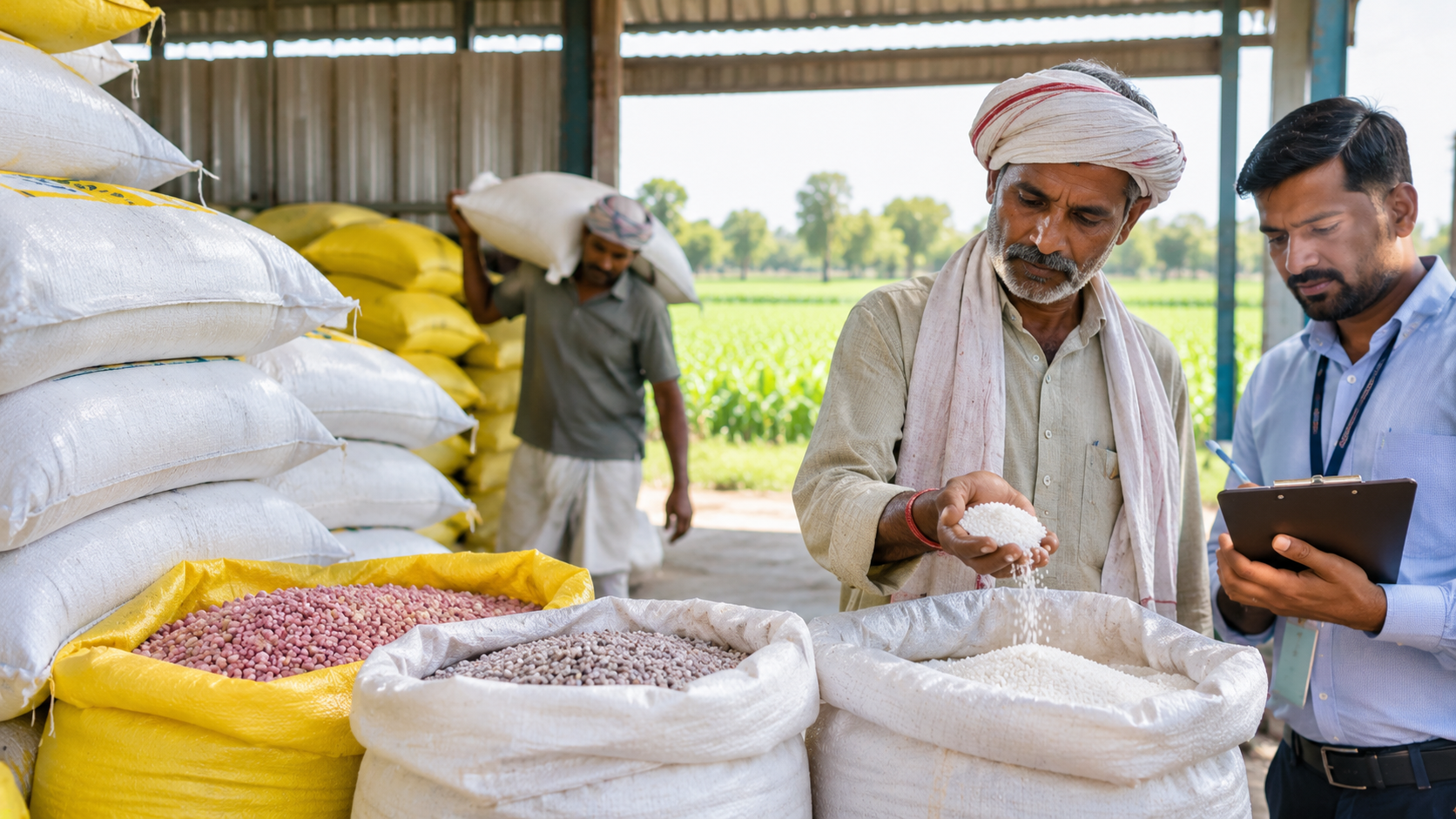
Urea is supplied to farmers at a statutorily notified maximum retail price. The MRP of a 45-kg bag is ₹242, excluding neem-coating charges and applicable taxes.
The subsidy bridges the difference between the delivered cost of urea at the farm gate and the net market realisation received by manufacturers or importers.