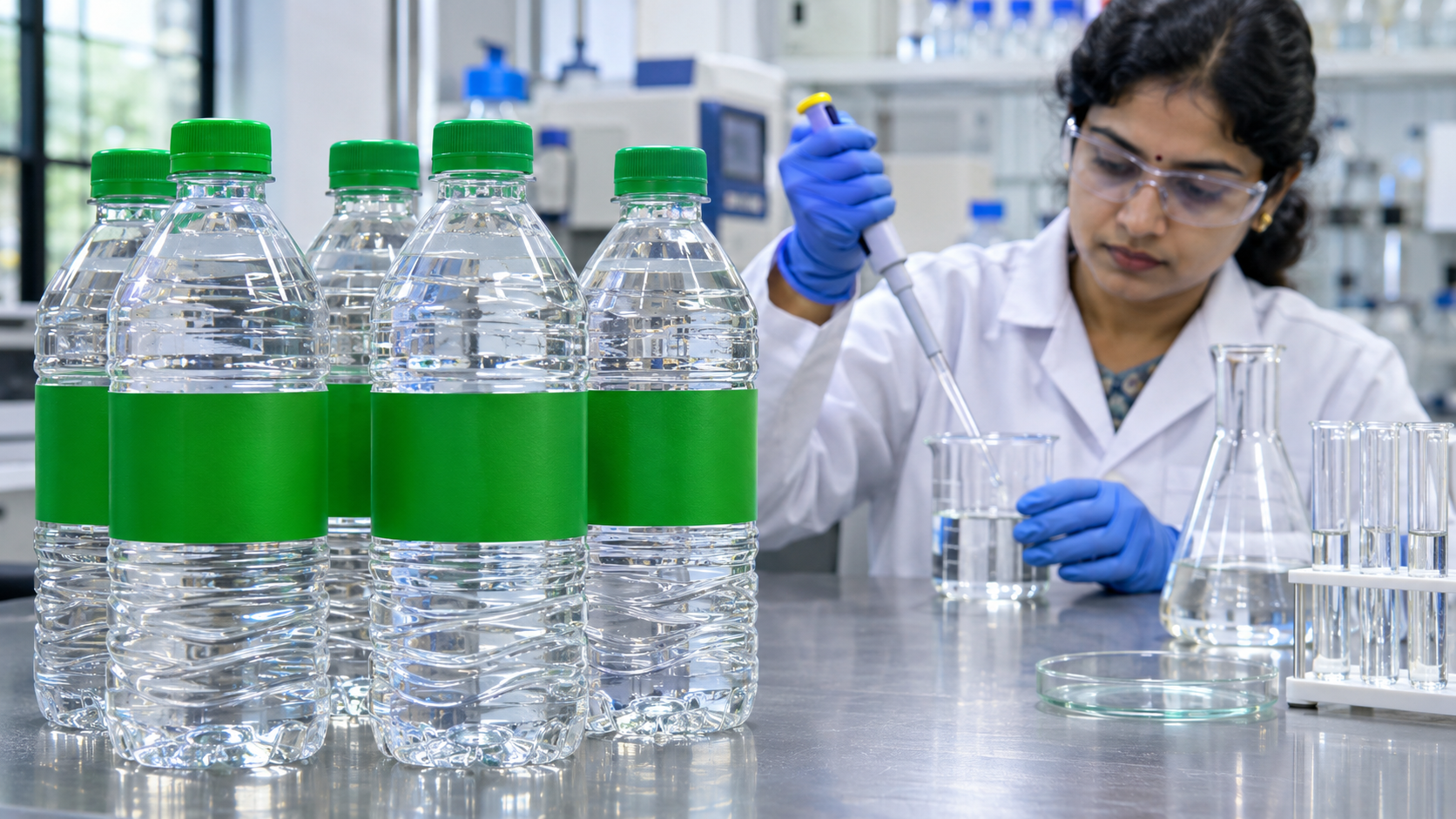
The company says subsequent tests found bromate within permitted limits, while the regulator’s referral laboratory also flagged PAHs in the disputed sample.
Highlights:
- The dispute concerns a batch produced at Bisleri’s Goa facility in September 2025.
- FSSAI sanctioned prosecution over a sample classified as unsafe, according to the report.
- Bisleri says five of six samples passed initial testing.
- The sixth sample initially recorded bromate above the prescribed limit.
- The company disputes the findings and maintains its water is safe.
Bisleri International has challenged laboratory findings behind a reported FSSAI decision to sanction prosecution over a packaged drinking water sample from its Goa facility. The company maintains that its water is safe for consumption and says subsequent testing found bromate within the permitted limit.
According to the Business Standard report, the dispute relates to a batch manufactured in September 2025. The regulatory action concerns a specific sample; the report does not describe a finding covering all Bisleri products.
What the tests found
Bisleri said FSSAI collected six samples from its Goa manufacturing facility on September 30, 2025. According to the company, five complied with the applicable standards, while one recorded bromate at 12 micrograms per litre against a permitted maximum of 10 micrograms per litre.
The company said it appealed the initial result on November 22, 2025, after which the sample was referred to another laboratory for testing.
The referral laboratory found bromate within the prescribed limit but detected polycyclic aromatic hydrocarbons, or PAHs, according to the company’s account. The report states that the regulator cited the PAH finding when describing the sample as unsafe.
Bisleri said it subsequently commissioned independent testing of the same sample at an FSSAI-approved laboratory. That test also found bromate within the prescribed limit, the company stated.
However, the reported independent result on bromate does not establish that the separate PAH finding was overturned. The two findings concern different substances and need to be assessed separately.
Company cites correspondence and quality controls
Bisleri said it submitted the independent laboratory results to FSSAI’s Western Regional Office through a letter dated February 2, 2026. It claimed that no further communication followed and that it consequently understood the matter to have been closed.
The company also said it had not received the reported notice by email or in physical form and had been unable to find it on the regulator’s website.
Defending its quality controls, Bisleri said its manufacturing process includes more than 90 tests across 10 stages. It added that it would cooperate with FSSAI through the regulatory process.
The positions remain disputed: the regulator’s reported action rests on an unsafe-sample finding, while Bisleri contests the laboratory conclusions and cites subsequent bromate results in its defence. Sanctioning prosecution allows legal proceedings to move forward; it does not itself amount to a court conviction.