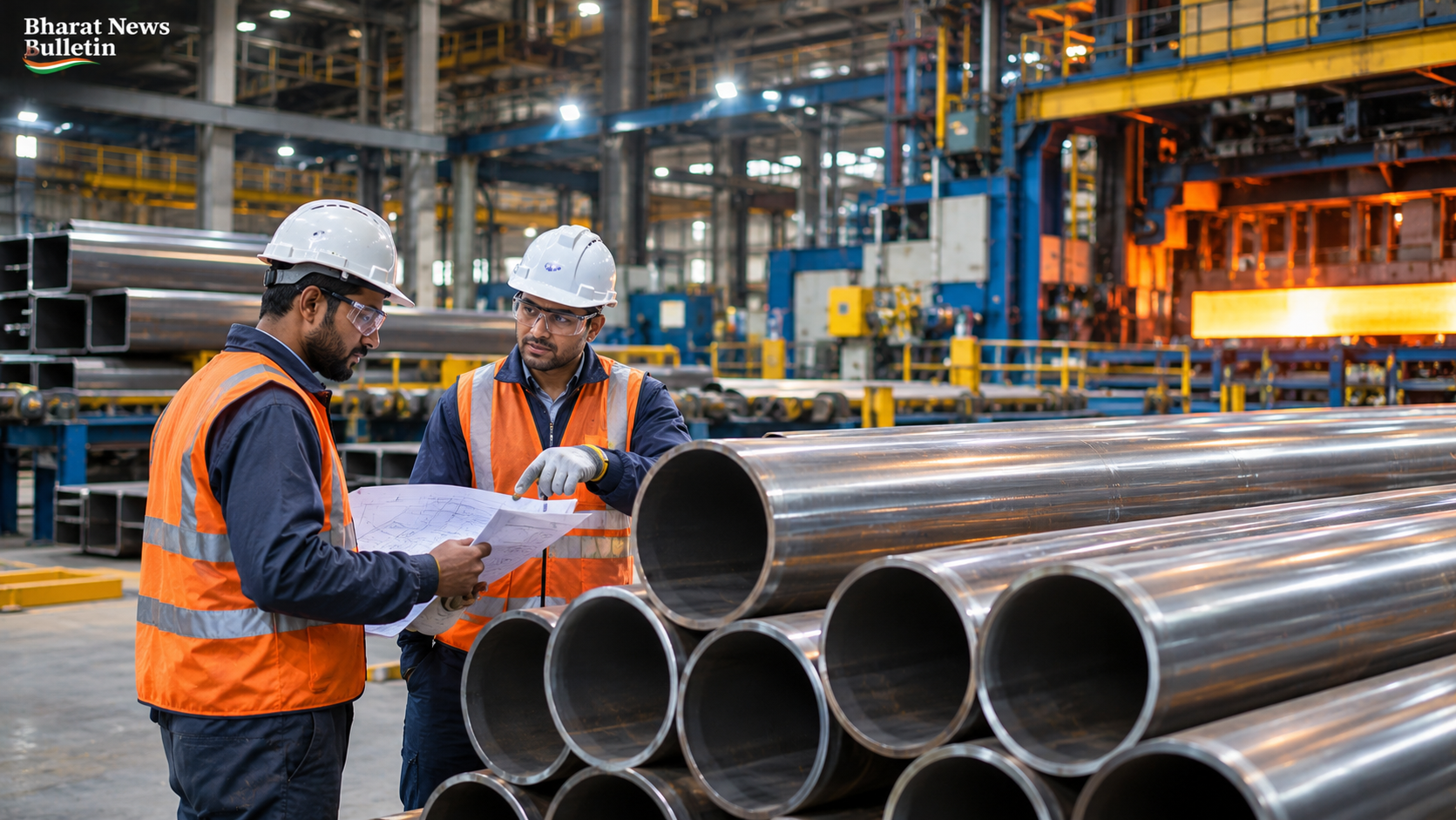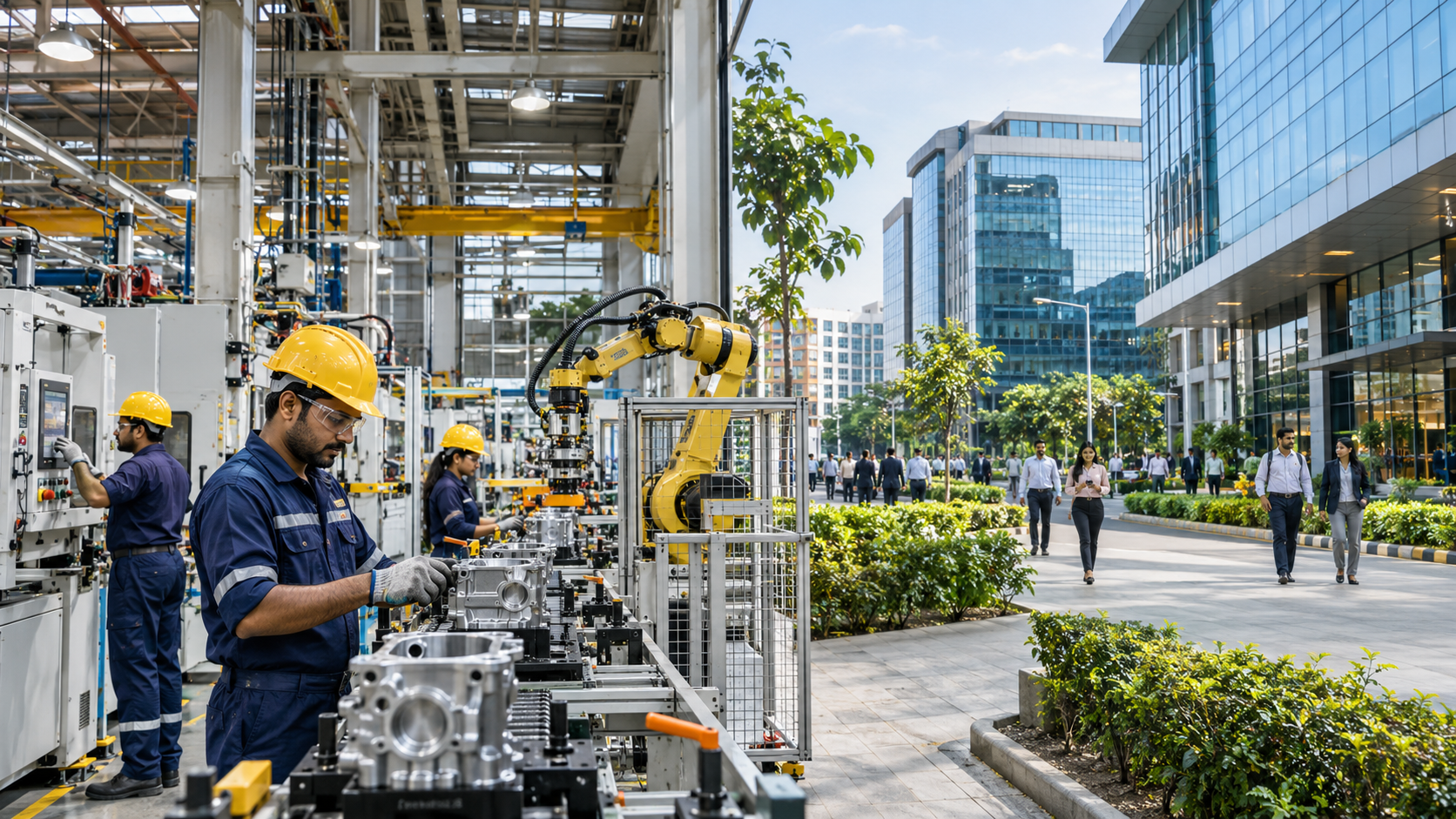
Factory activity strengthened on rising domestic orders, while services firms reported slower growth and a marginal decline in employment.
Highlights:
- Composite PMI edged up to 56.3 from October’s 56.2.
- Manufacturing PMI reached a nine-month high of 56.0.
- Services activity index slipped to 55.3 from 55.8.
- New business grew at its fastest pace since June.
- Factory hiring accelerated, while services employment declined slightly.
- Business confidence improved to its strongest level since May.
India’s private sector expanded at a slightly faster pace in November, with stronger manufacturing activity making up for slower growth in services. The HSBC Flash India Composite Purchasing Managers’ Index rose to 56.3 from 56.2 in October, according to the report supplied.
The preliminary survey showed a clearer improvement in factories. Manufacturing PMI climbed to 56.0 from 54.7, its highest reading in nine months. The manufacturing output index also increased, reaching 58.3 against 57.0 a month earlier.
Services businesses continued to expand, although their activity index eased to 55.3 from October’s 55.8. A PMI reading above 50 indicates growth compared with the previous month; a reading below that threshold signals contraction. The figures therefore point to continued expansion across both sectors, despite their differing momentum.
Stronger demand supported the overall performance. Total new business increased at the quickest pace since June, helped by an acceleration in manufacturing orders. Services firms recorded an unchanged rate of growth in new business. Companies linked higher sales to favourable demand conditions and the addition of customers.
Overseas business also improved across the private sector, with export orders growing at their fastest rate in four months. Manufacturers continued to report stronger international sales growth than services companies, although their pace moderated. Services exporters, meanwhile, recorded an acceleration.
The employment picture was mixed. Factory hiring gathered pace to a seven-month high, but services companies reduced staffing slightly—their first decline in close to a year. As a result, total private sector employment increased only marginally.
Capacity pressures remained limited. Outstanding work declined for a second consecutive month as services firms reduced unfinished business. Manufacturers, however, reported a small rise in pending orders.
Input costs increased only slightly in both sectors. Companies raised selling prices faster than in October, although the overall increase remained modest against the survey’s historical trend.
HSBC chief India economist Pranjul Bhandari attributed manufacturing’s improvement to stronger output and new orders, particularly from domestic customers. Services activity softened despite an improvement in overseas business.
Looking ahead, business confidence rose to its highest level since May, with manufacturers and services firms both becoming more optimistic. Sentiment nevertheless remained below its long-term average.
Manufacturers also stepped up input buying at the fastest pace since May. Stocks of purchased inputs increased at a nine-month high, while finished-goods inventories recorded their largest rise since the survey began in March 2005.