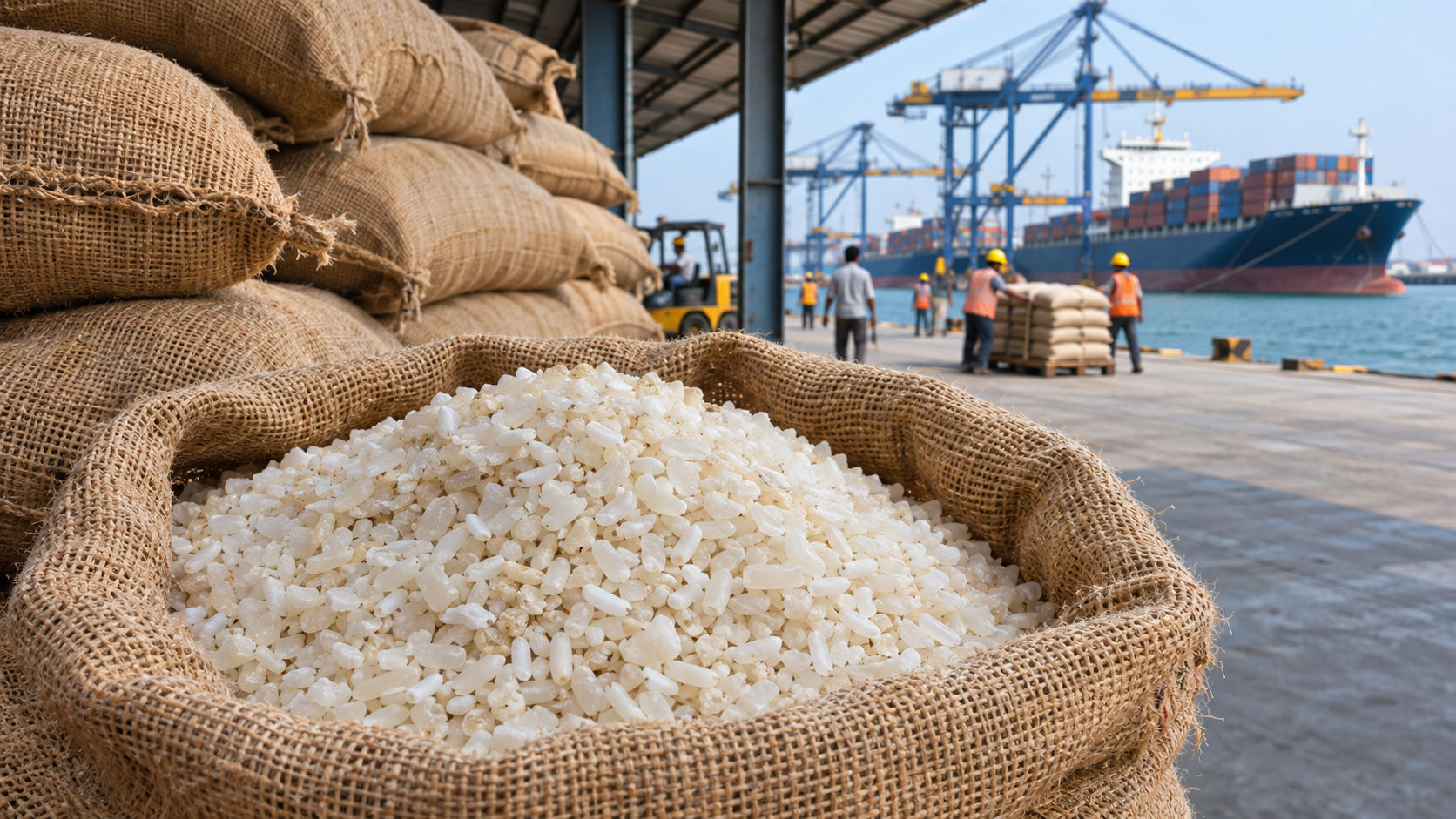
Senegal sourced nearly 29% of its broken rice imports from India in 2025. Exporters have warned of possible curbs as domestic prices rise, but New Delhi has announced no fresh restrictions.
Highlights
- India’s last verified trade notification moved broken rice exports from ‘Prohibited’ to ‘Free’ on March 7, 2025.
- India’s average wholesale broken rice price rose 5.3% to ₹3,036 per quintal between October 10 and November 2.
- Platts assessed Indian 100% broken white rice at $336 per tonne FOB Kakinada on November 5, up 5% from a month earlier.
- Senegal imported about 399,000 tonnes of broken rice from India in 2025. The Gambia and Côte d’Ivoire were also among India’s leading buyers.
New Delhi, November 10 — Rising broken rice prices in India are exposing West African importers to the risk of higher costs if New Delhi restricts shipments again. The Indian Rice Exporters’ Federation has warned that demand from ethanol makers and poultry-feed producers is intensifying competition for supplies. No fresh export curb has been announced, and government officials told Mint that steady paddy procurement and existing reserves were expected to meet domestic needs.
Why Senegal is exposed
Senegal imported 1.39 million tonnes of broken rice in 2025, of which about 399,000 tonnes came from India, according to UN Comtrade data accessed through the World Bank’s WITS platform. India was Senegal’s largest supplier by volume, followed by Thailand. Brazil and Pakistan also supplied sizeable quantities, giving importers alternatives if Indian shipments tighten. The Gambia and Côte d’Ivoire also bought Indian broken rice, so a supply squeeze could extend beyond Senegal.
Competition for lower-cost rice was already building before the latest talk of curbs. The US Department of Agriculture reported that Senegal’s broken rice imports fell 35% in the first half of 2026 from a year earlier, as stronger demand from buyers including China and the Philippines added to global price pressure. If Indian supply tightens, West African importers may have to compete more aggressively for cargoes from other origins.
India moves to bolster domestic supply
India banned broken rice exports in September 2022 and reopened them on March 7, 2025. This time, the measures announced on November 6 focus on the domestic market. The government made weekly stock disclosures mandatory for rice and paddy businesses and doubled its open-market rice sales target from 25 lakh to 50 lakh tonnes for 2026–27. It said 25 lakh tonnes had already been sold through e-auctions by October 31.
For importers with contracts already signed, the question is whether any future restriction would exempt committed shipments. The exporters’ federation has called for transition arrangements to protect existing contracts if the government intervenes. For now, buyers are dealing with higher prices while the last verified export policy keeps trade open.