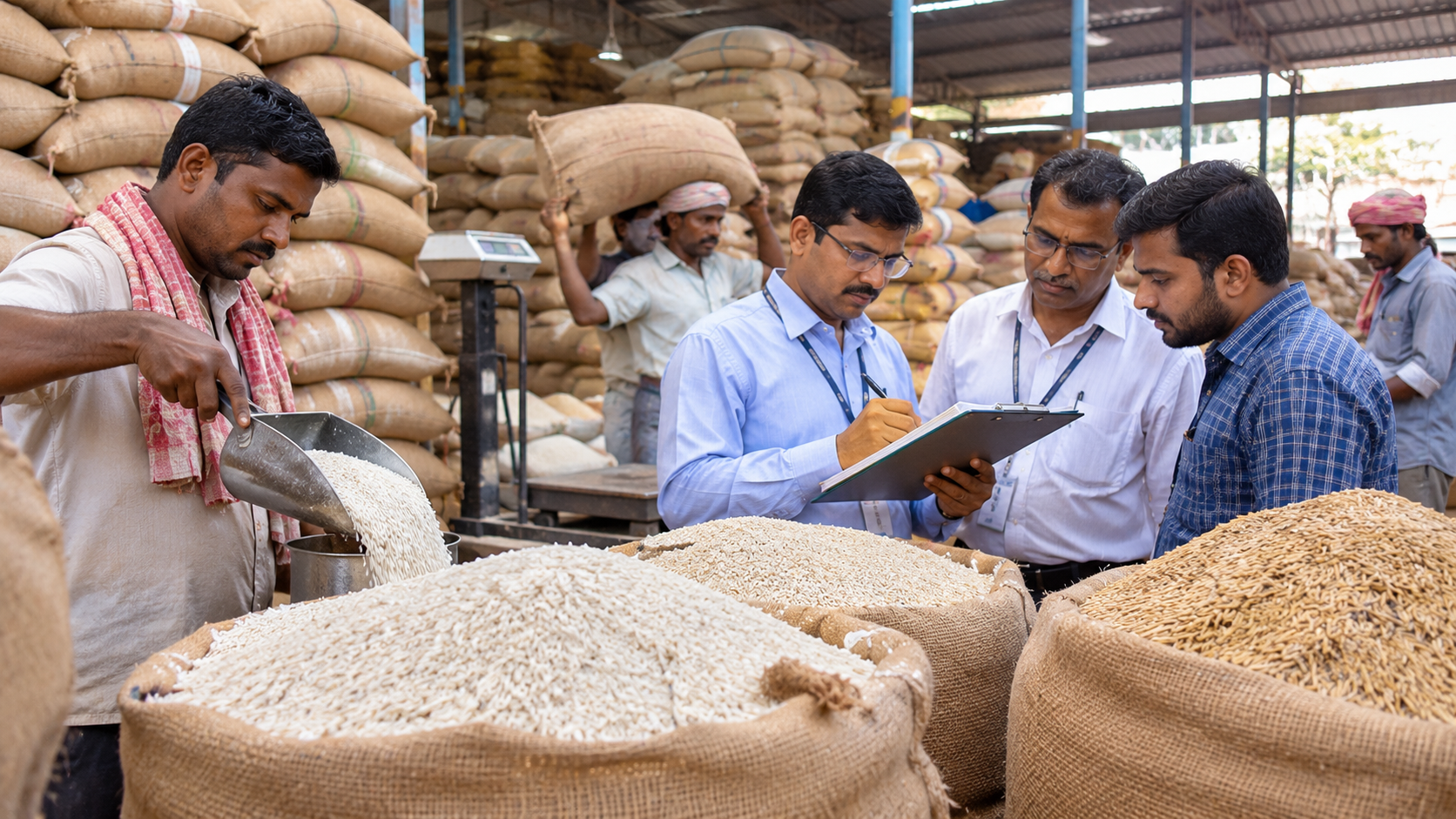
Centre Orders Mandatory Rice, Paddy Stock Declaration as Prices Rise
The Centre has directed traders, retailers, wholesalers, processors and millers across India to declare their rice and paddy stocks every Friday. Five southern states have also been allowed to impose stock limits as the government moves to curb hoarding amid rising rice prices.
New Delhi, November 6 — The Central government has made declaration of rice and paddy stocks mandatory across the country amid rising prices following deficient and uneven monsoon rainfall.
Under an order issued on November 6, traders, wholesalers, retailers, large retail chains, processors and millers in all states and Union Territories will have to declare the stocks held by them.
The disclosure requirement covers six categories — Basmati rice, non-Basmati premium rice, non-Basmati rice, parboiled rice, broken rice and paddy.
Every unit holding stocks will be required to update the details on the government’s Food Stock Portal every Friday.
Entities that fail to register on the portal or violate applicable stock limits could face action under Sections 6 and 7 of the Essential Commodities Act, 1955.
Five states allowed to impose stock limits
In a separate move, the Centre has allowed Andhra Pradesh, Karnataka, Kerala, Tamil Nadu and Telangana to impose stock limits on rice and paddy through control orders.
These limits will remain effective until January 31, 2027.
The Centre and state governments will monitor implementation to ensure adequate supplies and prevent hoarding and black marketing.
The government is also increasing rice availability through other channels.
Additional stocks are being allocated to NAFED, NCCF and Kendriya Bhandar for sale under the Bharat Rice initiative, with a particular focus on southern states.
The government has also doubled its rice sales target under the Open Market Sale Scheme (Domestic) for 2026-27 from 25 lakh tonnes to 50 lakh tonnes.
Around 25 lakh tonnes had already been sold to private parties by October 31, compared with 11 lakh tonnes during the same period last year.
Retail rice inflation hits 8.25%
The measures come as rice prices rise in several markets.
Retail rice inflation increased to 8.25% year-on-year in September from 5.89% in August, while the average retail price reached around ₹48.23 per kg, about 12% higher than a year earlier.
Premium southern varieties have witnessed sharper increases. Wholesale Sona Masoori prices reached ₹65–70 per kg, compared with around ₹50 a month earlier.
Kharif paddy acreage for 2026-27 declined by around 4% to 42.68 million hectares amid deficient rainfall.
Trade estimates put India’s rice production at around 147 million tonnes in 2026-27, down from a record 154 million tonnes in 2025-26.
Experts, however, said the situation does not amount to a nationwide shortage, as government rice stocks remain at comfortable levels.