Electric vehicle sales in India surged nearly 45% year-on-year to a record 3.55 lakh units in October 2026, led by strong growth in electric two-wheelers and passenger vehicles. Overall EV penetration increased to around 11.5%, compared with about 6% a year earlier.
Mumbai, November 6 — India’s electric vehicle (EV) market recorded its highest-ever monthly retail sales in October, with volumes jumping nearly 45% year-on-year as consumers increasingly shifted towards cleaner mobility options.
According to data released by the Federation of Automobile Dealers Associations (FADA), total EV retail sales increased to 3,54,625 units in October 2026, compared with 2,44,764 units in October 2025.
Electric two-wheelers lead growth
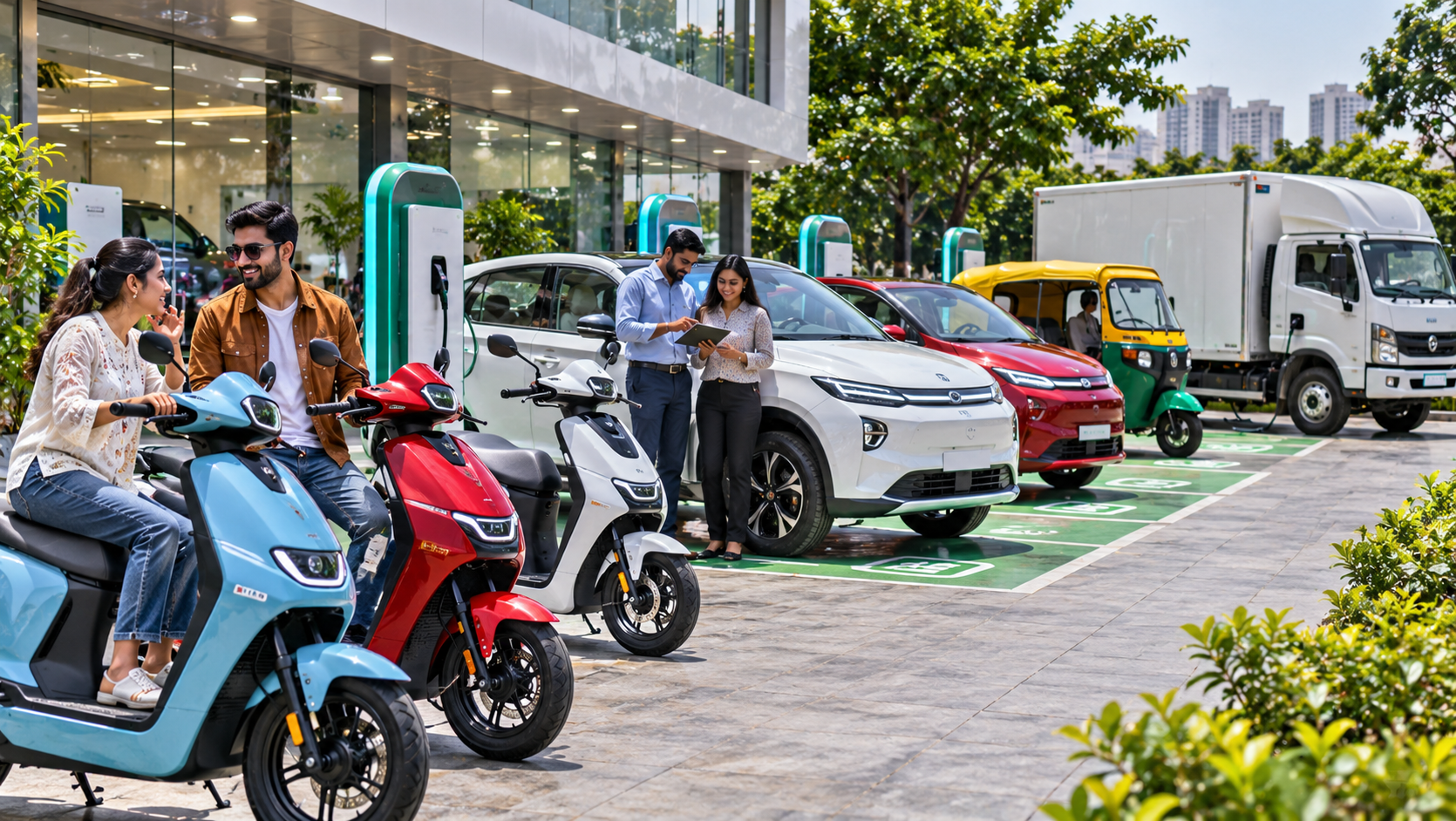
Electric two-wheelers remained the biggest contributor, with sales rising 48.49% to 2,24,064 units, compared with 1,50,890 units in October last year.
The segment’s market share more than doubled to 9.7% from 4.7% a year earlier.
Electric passenger vehicles recorded even faster growth.
Sales of electric cars and other passenger vehicles surged 76.47% to 37,049 units, against 20,995 units in October 2025.
Their market share increased to 7.3% from 3.5% during the same period.
E-commercial vehicle sales more than double
Electric three-wheeler sales increased 24.76% year-on-year to 88,570 units, compared with 70,995 units in the corresponding month last year.
Meanwhile, electric commercial vehicle sales jumped to 4,492 units from 1,884 units, indicating strong growth in electrification beyond personal mobility.
FADA President Sai Giridhar said overall EV retail sales touched an all-time high of about 3.55 lakh units, lifting EV penetration to approximately 11.5% from around 6% a year earlier.
October was also the best-ever month for electric two-wheelers, three-wheelers, passenger vehicles and commercial vehicles, according to FADA.
EV demand begins to outpace supply
FADA said consumer demand ran ahead of supply during the month.
Higher petrol and diesel prices, improvements in electric vehicle driving range, and EV prices increasingly becoming comparable with equivalent petrol and diesel models have strengthened consumer interest.
Availability, rather than demand, is now becoming a key constraint in parts of the EV market, according to the industry body.
Three-wheelers are particularly advanced in the transition, with nearly 63% of the segment now electric.
FADA also noted that consumers are increasingly moving towards CNG, hybrid and electric vehicles, with alternative fuels once again exceeding petrol’s share in the passenger vehicle mix.
The October numbers indicate that India’s shift towards electric mobility is broadening across vehicle categories as EV technology, pricing and consumer acceptance continue to improve.