The Centre has introduced provisions for E85 and E100 ethanol fuels under the Central Motor Vehicles Rules, opening the door for automakers to develop vehicles capable of running on high-ethanol blends.
Highlights
- Government amends Central Motor Vehicles Rules to recognise E85 and E100 fuels.
- New provisions pave the way for E100-compatible cars in India.
- Regular petrol and E20 vehicles cannot use E85 or E100 fuel.
- Higher ethanol blends require specially designed and certified vehicles.
- Move expected to encourage automakers to develop flex-fuel models.
- Ethanol adoption could help reduce India’s dependence on imported crude oil.
Government Approves E100 Ethanol Fuel, Paving Way for Cars Running on Nearly 100% Ethanol
New Delhi, October 26, 2026: The Central Government has amended the Central Motor Vehicles Rules, 1989, to allow the use of E100 ethanol fuel in specially designed flex-fuel vehicles. The move clears an important regulatory hurdle for automobile manufacturers planning to introduce vehicles capable of running on nearly 100% ethanol.
The Ministry of Road Transport and Highways (MoRTH) issued the notification dated October 23, 2026, incorporating E100 alongside E85 in provisions related to vehicle emission standards and certification requirements. The amendments came into effect following publication in the Official Gazette on October 26.
What Is E100 Fuel?
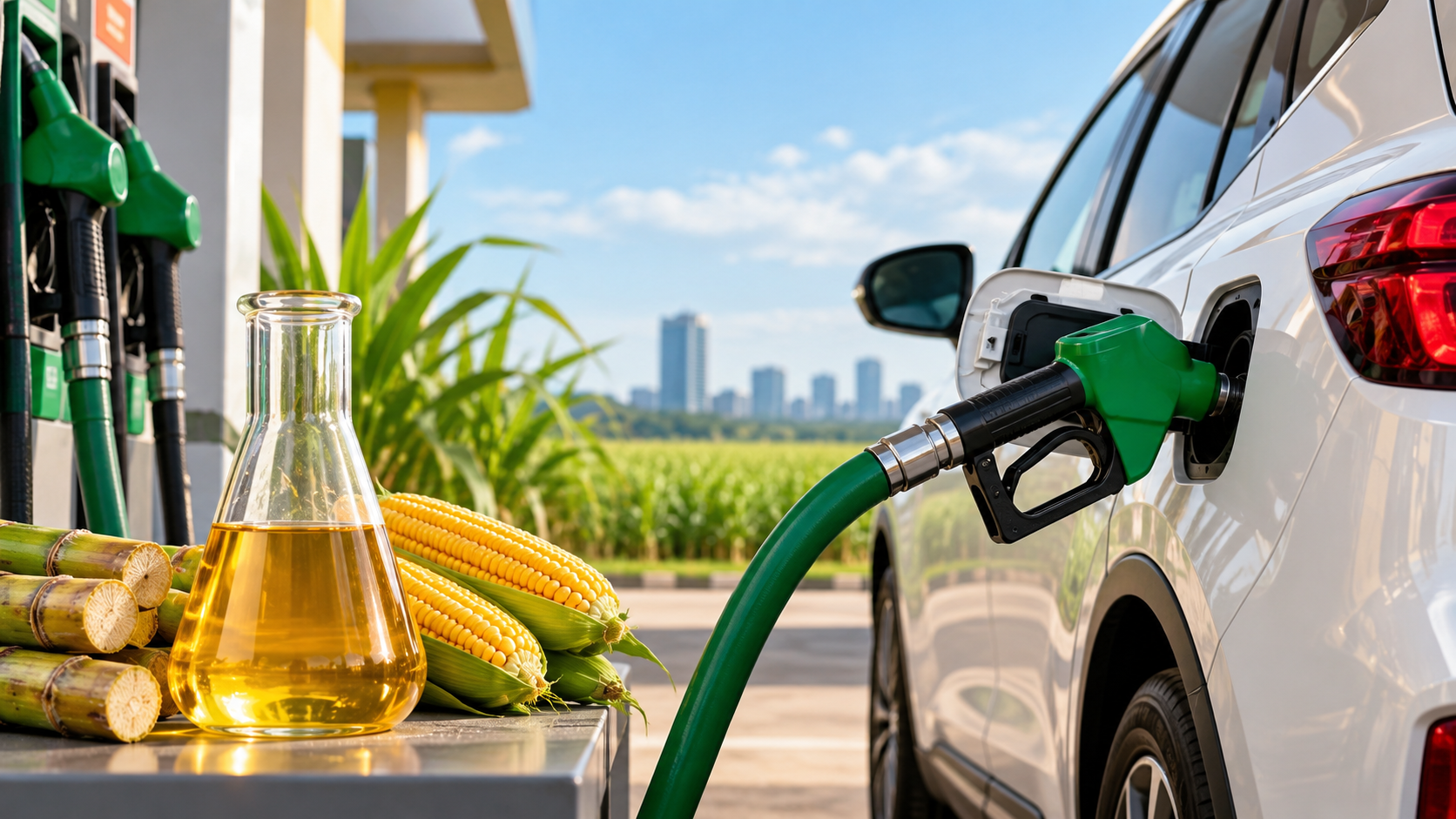
E100 is a fuel consisting predominantly of ethanol, while E85 contains up to 85% ethanol mixed with petrol. Ethanol is a renewable fuel that can be produced from agricultural feedstocks, including sugarcane and maize.
Flex-fuel vehicles are specially engineered to operate on different combinations of petrol and ethanol. Their engines and fuel systems are designed to handle higher ethanol concentrations, allowing drivers to use compatible fuels according to the manufacturer’s certification.
Can Existing Petrol Cars Use E100?
The government has clarified that E85 and E100 fuels can only be used in vehicles specifically designed and certified by automobile manufacturers.
Regular petrol cars and vehicles compatible only with E20 fuel cannot use E85 or E100. The new notification also does not require existing vehicle owners to modify their engines or switch to higher ethanol blends.
Vehicle owners must follow the fuel compatibility information provided by their manufacturers.
What Changes for Car Manufacturers?
The revised regulations provide a framework for automakers to develop, test and certify E100-compatible vehicles in India.
The government has also increased the gross vehicle weight threshold in the relevant emission standards from 3,000 kg to 3,500 kg, alongside other technical amendments.
Why Is the Government Promoting Ethanol?
The move is part of India’s broader strategy to reduce dependence on imported crude oil and promote domestically produced alternative fuels.
Greater ethanol use could support the agricultural and biofuel sectors while helping reduce certain vehicle emissions. However, the overall environmental benefits depend on ethanol production methods and feedstocks.
Although the regulatory pathway is now open, the government has not announced a nationwide timeline for E100 availability at fuel stations. The commercial introduction of E100-compatible cars will depend on manufacturers and fuel distribution infrastructure.
Press Information Bureau