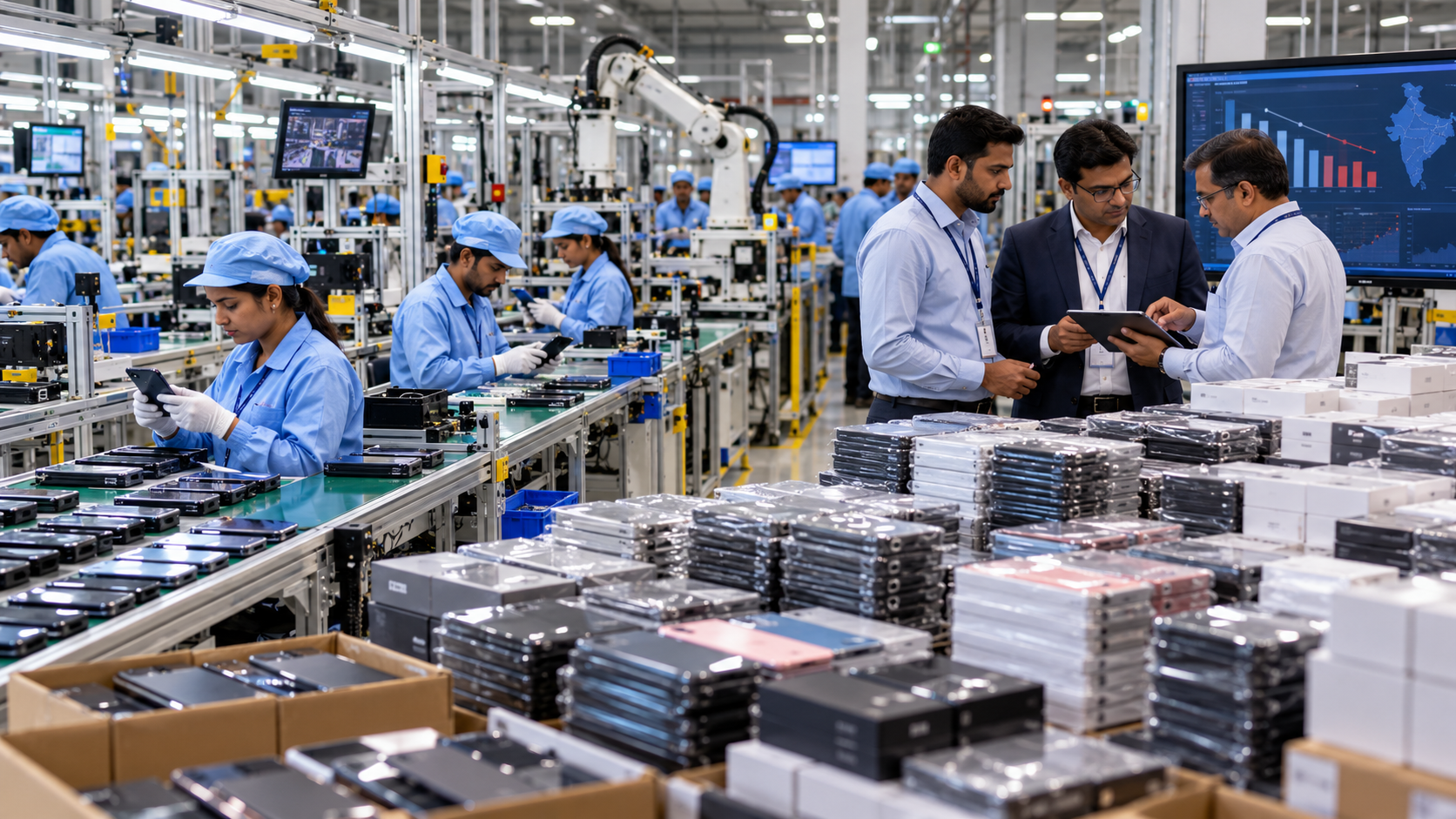
Weak smartphone sales, high inventories and uncertainty around global tariffs could slow applications for India’s proposed Mobile PLI 2.0 scheme, as some manufacturers may struggle to meet the required turnover and production thresholds.
Mumbai — A slowdown in India’s smartphone market could create challenges for the government’s next-generation mobile manufacturing incentive scheme, with weaker sales and elevated inventory levels potentially limiting the number of companies eligible to apply.
The proposed Mobile PLI 2.0 framework is aimed at expanding India’s electronics manufacturing ecosystem beyond basic handset assembly and encouraging greater localisation of components, design and research.
However, subdued smartphone demand has raised concerns about whether manufacturers will be able to meet the scheme’s eligibility requirements.
According to the report, the proposed programme currently aims to support companies with at least ₹10,000 crore of turnover in FY26.
Industry participants have warned that softer sales volumes and excess inventories could make this threshold difficult for some manufacturers to achieve.
The pressure comes at a time when smartphone demand has moderated and companies are also facing uncertainty from global tariff developments and changing international supply chains.
Manufacturers participating in the existing incentive framework have already expanded local production considerably, but the proposed new scheme is expected to focus more heavily on creating a deeper domestic supply chain.
This could include incentives for local manufacturing of key sub-assemblies, Indian design capabilities and research and development.
The objective is to reduce India’s dependence on imported components while increasing the value added within the country.
Industry representatives, however, believe the eligibility criteria may need to be reassessed if market conditions remain weak.
A sharp fall in volumes could particularly affect companies that depend heavily on domestic smartphone sales to meet revenue thresholds.
The report also notes that maintaining production growth while demand remains soft could worsen inventory levels, making manufacturers cautious about expanding output simply to qualify for incentives.
At the same time, the government wants the next phase of its electronics policy to encourage companies to move into higher-value activities rather than focusing only on final assembly.
The proposed scheme is therefore expected to place greater emphasis on components, sub-assemblies, product engineering and local technology development.
The final level of participation will depend on how eligibility rules are structured and whether smartphone demand recovers before applications are invited.