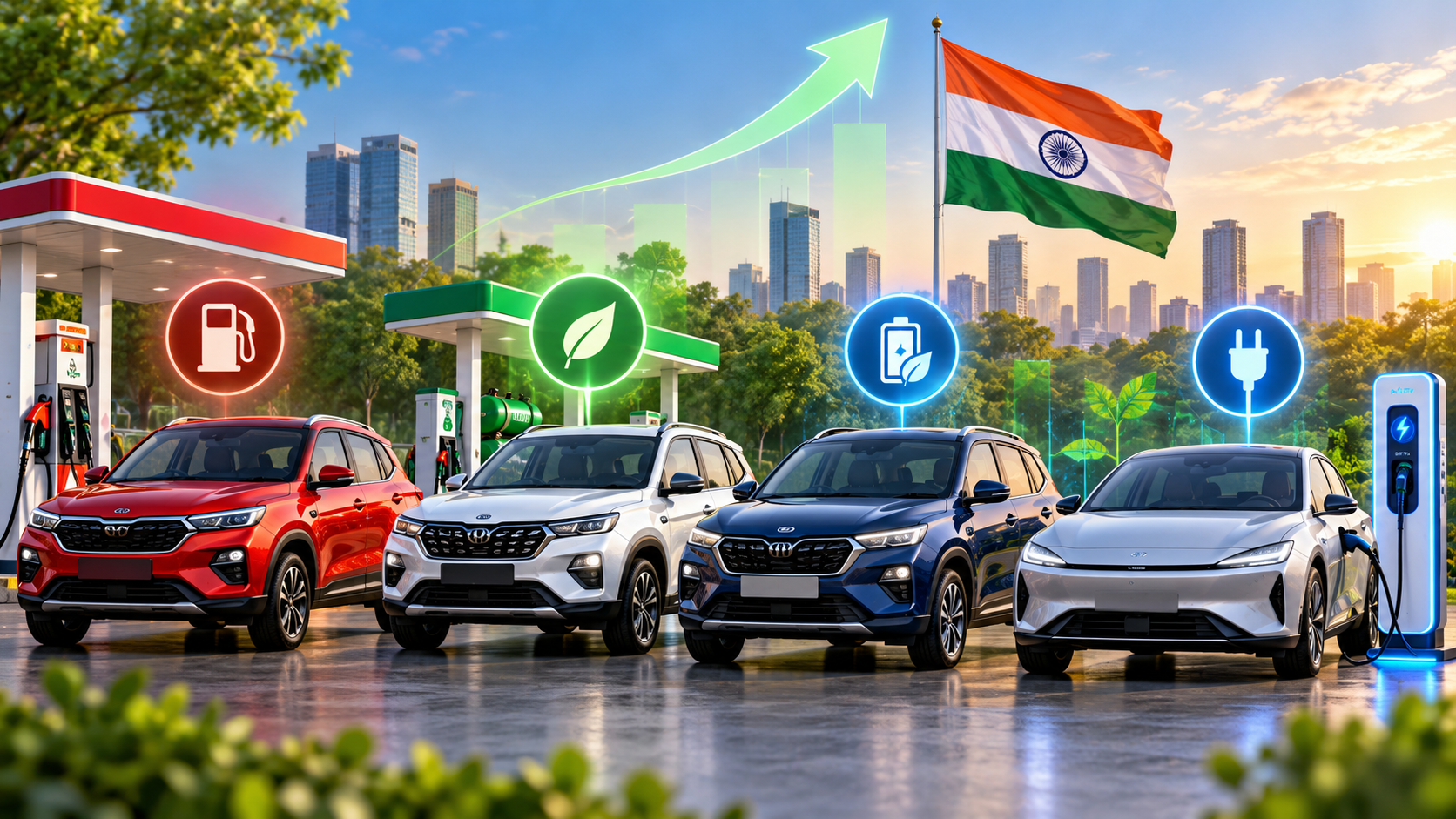
Automakers including Maruti Suzuki, Hyundai, Tata Motors, Mahindra, Renault and Stellantis are expanding petrol, CNG, hybrid and electric vehicle options to attract buyers and meet changing market demands.
Highlights
- Indian automakers are moving towards multi-powertrain strategies amid rising fuel prices and stricter emission regulations.
- Petrol vehicle market share declined to 41% in September 2026 from 47% a year earlier.
- CNG vehicles gained popularity, with their market share rising from 30% to 35%.
- Hybrid and electric vehicle share increased to 19%, compared with 13% in September 2025.
Carmakers Gear Up to Give New Models a Multi-Powertrain Edge as Fuel Prices Rise
New Delhi, October 20: India’s automobile manufacturers are increasingly adopting multi-powertrain strategies as rising fuel prices, changing consumer preferences and stricter emission regulations reshape the passenger vehicle market.
Leading carmakers are preparing to offer multiple fuel and powertrain options, including petrol, compressed natural gas (CNG), hybrid and electric variants, across their vehicle portfolios.
According to a Business Standard report dated October 19, manufacturers believe offering different powertrain choices will help attract a wider range of customers while reducing dependence on conventional petrol vehicles.
Petrol Cars Lose Market Share
The shift towards alternative fuels is already visible in India’s passenger vehicle sales data.
Petrol-powered cars accounted for 41% of total sales in September 2026, compared with 47% during the same month last year.
Meanwhile, CNG vehicle market share increased to 35% from 30%, reflecting growing demand for more economical transportation options.
Hybrid and electric vehicles also gained traction, with their combined market share rising to 19% from 13% a year earlier.
These figures indicate a gradual shift in consumer preferences towards vehicles offering lower running costs and improved fuel efficiency.
Renault Expands Alternative Powertrain Strategy
Renault India is among the manufacturers planning to strengthen its alternative fuel portfolio.
The company currently offers CNG options across a significant portion of its vehicle lineup and aims to expand alternative powertrain coverage to more than 80% over the next few years.
Renault executives believe customers increasingly prefer vehicles that provide greater flexibility in fuel choices.
The company is also preparing new products and technologies to address evolving market requirements.
Stellantis Plans Multiple Fuel Options
Stellantis is also exploring a broader range of powertrain technologies for the Indian market.
The automaker is evaluating CNG, hybrid and electric vehicle options across its platforms to provide customers with greater choice.
Its strategy focuses on developing vehicles capable of supporting different powertrain technologies while maintaining cost competitiveness.
Industry executives believe multi-powertrain platforms could help manufacturers respond more effectively to changing regulations and consumer demand.
Volkswagen and Mahindra Explore New Technologies
Volkswagen is evaluating alternative fuel technologies, including CNG and hybrid systems, for its future vehicle portfolio.
Mahindra, meanwhile, continues to explore different powertrain technologies while expanding its electric vehicle offerings.
Manufacturers are also considering how hybrid technologies could improve fuel efficiency without requiring customers to depend entirely on charging infrastructure.
Stricter Emission Norms Drive Industry Changes
India’s evolving emission regulations are another major factor influencing automakers’ product strategies.
Manufacturers are working to reduce vehicle emissions while maintaining performance, affordability and fuel efficiency.
Multi-powertrain platforms allow companies to introduce different technologies across the same vehicle architecture, potentially reducing development costs and improving manufacturing flexibility.
For consumers, the transition could mean more choices across price segments, from affordable CNG vehicles to premium hybrids and electric cars.
As India’s automobile market evolves, manufacturers offering a wider range of fuel-efficient and low-emission vehicles could gain a competitive advantage.