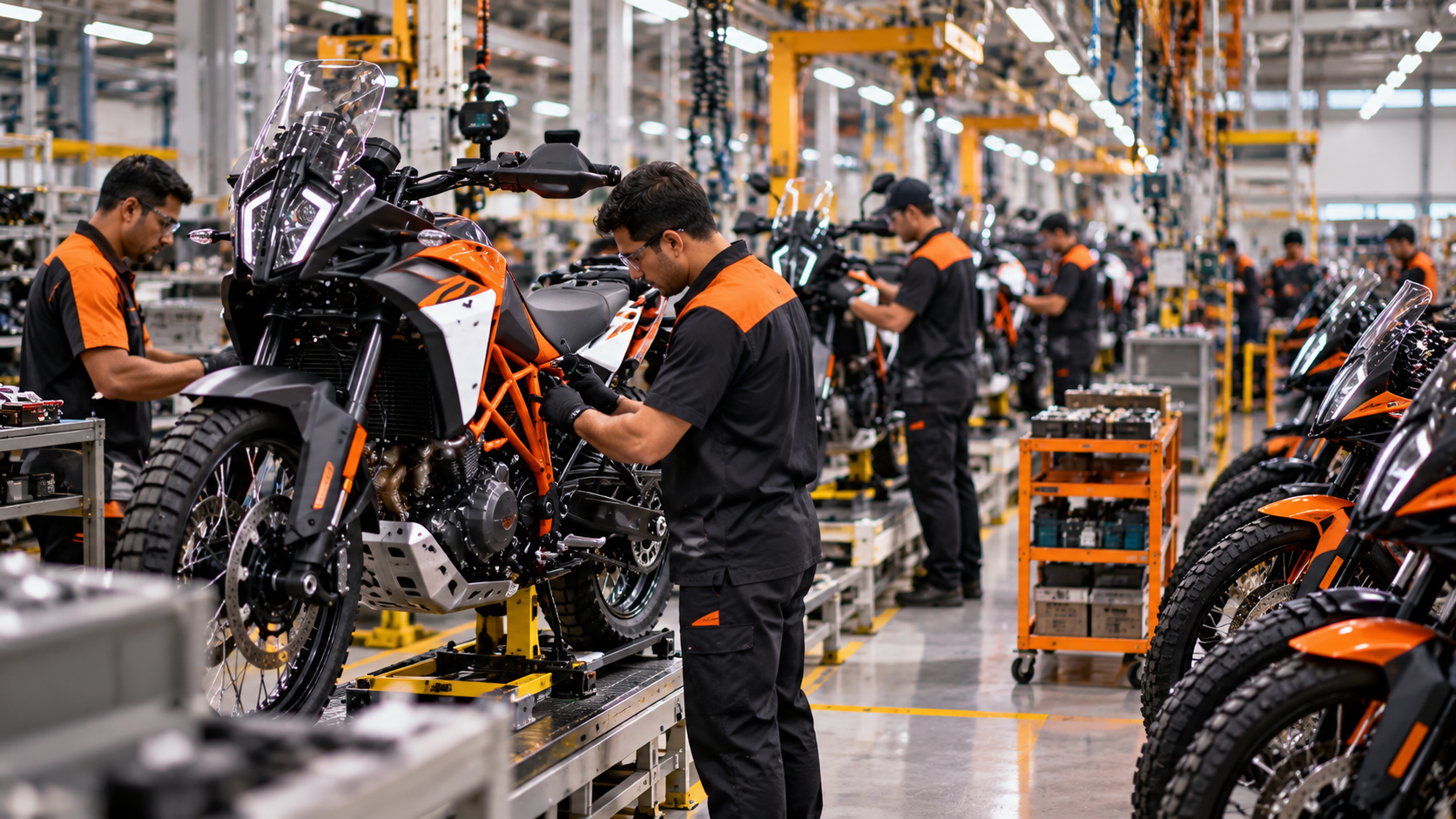
Bajaj Auto-owned Austrian motorcycle brand KTM has opened a new assembly plant in Manaus, Brazil, with an annual installed capacity of 20,000 motorcycles, strengthening its manufacturing presence in the country.
New Delhi, October 17 — KTM, the Austrian motorcycle brand owned by Bajaj Auto, has opened a new completely knocked-down (CKD) assembly plant in Manaus, Brazil, with an annual installed capacity of 20,000 motorcycles.
The facility will be dedicated exclusively to the KTM and Husqvarna brands and will assemble 10 motorcycle models across the motocross, enduro and adventure segments.
The company said the plant opening is part of the reorganisation of KTM and Husqvarna operations in Brazil.
KTM plans to assemble around 3,500 units by the end of 2026 and scale up production further next year.
The company has invested around 20 million Brazilian Reais in facilities and equipment for the new plant.
KTM has been assembling motorcycles in Manaus since 2016 through a partnership with Dafra Motos. With the new facility, the company now has an independent industrial operation dedicated entirely to KTM and Husqvarna products.
The plant will manufacture motorcycles ranging from off-road competition models to adventure-touring bikes.
Rakesh Sharma, Joint Managing Director of Bajaj Auto, said Brazil is an important market in the global portfolios of both Bajaj and KTM.
He said locating the KTM facility alongside Bajaj Auto’s plant in Manaus reflects the group’s commitment to the Brazilian market.
Among the motorcycles to be assembled at the plant are the KTM 250 SX-F and KTM 450 SX-F in the motocross category.
The enduro line-up will include the KTM 250 EXC-F, 350 EXC-F 6DAYS, 300 EXC and 300 EXC 6DAYS.
The plant will also produce the new KTM 390 Adventure R and KTM 390 Adventure X, along with Husqvarna’s FE 350 and TE 300 PRO.
KTM currently has an authorised sales and service network across 12 locations in Brazil and plans to expand it to 30 outlets by 2027.
The new Manaus facility gives KTM greater control over production in Brazil and supports its plan to expand both manufacturing and retail operations in the Latin American market.