Brands Target ₹500 Crore GrowthKey Highlights
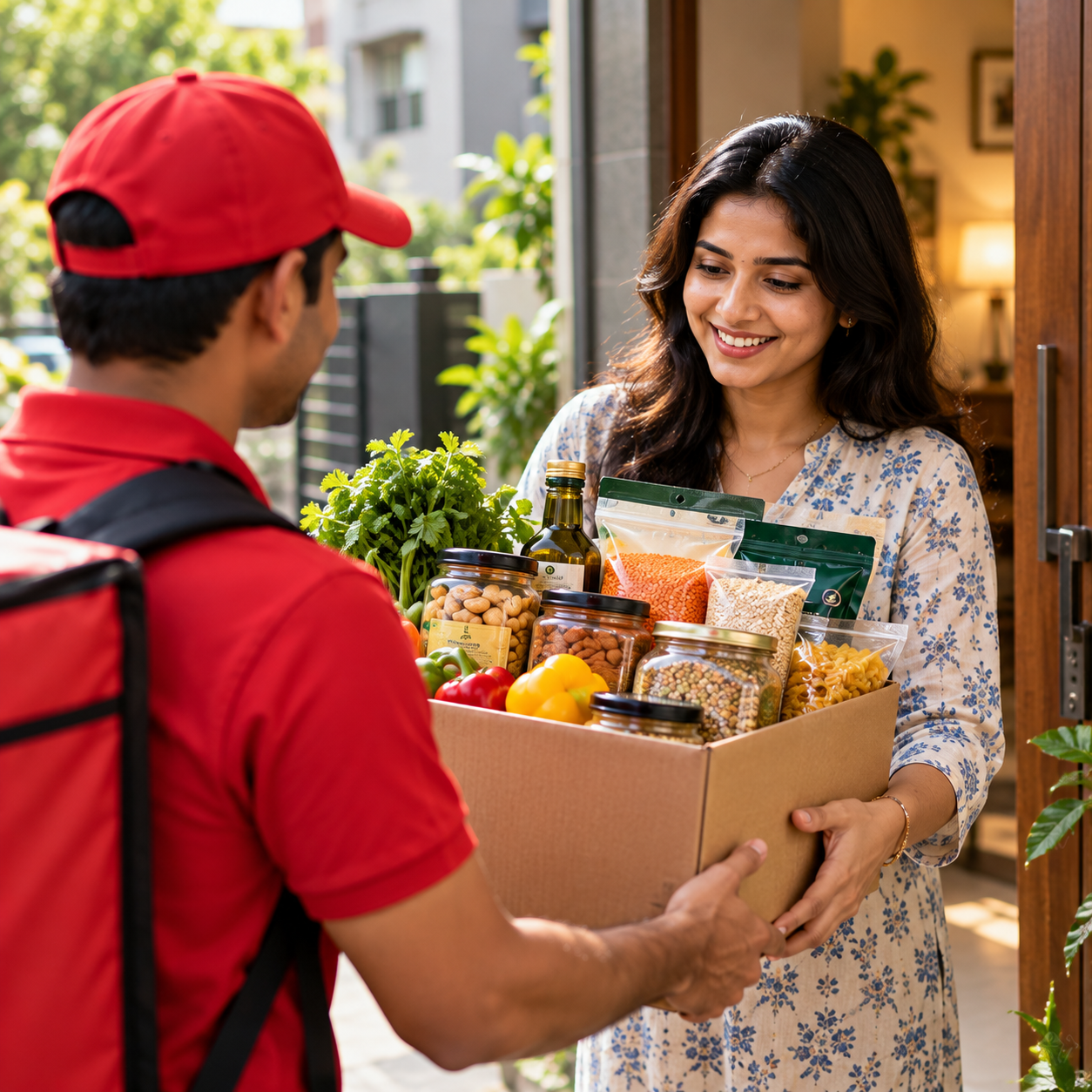
India’s premium grocery segment is witnessing rapid growth through quick-commerce platforms, but building a much larger business beyond the ₹100-crore mark is proving considerably more difficult for new-age brands.
Quick commerce has allowed niche grocery companies to reach consumers across multiple cities without first establishing the extensive distribution networks traditionally required by FMCG companies.
For several emerging brands, quick-commerce platforms now account for more than half of total sales. Gulab Group, which sells more than 60 stock-keeping units across categories such as oils, flours, rice, millets and pulses, derives around 76% of its revenue from quick commerce.
Patanjali is another example, with quick commerce contributing about 61% of its revenue.
The rapid expansion of quick commerce has changed how consumers discover and purchase premium grocery products. Brands can launch products, test consumer response and acquire customers without spending years building conventional distribution networks.
However, the economics and operational requirements change significantly when companies attempt to scale from ₹100 crore to ₹500 crore.
Industry experts point out that brands must increasingly move beyond digital channels and develop a presence across modern trade and general trade. This requires stronger supply-chain execution, better product-price-pack architecture and greater working capital.
The challenge is particularly significant for premium products, where brands need to convince consumers that higher prices are justified by product quality, provenance and ingredients.
Quick commerce remains an important growth engine. Gulab Group, for example, expects its quick-commerce business to expand substantially over the coming years. The channel provides access to consumers across cities while allowing brands to avoid some of the upfront costs associated with traditional distribution.
However, industry executives believe the next phase of growth will require a combination of digital and physical distribution. Brands that can successfully build offline networks while maintaining their quick-commerce momentum could be better positioned to reach the ₹500-crore scale.
The shift reflects a broader evolution in India’s consumer economy, where digital discovery is increasingly helping niche brands establish themselves before they attempt mass-market expansion.