ICE Vehicles Could Match Tax TreatmentKey Highlights
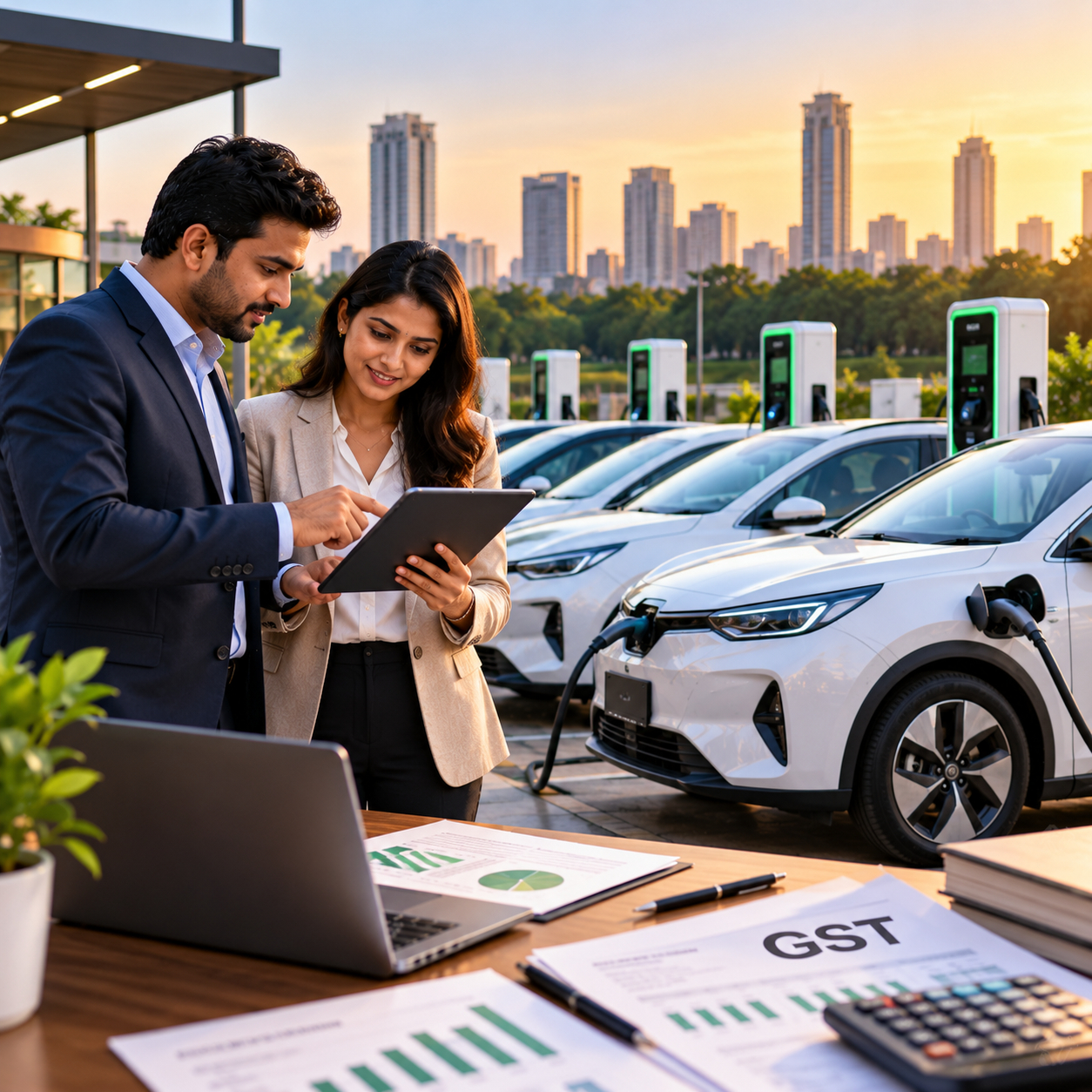
Electric-vehicle fleet operators could receive greater clarity on GST treatment under a proposal being considered by the GST Council that seeks to bring electric and internal-combustion-engine vehicles under a more technology-neutral tax framework.
The proposal focuses on passenger transport and vehicle rental services provided through EVs and conventional internal-combustion-engine vehicles.
At present, differences in the GST treatment of vehicles and related services can create uncertainty for fleet operators, particularly when businesses operate mixed fleets or provide services across different categories.
Under the proposed framework, passenger transport and rental services involving EVs could receive the same treatment as comparable services using conventional vehicles. The proposal is designed to ensure that the applicable GST rate depends on the nature of the service rather than the technology powering the vehicle.
The proposal is centred on a 5% GST treatment, while also seeking clarity on input-tax-credit eligibility. Existing arrangements include different tax structures depending on the nature of the service and whether the operator is eligible for full input tax credit.
Industry participants believe greater clarity could help fleet operators make investment decisions and avoid tax uncertainty while expanding electric mobility.
The proposal would not necessarily amount to a major reduction in the headline GST rate. Instead, its significance lies in creating greater consistency between EV and ICE-based services.
Fleet operators providing passenger transportation, rental and related mobility services could benefit from a clearer framework covering GST rates, input-tax credits and associated operating expenses.
The proposed approach also reflects the government’s broader effort to make tax policy technology-neutral. Rather than providing different treatment solely because a vehicle is electric or conventional, the framework would focus on the service being provided.
A clearer GST structure could support the expansion of electric fleets while ensuring that tax treatment does not create an unintended disadvantage for either EV or ICE-based operators.