Volvo Car India plans to introduce three new electric vehicle models over the next three years while evaluating plug-in hybrids amid high taxation and supply-chain challenges.
Swedish luxury carmaker Volvo plans to launch three new electric vehicle (EV) models in India over the next three years, while exploring the possibility of introducing plug-in hybrid vehicles, according to a senior company official.
Volvo Car India Managing Director Jyoti Malhotra said the company intends to maintain a balanced portfolio of electric vehicles and mild hybrids while assessing demand for plug-in hybrid electric vehicles (PHEVs). He identified India’s tax structure as a major obstacle to introducing plug-in hybrids in the market.
Battery electric vehicles attract 5% Goods and Services Tax (GST) in India, while plug-in hybrids above the small-car category are taxed at 40%. This creates a 35-percentage-point tax difference between the two categories, making plug-in hybrids significantly more expensive.
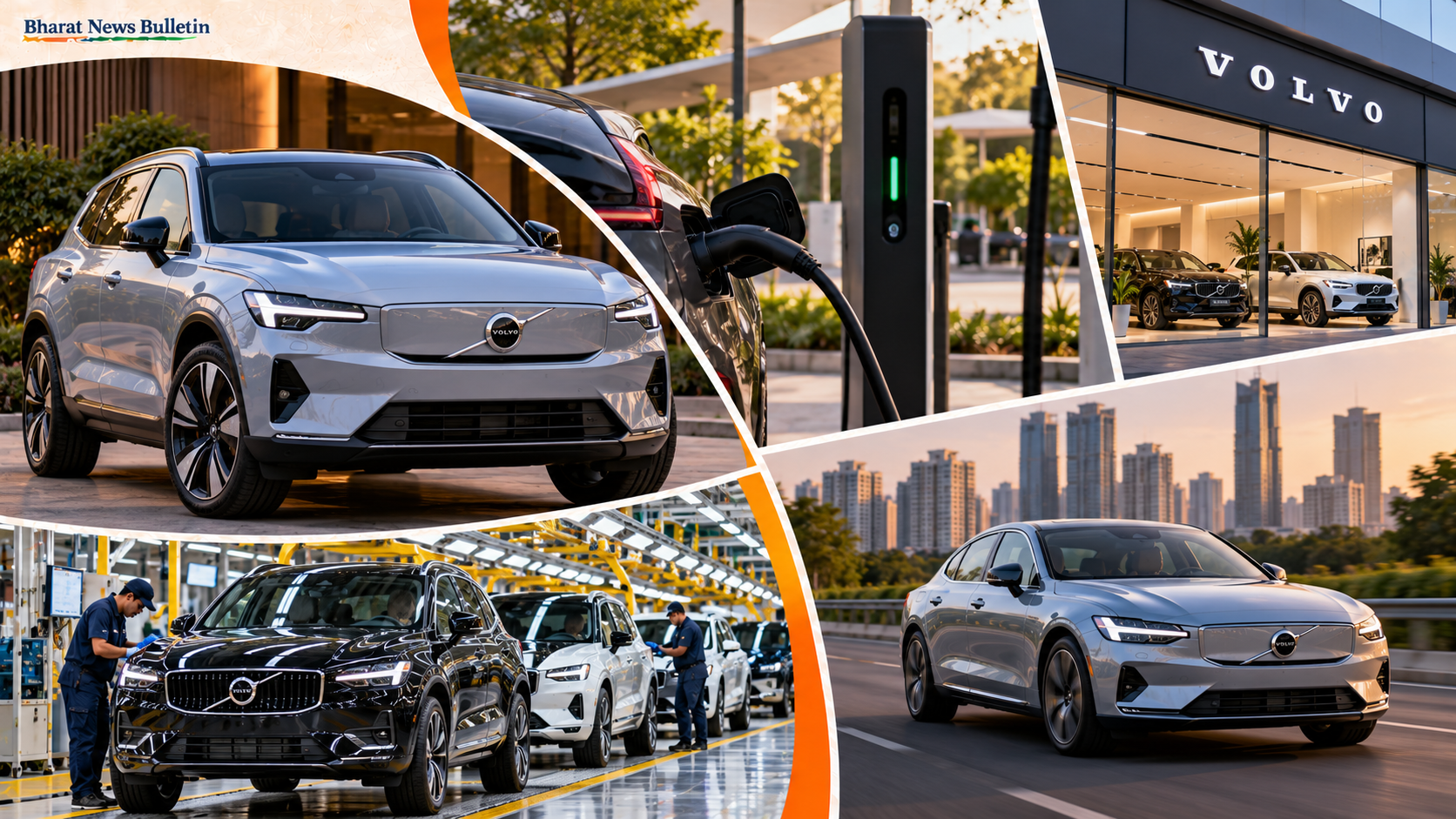
Volvo currently sells two fully electric models in India, the EX30 and EC40, alongside the mild-hybrid XC60 and XC90. On October 12, the company launched its new EX90 luxury electric SUV at an ex-showroom price of ₹1.26 crore. The six-seater model is built on Volvo’s SPA2 platform, with deliveries scheduled to begin in January 2027.
The company’s next expected electric vehicle launch in India is the ES90 sedan. Malhotra said Volvo’s strategy was to introduce one electric car every year.
Electric vehicles currently account for approximately one-fourth of Volvo’s sales in India. However, supply-chain disruptions have affected the company’s near-term sales and increased the cost and lead time of imported kits used for local vehicle assembly.
Malhotra said these disruptions had made delivery schedules less predictable and had considerably affected sales volumes. He also indicated that the company could raise vehicle prices during the festival season as higher costs become increasingly difficult to absorb. Volvo had not implemented price increases since the first quarter of 2026, he said.
The company said its immediate focus in India remains strengthening brand awareness and improving customer experience rather than prioritising sales volumes or market share.