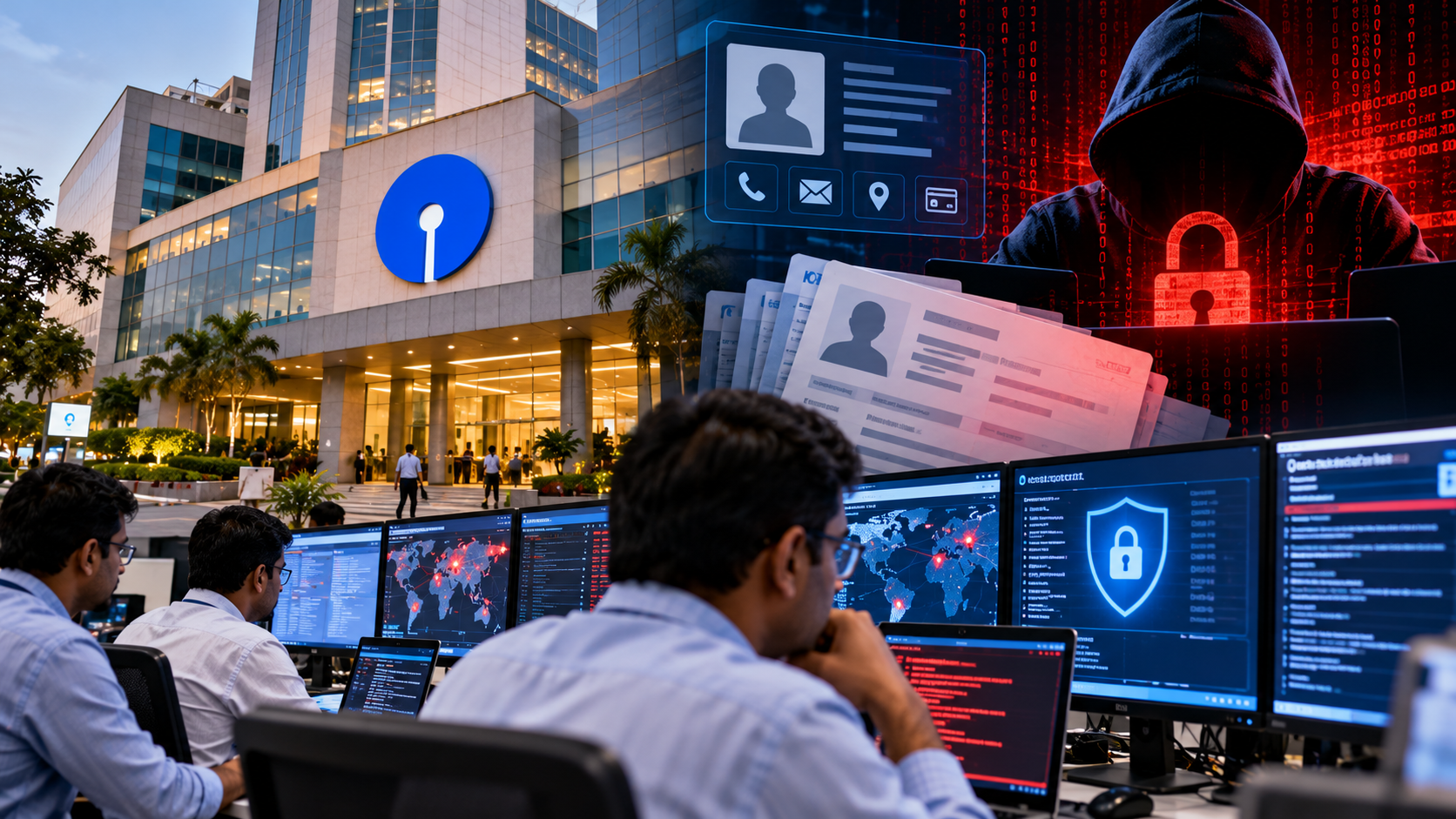
State Bank of India has reported a cyberattack that exposed personally identifiable information linked to 3,897 customers on the dark web, while the bank said the incident is not expected to materially affect its core operations or financial performance.
Mumbai, October 21 — State Bank of India (SBI) has reported a cyberattack involving 3,897 customer records containing personally identifiable information, according to a disclosure reported by Reuters.
The exposed data appeared on the dark web and included customer names, mobile numbers, dates of birth, email addresses, residential addresses, brand and customer identifiers, as well as loan-related records.
SBI said the 3,897 records were identified during a preliminary analysis of the incident.
Separate reports said around 3.75 lakh records had surfaced online, but only a much smaller subset was found to contain personally identifiable information linked to SBI customers.
The country’s largest lender has engaged an independent cybersecurity agency to carry out a comprehensive investigation into the source, nature and extent of the data leak.
SBI said it is assessing the exposed information and the potential risks associated with the breach.
The bank also said the incident is not expected to have any material impact on its core business operations, financial performance or business continuity.
There was no indication in SBI’s disclosure that customer account balances had been affected.
The incident has nevertheless raised concerns about the possibility of the leaked personal information being misused for phishing, impersonation or other forms of fraud.
Cybercriminals can use information such as names, phone numbers, addresses and loan details to make fraudulent calls or messages appear more convincing.
The breach comes at a time when Indian banks are facing growing pressure to strengthen their cybersecurity systems.
The Reserve Bank of India has been pushing financial institutions to improve cyber-resilience frameworks amid an increase in attacks targeting banks and digital financial services.
The latest incident also highlights the growing importance of monitoring dark-web marketplaces and online forums where stolen customer information can be offered for sale or shared.
SBI has not yet publicly disclosed the source of the breach, and the investigation is continuing.
Customers should remain alert to suspicious calls, messages or emails asking for banking credentials and should avoid sharing OTPs, PINs or passwords with anyone claiming to represent the bank.