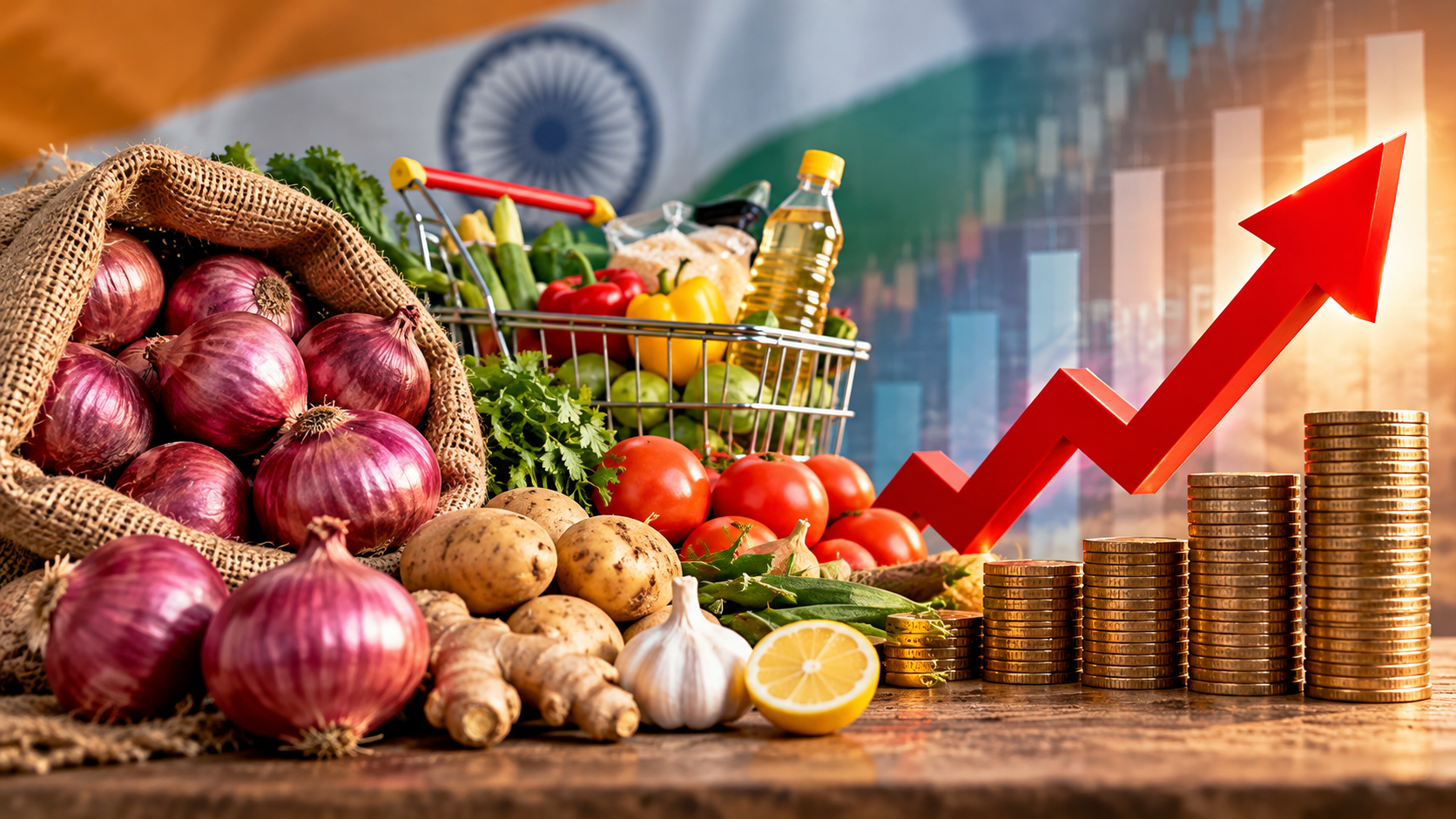
India’s retail inflation increased from 4.83% in August to 5.54% in September 2026, driven by rising food prices.
Highlights
- Retail inflation rose to 5.54% in September from 4.83% in August.
- Food inflation climbed to 7.74%, putting pressure on household budgets.
- Onion prices surged 108.09% compared with September last year.
- Ginger, garlic and lemon prices increased sharply.
Retail Inflation Rises to 5.54% in September as Food Prices Put Pressure on Household Budgets
India’s retail inflation rose to 5.54% in September 2026 from 4.83% in August, mainly due to a sharp increase in food prices. According to provisional data released by the Ministry of Statistics and Programme Implementation (MoSPI), food inflation reached 7.74%, adding pressure on household budgets across the country.
The latest Consumer Price Index (CPI) figures indicate that consumers are paying significantly more for several essential food items, particularly vegetables and everyday cooking ingredients.
Food Prices Rise Sharply
Food inflation remained a major concern in September, with several commonly used vegetables recording substantial price increases.
Onion prices surged 108.09% compared with September last year, significantly higher than the 48.78% inflation recorded in August.
Ginger prices increased 62.85%, while garlic inflation reached 54.62%, up from 43.60% in August. Lemon prices also rose sharply, recording inflation of 36.41%.
These increases could affect household spending, particularly among lower- and middle-income families that spend a considerable share of their income on food.
Rural Households Face Higher Inflation
Inflation remained higher in rural India than in urban areas during September.
Retail inflation in rural areas stood at 6.08%, compared with 4.88% in urban centres.
Similarly, rural food inflation reached 8.06%, while urban food inflation was recorded at 7.18%.
The figures indicate that rural households experienced greater price pressure, particularly on essential food items.
Some Vegetables Become Cheaper
Despite the overall rise in inflation, prices of certain products declined compared with the previous year.
Potato prices fell 11.50%, while tomato prices dropped 8.62%. Lady’s finger, coconut, motor cars and jeeps also recorded negative inflation.
Meanwhile, silver jewellery remained expensive, recording inflation of 87.80%, although this was lower than August’s 106.81%.
What Rising Inflation Means for Consumers
Higher inflation means households may need to spend more money to purchase the same quantity of goods and services.
Rising prices of essential vegetables and cooking ingredients could reduce disposable income and limit spending on other household needs.
For consumers already managing monthly expenses, continued food inflation could make budgeting more difficult.
MoSPI collected price data from 1,407 urban markets and 1,465 villages across states and Union Territories, with a reported response rate of 100%.
The latest inflation figures will remain important for consumers, policymakers and the Reserve Bank of India as they assess price stability and future monetary policy decisions.