Smartphones remained the largest export category, while faster growth in other electronics pointed to a broader manufacturing and export base.
Highlights:
- Electronics exports recorded strong growth in April–September FY2026–27.
- Smartphones continued to lead the export basket.
- Non-smartphone electronics registered faster growth.
- Components, PCBs and communication equipment contributed to diversification.
- Memory and storage devices also featured in the expanding product mix.
- The supplied information does not specify export values or growth rates.
India’s electronics exports recorded strong growth during April–September of financial year 2026–27, with an expanding range of products contributing to overseas shipments. Smartphones remained the largest export segment, while faster growth in non-smartphone electronics indicated a widening export base, according to the information provided.
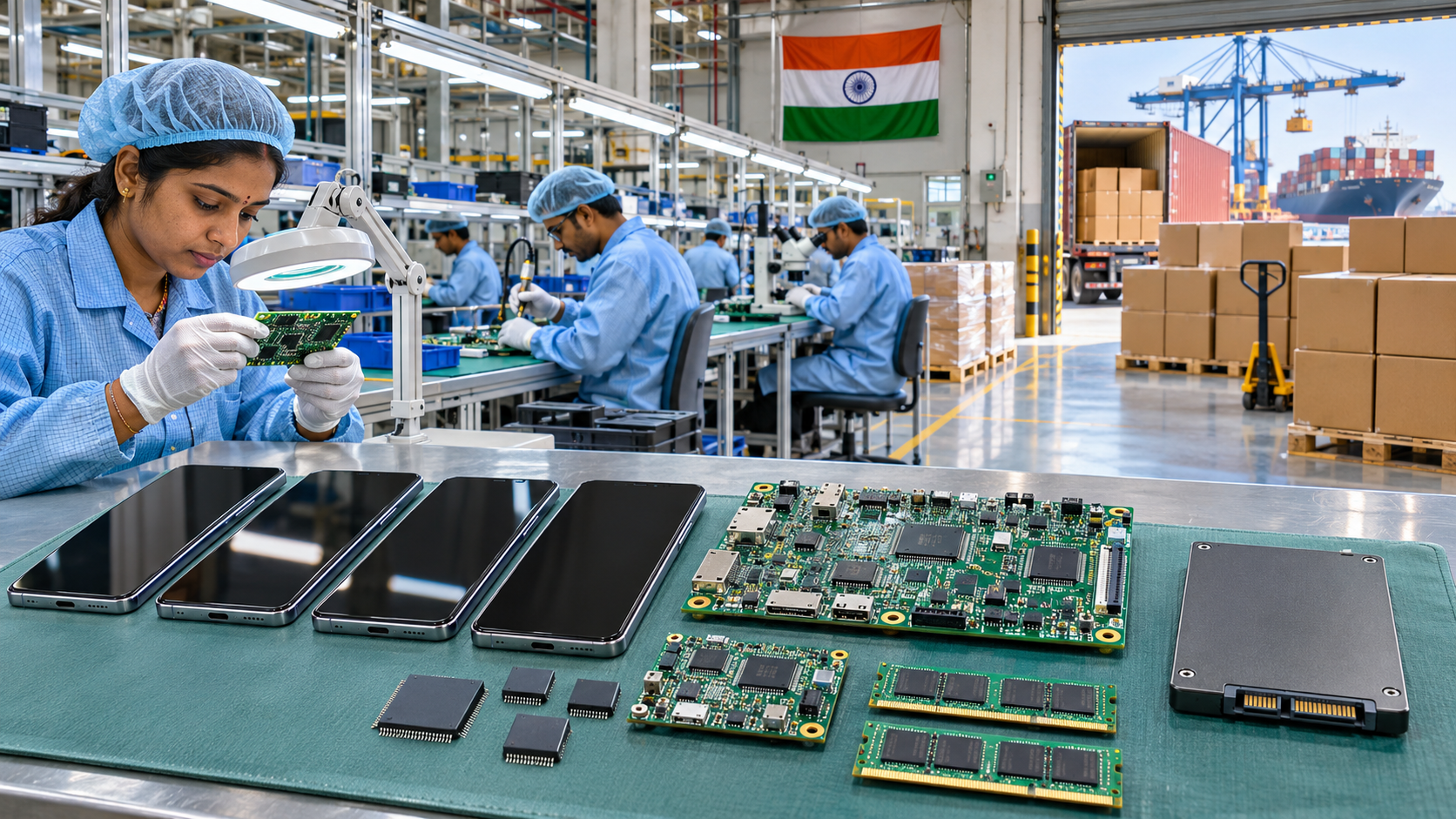
The performance points to diversification within electronics manufacturing. Alongside finished smartphones, the export basket included components, printed circuit boards, communication equipment, memory and storage devices.
The supplied information does not include export values, category-wise growth rates or destination-level figures. It therefore indicates the direction of growth without establishing the precise contribution of individual product groups.
Smartphones retain the lead
Smartphones continued to occupy the largest position in India’s electronics exports during the six-month period. Their scale remained central to the sector’s overall export performance.
However, the faster expansion of non-smartphone categories suggests that growth was becoming more widely distributed across the electronics basket. Faster growth does not necessarily mean these categories exported more than smartphones; their individual values and starting bases would be needed to make that comparison.
Components and equipment widen the basket
The categories highlighted included printed circuit boards and electronic components, as well as communication equipment and memory and storage products.
These products represent different stages of the electronics supply chain. Components and circuit boards are used within electronic systems, while communication equipment and storage devices serve distinct business and consumer requirements.
Their growing contribution suggests a broader range of export activity. However, export growth alone does not establish how much domestic value was added or whether the underlying components were manufactured locally. Those assessments require separate production and sourcing data.
Global reach expands
The supplied account also highlighted the growing presence of Indian electronics in international markets. A wider product basket can create opportunities to serve different customers and industries, although the information does not identify which destinations recorded the strongest gains.
The first-half performance indicates that smartphones remained the sector’s main export category while other electronics expanded more quickly. Detailed trade figures would help establish the scale of this diversification, the leading overseas markets and the products contributing most to the increase.
For manufacturers and exporters, sustained growth across multiple categories could support a more varied overseas business base over time.