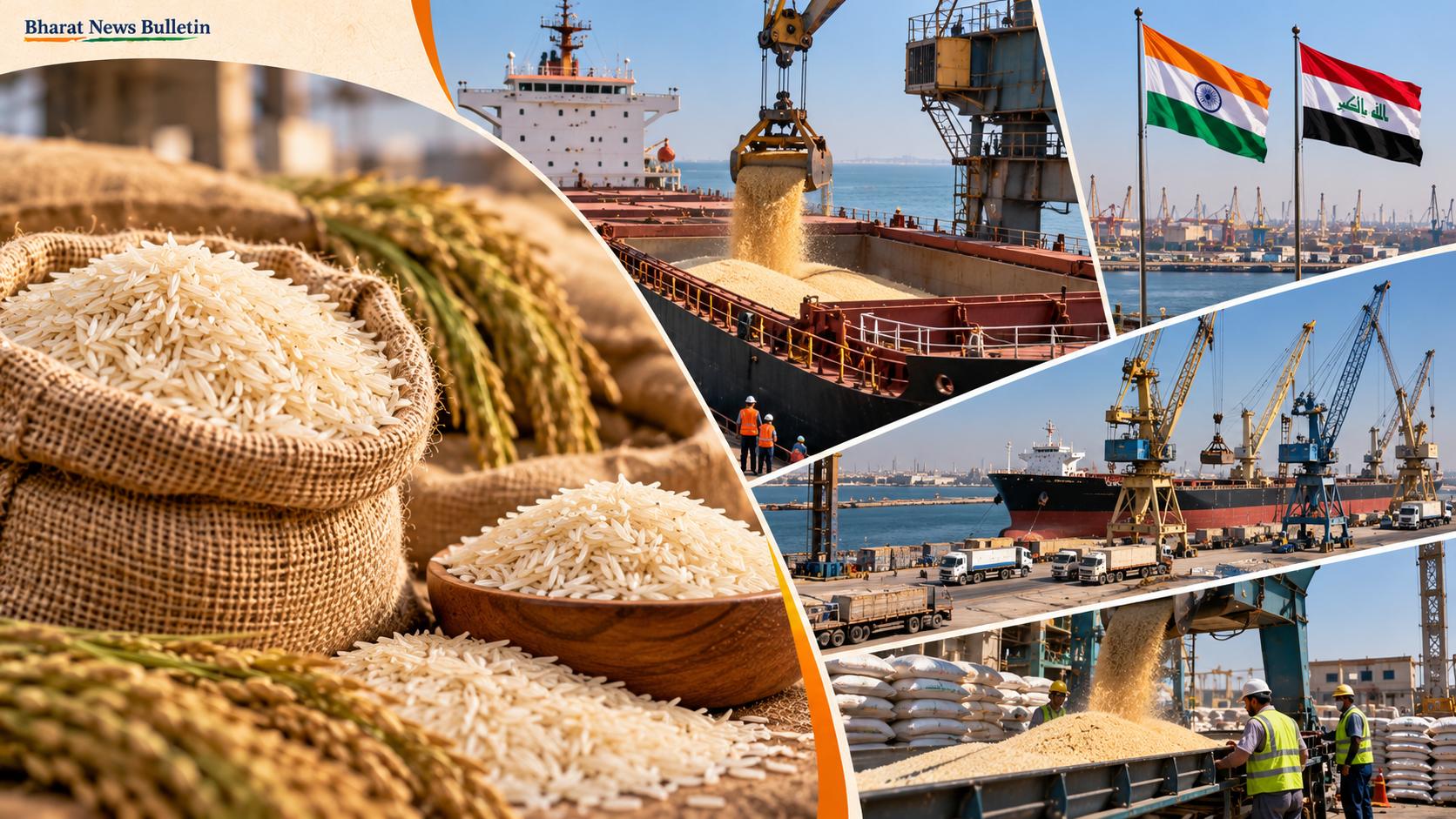
Indian rice exporters are shifting to bulk shipping for Iraq-bound Basmati rice, targeting a 74% reduction in freight costs as logistics disruptions challenge India’s Middle East trade.
India’s rice exporters have introduced a bulk-shipping initiative aimed at reducing freight costs for Basmati rice shipments to Iraq by nearly 74%, from around $350 to $90 per metric tonne. The initiative is expected to strengthen India’s competitiveness in the Middle East, where Basmati rice exports were valued at ₹34,284 crore in the financial year 2025–26.
The Indian Rice Exporters’ Federation (IREF), in collaboration with Singapore-based Eximwala Solutions Pte. Ltd., has arranged shipments totalling 1,02,210 metric tonnes of Basmati rice across three vessels. The initiative comes amid rising freight rates, container shortages and geopolitical disruptions affecting shipments to the Gulf region.
At the targeted freight rate, exporters could save approximately $260 per tonne. Across the three-vessel shipment volume, the estimated gross savings could reach $26.6 million, although actual savings will depend on final shipping costs and contractual terms.
Middle East remains a key export market
India exported 45.64 lakh metric tonnes of Basmati rice worth ₹34,284 crore to the Middle East in FY 2025–26, accounting for nearly 70% of the country’s total Basmati export volume, according to IREF.
Including non-Basmati varieties, India’s rice exports to the region reached 56.48 lakh tonnes, valued at ₹39,657 crore during the same period. Saudi Arabia was the largest regional market for Indian Basmati rice, with imports worth ₹8,324 crore, followed by Iran at ₹6,970 crore, Iraq at ₹5,583 crore and the United Arab Emirates at ₹4,132 crore.
Iraq imported approximately 7.64 lakh tonnes of Indian Basmati rice during the financial year, making competitive freight rates important for maintaining trade volumes and exporter margins.
Bulk vessels offer an alternative to containers
The new arrangement uses bulk carriers instead of conventional container shipments to transport large quantities of rice. According to IREF, container freight quotations for Iraq had reached approximately $350 per metric tonne, while the bulk-shipping plan targets a rate of about $90.
The three vessels involved in the programme are the MV LAMAR S, MV LOLO GATE and MV OUTLANDER. The MV LAMAR S, carrying 36,810 tonnes of rice, had reached Iraq’s Umm Qasr port and begun unloading, according to information released by the federation.
Bulk shipping may help exporters manage container shortages and rising transport costs. However, its commercial benefits will depend on vessel availability, port-handling charges, shipment schedules and the suitability of bulk transport for individual consignments.
Exporters seek wider logistics solutions
IREF National Vice President Dev Garg said high shipping costs directly affect India’s competitiveness in the Middle East. The federation aims to explore similar commercially viable shipping arrangements for other Gulf destinations to protect export markets and improve returns across the rice supply chain.
The initiative comes ahead of the Bharat International Rice Conference 2026, scheduled for October 23–25 at Bharat Mandapam in New Delhi. The event is expected to include discussions on shipping costs, cargo insurance, port delays, container logistics and maritime disruptions.
The shift towards bulk shipping highlights how Indian exporters are adapting their logistics strategies to maintain overseas market access and limit the impact of higher freight expenses.