The auto component maker’s stock rally has accompanied higher revenue, stronger profits and expansion into sunroofs, gas springs and other automotive businesses.
Highlights:
- Shares climbed from around Rs 120 to Rs 1,500 over 10 years.
- A Rs 1 lakh investment grew to Rs 12.5 lakh, excluding dividends.
- Standalone net sales reached Rs 4,233 crore in FY26.
- Annual profit increased from Rs 75 crore to Rs 243 crore.
- Aftermarket reach expanded to more than 30,000 retail outlets.
- New businesses offer growth opportunities, while competition remains a risk.
Gabriel India’s expansion across the automotive components industry has accompanied a sharp rise in its share price over the past decade. According to NDTV Profit, the stock climbed from around Rs 120 in November 2016 to Rs 1,500 in November 2026, taking the value of a Rs 1 lakh investment to approximately Rs 12.5 lakh, excluding dividends.
The price movement represents a gain of about 1,150%. Alongside this rally, the company has increased its revenue and profit while building a broader product portfolio.
Standalone net sales rose from Rs 1,426 crore in FY16 to Rs 4,233 crore in FY26. Profit after tax increased from Rs 75 crore to Rs 243 crore during the same period. However, the company’s EBITDA margin remained broadly unchanged, indicating that the expansion in business scale did not translate into a higher margin over the decade.
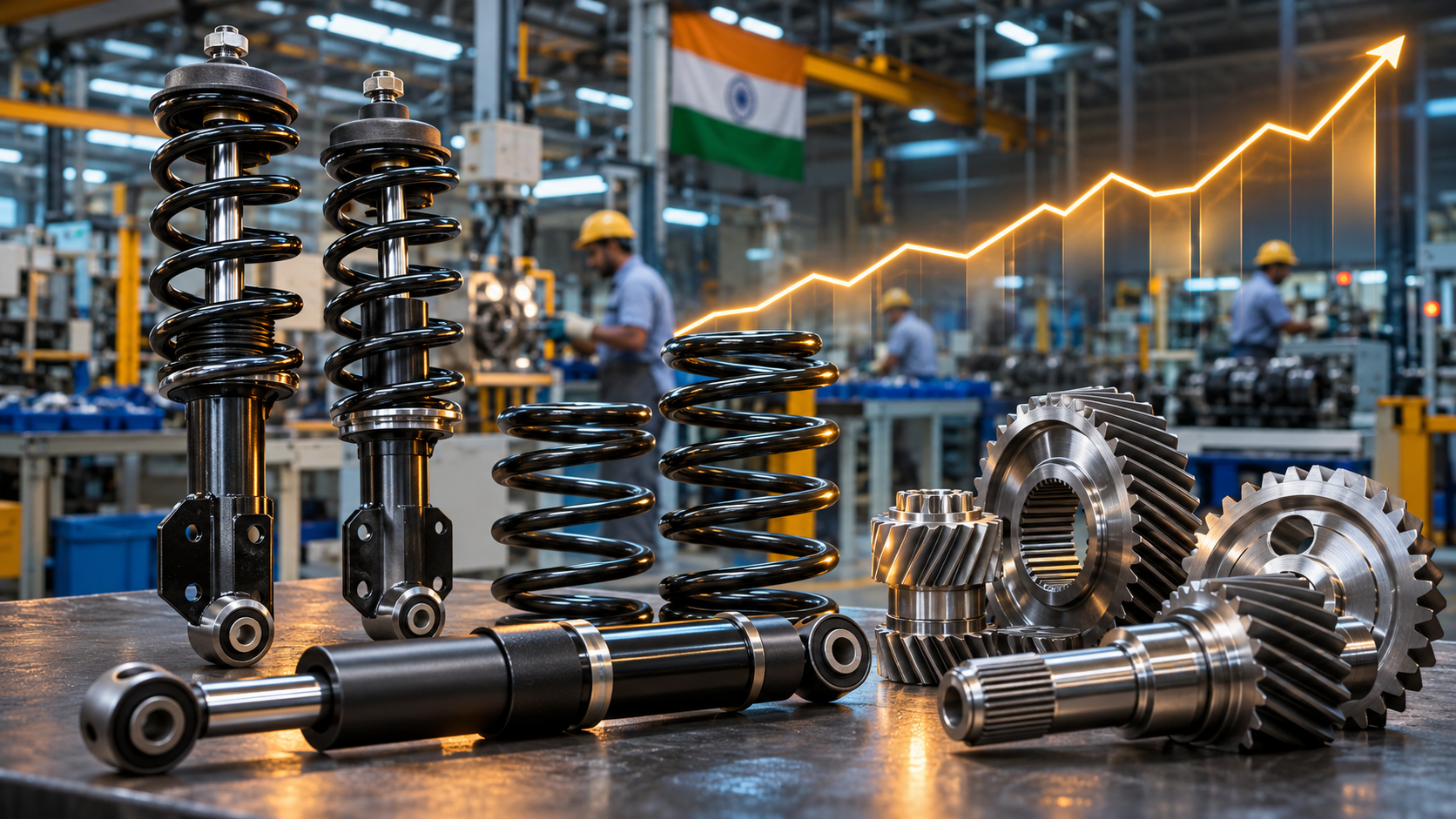
Gabriel was earlier known mainly for shock absorbers and front forks. Its business interests have since widened to include sunroofs, gas springs, drivetrain components, synchroniser rings, aluminium forgings and solutions that address vehicle noise and vibration.
Its distribution network has also expanded substantially. The company now reaches more than 30,000 aftermarket retail outlets, compared with around 6,000 in 2016. Its business partner network has grown from 375 to more than 800.
Acquisitions and partnerships have supported this diversification. The acquisition of Marelli Motherson Auto Suspension Parts added suspension capacity and gas springs, while the Inalfa partnership strengthened its sunroof operations. Ventures involving SK Enmove and Jinhap target lubricants, e-fluids and automotive fasteners. A partnership with Forvia marks its entry into passenger vehicle seating.
For the first half of FY27, consolidated revenue increased 19.3% year-on-year to Rs 3,034 crore. EBITDA rose 8.6% to Rs 265 crore, while profit before tax increased 10% to Rs 281 crore. EBITDA growing more slowly than revenue suggests pressure on operating profitability during the period.
Despite its wider portfolio, two-wheelers and three-wheelers continue to contribute around 62% of sales. Scaling newer businesses and increasing their earnings contribution will therefore remain important.
Competition, changing automotive technologies and dependence on its core vehicle segments remain key challenges. The historical share-price performance illustrates the company’s past growth; it does not establish what returns investors may earn in future.