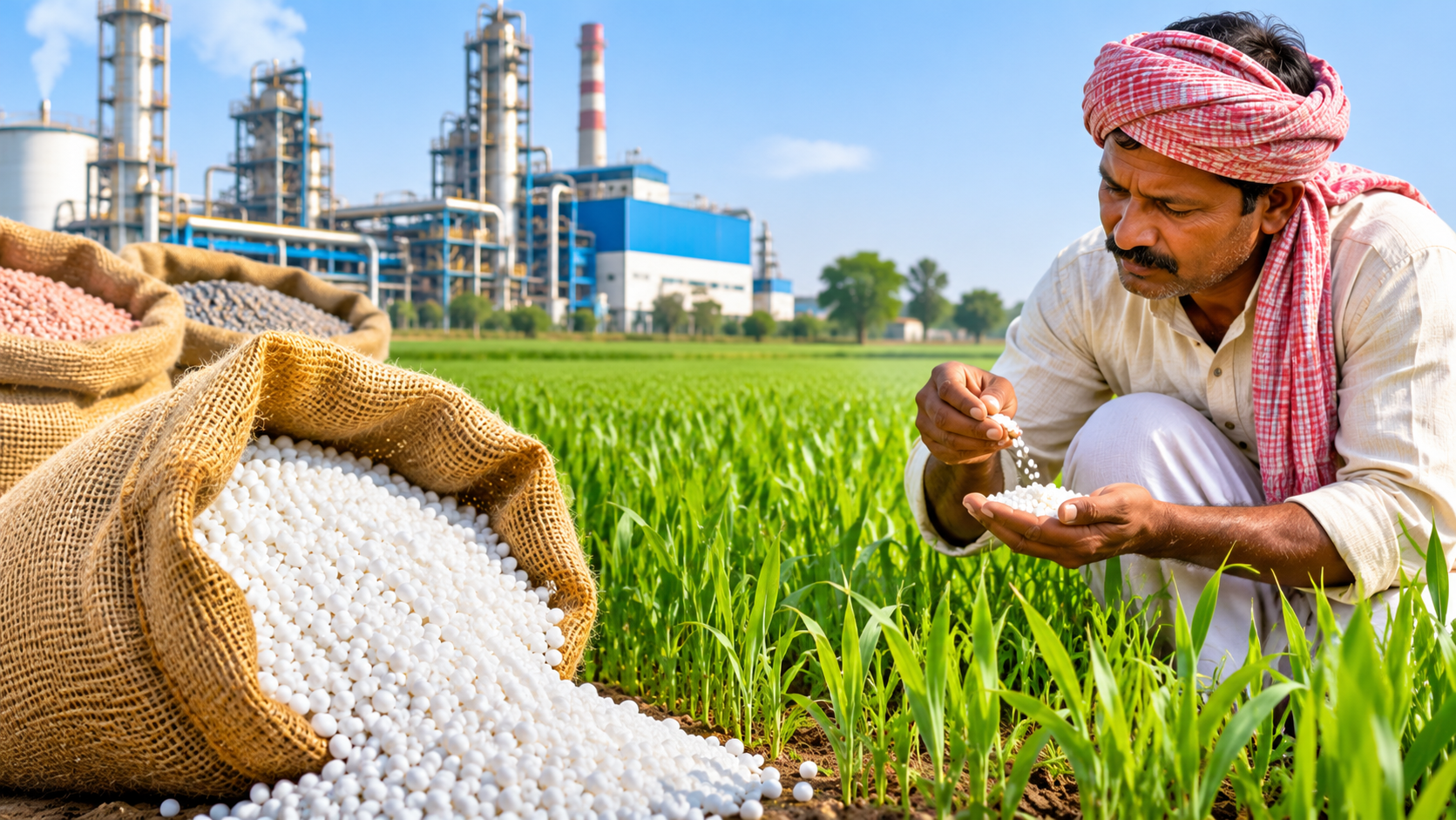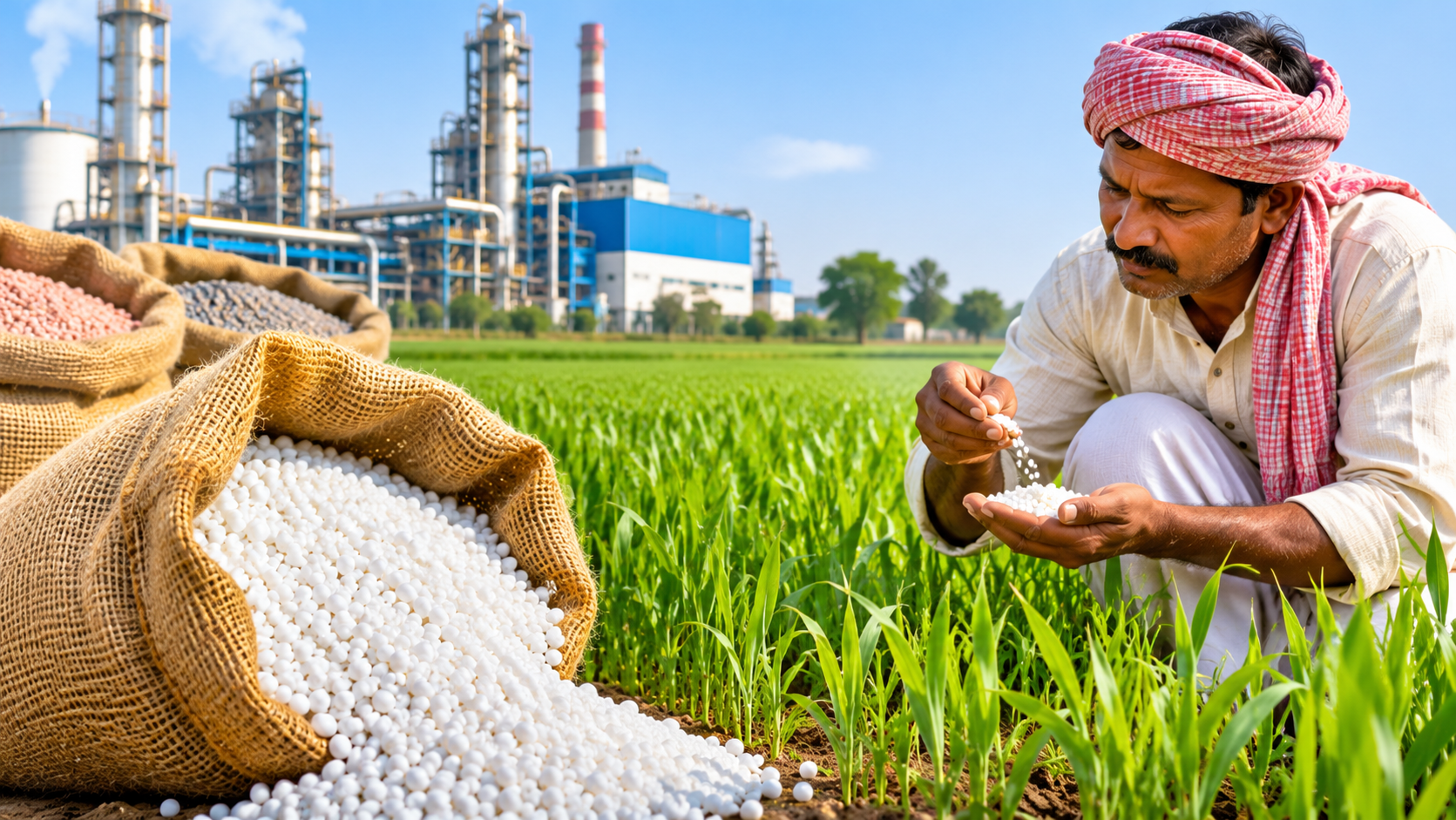
West Asia tensions have raised the cost of imported non-urea fertilisers, while the government has approved six new urea plants to cut import dependence.
Highlights
- Fertiliser subsidy for 2026-27 is likely to exceed the Budget Estimate of Rs 1.71 lakh crore.
- Higher import costs of non-urea fertilisers due to the West Asia crisis are putting pressure on subsidy spending.
- Around 70-75% of the fertiliser subsidy budget has already been spent so far.
- Six new urea plants have been approved under NIPU-2026 with an estimated investment of Rs 54,000 crore.
- India’s annual urea demand is around 40 million tonnes, while current production capacity is about 30 million tonnes.
- Supplies of major fertilisers remain adequate for the ongoing rabi season, the government said.
The government’s fertiliser subsidy bill for 2026-27 is likely to exceed the Budget Estimate (BE) of Rs 1.71 lakh crore, Fertiliser Secretary Rajat Kumar Mishra said on Friday, citing higher import costs of non-urea fertilisers amid the ongoing West Asia crisis.
Speaking to reporters, Mishra said the final subsidy bill will rise beyond the budgeted level, though the eventual figure will depend on how the remaining five months of the fiscal year unfold. He added that, if conditions remain stable, the subsidy burden could be close to the revised estimate of Rs 1.86 lakh crore for 2025-26.
The comments come even as the Fertiliser Association of India has estimated the subsidy bill at a much higher Rs 2.5 lakh crore. Mishra, however, did not confirm that number and said only that the outgo would “increase further” from the Budget Estimate. He noted that nearly 70-75 per cent of the allocated subsidy amount has already been used.
Despite higher gas prices, domestic urea production has remained steady at about 2.6 million tonnes a month, which has helped maintain adequate inventories and reduced the immediate need for fresh procurement.
In a key step to strengthen domestic supply, the Cabinet has approved six new urea plants under the National Investment Policy for Urea (NIPU)-2026. These brownfield projects are aimed at modernising existing facilities, expanding output and reducing import dependence. Each plant is expected to produce around 1.27 million tonnes annually, adding a total of 7.62 million tonnes of new capacity.
The combined investment for these projects is estimated at around Rs 54,000 crore, or nearly Rs 9,000 crore per plant. The plants will be financed by the companies themselves, with government support over eight years, and are expected to be commissioned within four years.
India’s current urea production capacity is about 30 million tonnes a year, against annual demand of nearly 40 million tonnes. Mishra said the new plants could help raise capacity to 40 million tonnes, though demand is projected to reach around 46 million tonnes by 2030.
On rabi supplies, Mishra said all five major fertilisers are adequately available and added that DAP prices may soften in the near term. He also said action against overpricing and black marketing remains the responsibility of state governments.