Eternal remains committed to fleet electrification but is reviewing its timeline to account for rapid growth, EV availability and the transport needs of its businesses.
Highlights:
- Eternal is reassessing its 2030 target for a 100% electric delivery fleet.
- Monthly active riders have grown to 12 lakh across Zomato and Blinkit.
- A revised deadline is being considered; 2035 has not been confirmed.
- The group’s target will also cover Hyperpure’s commercial delivery vehicles.
- EV adoption is encouraged through equal payouts, rentals and awareness initiatives.
- The company wants policies that protect delivery partners’ employment opportunities.
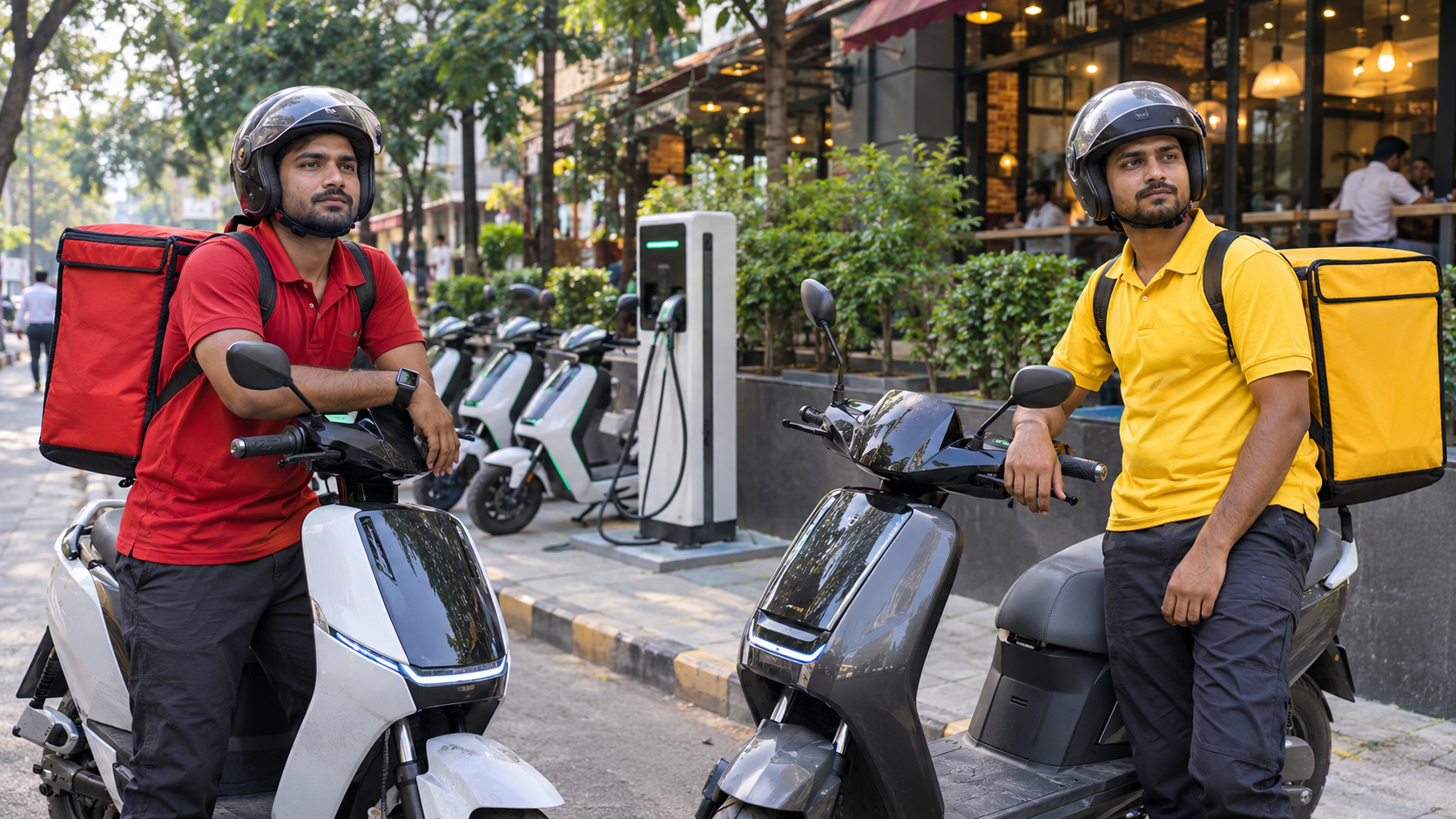
New Delhi: Eternal, the parent company of Zomato and Blinkit, is reassessing its target of achieving a fully electric delivery fleet by 2030 as rapid business expansion and uneven access to electric vehicles complicate the transition.
In an interview with PTI, Eternal Chief Sustainability Officer Anjalli Ravi Kumar said the company remained committed to electrification because it continued to make economic sense. However, the scale of its operations had changed significantly since the original target was announced.
Rider Base Expands Sharply
When the target was set, Zomato had around 1.5 lakh monthly active riders. Today, Zomato and Blinkit together have approximately 12 lakh riders, Kumar said.
Maintaining that monthly base requires onboarding around 30 lakh people annually across 900 cities. Ensuring that every incoming delivery partner can reliably access an EV remains a challenge, particularly as the business continues to grow.
No Revised Deadline Yet
Kumar said Eternal was actively working towards a revised date. However, she did not commit to 2035, noting that the rollout of government EV policies would influence the decision.
The revised target must also reflect transportation requirements across the group. Hyperpure, for example, uses trucks and smaller commercial vehicles, meaning the transition extends beyond electric two-wheelers.
Incentives to Encourage Adoption
According to an estimate conducted around December last year, approximately 12–13% of delivery partners in the company’s fleet used EVs, compared with 6–7% penetration in the broader two-wheeler market, Kumar said.
Zomato pays delivery partners using EVs the same as those using petrol vehicles, despite electric vehicles having lower running costs. It also helps partners explore rental options through its delivery partner app.
Initiatives such as EV Bazaar introduce riders to available electric models. The company’s approach is to encourage adoption through access, awareness and financial benefits.
Focus on Delivery Partners’ Livelihoods
Kumar stressed that EV policies must account for delivery partners’ financial circumstances, as they generally arrange their own vehicles. Eternal is advocating policies that support cleaner mobility while preserving employment opportunities for people unable to afford an EV.
Beyond transport, the company is promoting sustainable restaurant packaging through PackSwitch, a website that helps restaurants identify alternatives to plastic.
Through Hyperpure, Eternal sold more than 3,000 metric tonnes of sustainable packaging to 50,000 restaurants last year. More than 10,000 restaurants across over 400 cities have also received Zomato’s low-plastic packaging tag following verification.