India needs to rethink its economic strategy and strengthen domestic reforms to remain resilient amid growing global uncertainties, according to the Finance Ministry’s Monthly Economic Review for July 2026.
Assam Exports First Purabi Ice Cream to Bhutan
In a major milestone for Assam’s dairy sector and processed food trade in the North Eastern Region, Chief Minister Dr. Himanta Biswa Sarma flagged off the inaugural export consignment of 5,627 litres of Purabi Ice Cream to Bhutan on July 28, 2026. This marks the first-ever international export of dairy products from the state of Assam.
J&J Offers $5.5 Billion Talc Settlement
Pharmaceutical giant Johnson & Johnson (J&J) announced a landmark settlement agreement of $5.5 billion to resolve the remaining vast majority of lawsuits alleging that its talc-based products (such as baby powder) caused ovarian cancer.
Centre Caps Sugar Stocks
The Central Government of India imposed nation-wide stockholding limits on sugar dealers from August 1 to November 30, 2026. The measure aims to curb hoarding, suppress speculative trading, and stabilize surging domestic prices ahead of the upcoming festive season.
Govt Plans Easier FDI Rules
The Government of India is preparing major policy easing across key sectors to simplify Foreign Direct Investment (FDI) norms, reduce regulatory friction, and attract long-term global capital.
Ashok Leyland Joins UCO Bank
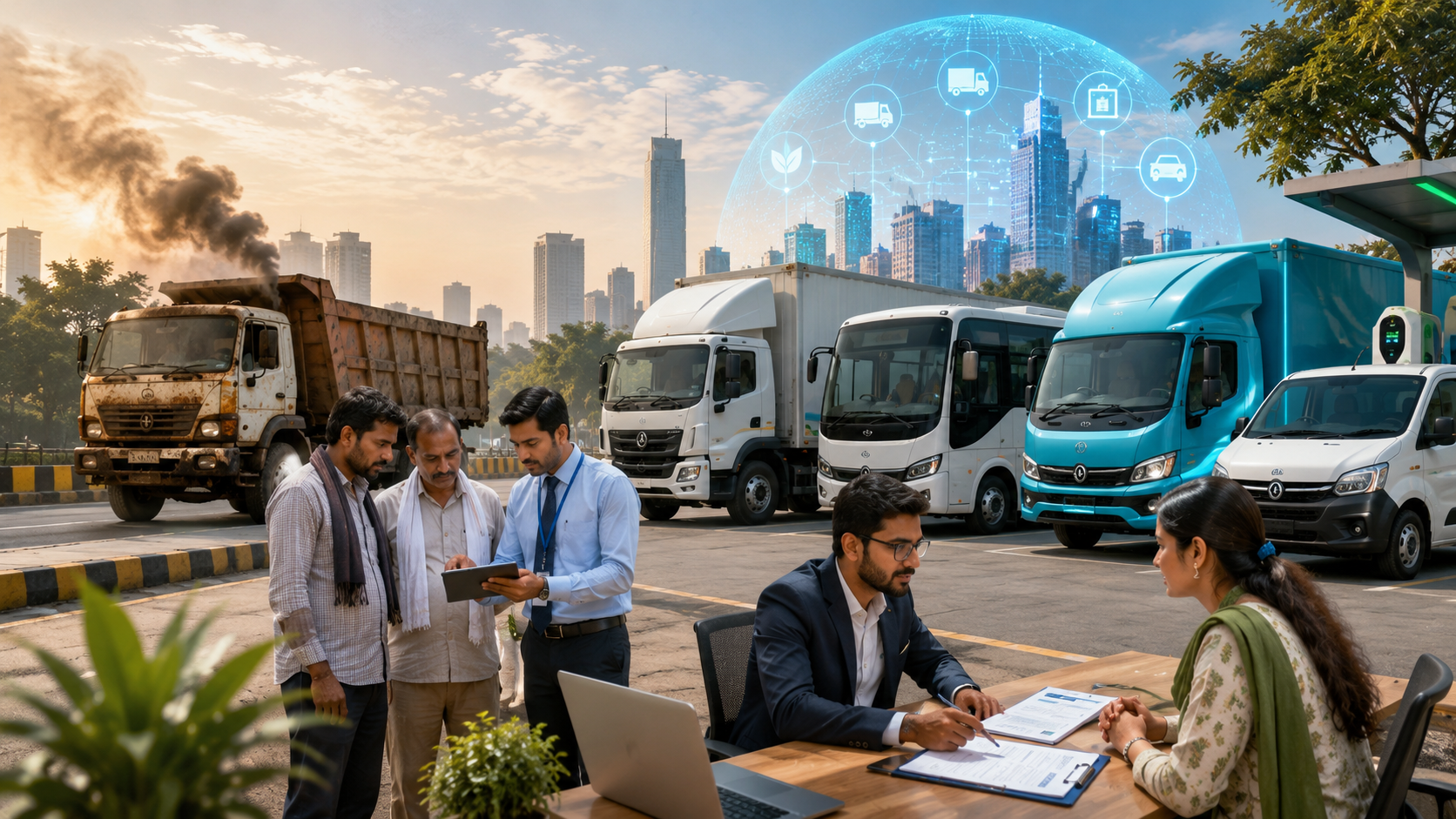
CV Financing Partnership Signed Key Highlights Commercial vehicle manufacturer Ashok Leyland has entered into a strategic partnership with UCO Bank to provide customized financing solutions for customers purchasing its trucks and buses. The two organizations have signed a Memorandum of Understanding (MoU) that will enable businesses and fleet operators to access flexible financing options while buying Ashok Leyland commercial vehicles. Ashok Leyland Whole-Time Director and CFO K. M. Balaji said the partnership will strengthen the company’s market presence by making its range of commercial vehicles more accessible to customers across India. UCO Bank Deputy General Manager and Zonal Head R. S. Ajith said the collaboration reinforces the bank’s commitment to supporting businesses through tailored financing solutions that simplify vehicle ownership. The partnership is expected to improve financing accessibility for transport operators, logistics companies and commercial fleet owners, supporting the growth of India’s transportation sector.
Government Summons Meta
PM Post Removal Queried Key Highlights The Ministry of Electronics and Information Technology (MeitY) has summoned Meta’s Global Head of Public Policy after a Facebook post by Prime Minister Narendra Modi was temporarily removed from the platform. According to government sources, the ministry has sought an explanation from Meta regarding the incident involving the Prime Minister’s post, which was published on July 23 and addressed India’s youth while highlighting measures against examination paper leaks. A Meta spokesperson acknowledged the incident and said the removal occurred due to an operational error. The company stated that the content was removed mistakenly and has since been restored on Facebook. The government is expected to seek further clarification regarding the circumstances that led to the removal and the safeguards in place to prevent similar incidents in the future.
Ampere Partners Muthoot Capital
EV Financing Gets Easier Key Highlights Greaves Electric Mobility Ltd has announced a strategic partnership between its electric two-wheeler brand Ampere and Muthoot Capital Services to offer convenient retail financing solutions for customers across India. The collaboration is aimed at making electric two-wheelers more affordable by providing flexible repayment options suited to salaried employees, self-employed professionals, gig workers and small business owners. Greaves Electric Mobility Chief Business Officer Manoj MP said the partnership combines trusted brands to offer seamless ownership experiences while accelerating electric mobility adoption across Bharat. Muthoot Capital Services CEO Mathews Markose said financing will play a crucial role in expanding EV adoption beyond metropolitan cities and into smaller towns and rural markets. The companies expect the financing partnership to reduce affordability barriers and encourage more consumers to switch to sustainable transportation.
HUL Q1 Profit Slips 3.2%
Revenue Hits 13-Quarter High Key Highlights FMCG giant Hindustan Unilever Ltd (HUL) reported a 3.17% year-on-year decline in consolidated net profit to ₹2,680 crore for the June quarter of FY27, primarily due to exceptional expenses and a sharp increase in tax costs. The company had posted a net profit of ₹2,768 crore during the same quarter last year. During the quarter, HUL recorded an exceptional loss of ₹75 crore, including restructuring expenses of ₹115 crore, partially offset by a ₹45 crore gain from the disposal of surplus assets. Tax expenses also surged to ₹952 crore, compared with ₹526 crore a year earlier. Despite lower profit, HUL delivered its highest revenue growth in 13 quarters, with revenue from product sales increasing 10.26% to ₹17,149 crore. Total income rose 9.84% to ₹17,529 crore, while EBITDA increased 8% to ₹3,947 crore, maintaining an EBITDA margin of 23%. CEO and Managing Director Priya Nair said the company achieved 10% Underlying Sales Growth (USG), driven equally by volume and pricing, despite a volatile operating environment. Among business segments, Home Care led growth with revenue rising 13.4% to ₹6,554 crore, supported by strong demand for brands such as Surf Excel, Rin and Vim. Beauty & Wellbeing also delivered robust growth of 12.4%, driven by premium skincare, haircare and the recently acquired Minimalist brand. The Food segment grew 6.8%, supported by strong demand for coffee, lifestyle nutrition and packaged foods, while Personal Care recorded a 3.3% increase amid continued inflation in palm oil prices. HUL said it remains focused on volume-led growth while strengthening its premium product portfolio and innovation pipeline.
DGFT Restricts PVC Resin Imports
Minimum Import Price Imposed Key Highlights The Directorate General of Foreign Trade (DGFT) has imposed a Minimum Import Price (MIP) on Suspension Grade Polyvinyl Chloride (S-PVC) resin, a key raw material widely used in manufacturing PVC pipes, fittings, electrical cables, films, footwear and several industrial products. Under Notification No. 25/2026-27, imports of S-PVC resin with a CIF value of US$0.766 per kilogram or below have been shifted from the “Free” category to the “Restricted” category. Importers bringing in material below this price will now require a DGFT import licence in addition to paying applicable customs duties. The measure will remain effective for six months. Imports priced above the prescribed threshold will continue under the free import regime during the notification period. However, the notification has raised legal uncertainty over whether all S-PVC imports could become restricted after six months if no further clarification is issued. The policy exempts imports made by 100% Export Oriented Units (EOUs), Special Economic Zones (SEZs) and shipments under the Advance Authorisation Scheme, provided the imported material is used for export production. India remains heavily dependent on imported PVC resin, importing nearly 64% of its annual requirement. The country consumes around 4.7 million metric tonnes (MMT) of PVC annually, while domestic production capacity stands at only about 1.7 MMT. Major domestic manufacturers include Reliance Industries, Chemplast Sanmar, and DCM Shriram. The notification is expected to affect virtually every major exporting country, including China, Japan, Taiwan, South Korea, the United States, Mexico, Indonesia, Thailand, Singapore and Vietnam, as their average export prices currently remain below the new MIP threshold. Industry experts believe the measure is unlikely to significantly reduce imports because domestic production cannot meet demand. Instead, the higher import cost is expected to push up domestic PVC resin prices, improving margins for Indian producers while increasing production costs for downstream industries. Thousands of MSMEs manufacturing PVC pipes, irrigation equipment, plumbing products, electrical cables, packaging materials, footwear and medical products may experience higher raw material costs. These increased costs could eventually be passed on to consumers, affecting sectors such as agriculture, housing and public infrastructure. The MIP replaces the anti-dumping duties earlier recommended by the Directorate General of Trade Remedies (DGTR), which were not implemented by the Ministry of Finance due to concerns over their impact on downstream industries. Looking ahead, India’s dependence on imports could gradually decline as new domestic capacity comes online. Reliance Industries continues expanding its PVC operations, while the Adani Group is developing a 2.0 MMT integrated PVC manufacturing complex at Mundra, with the first phase expected to begin production in FY2027-28. Analysts estimate that if import volumes remain unchanged and overseas suppliers raise prices to comply with the new MIP, India’s annual S-PVC import bill could increase by approximately US$200 million.