A farmer uses a smartphone and QR code system to receive fertiliser through the government’s digital distribution platform.
LIC OFS Sees Demand
Institutional investors participate in the LIC offer for sale as the government reduces its stake in the insurer.
Govt Meets Meta Team
Government officials hold a meeting with Meta executives to discuss online safety, content moderation and platform accountability.
UPL Returns To Profit
Agricultural research and crop fields representing UPL’s return to profitability driven by crop protection and seed businesses.
Hero Boosts Premium Strategy
Hero MotoCorp premium motorcycles displayed inside a modern showroom highlighting the company’s premium mobility expansion strategy.
Evren Secures 750 MW NTPC Deal
Renewable power project boosts India’s clean energy capacity Key Highlights Renewable energy company Evren has signed a 750 MW Power Purchase Agreement (PPA) with state-owned power producer NTPC, marking one of the largest renewable energy contracts secured by capacity in India. The project will combine solar power, wind energy and battery energy storage systems (BESS) across Andhra Pradesh and Rajasthan, enabling the supply of reliable renewable electricity while improving grid stability. According to the company, the project is expected to generate around 2.5 billion units of clean electricity annually, while reducing nearly 1.8 million tonnes of carbon dioxide emissions every year, supporting India’s long-term climate commitments. Evren CEO Suman Kumar said the agreement reflects the company’s execution capabilities and strengthens its position as a long-term renewable energy partner. The Brookfield-backed company currently has an 11 GW renewable energy pipeline, with over 3.5 GW already under construction across solar, wind and battery storage projects. The latest agreement further supports India’s transition toward clean energy while accelerating investments in large-scale renewable infrastructure.
India’s Russian Oil Imports Hit Record High Despite US Tariff Threat
Refiners prioritise affordable crude and supply security Key Highlights India’s dependence on Russian crude oil reached a historic milestone in July 2026, with imports touching a record 2.78 million barrels per day (bpd), according to commodity analytics firm Kpler. For the first time, Russian crude accounted for more than half of India’s total crude oil imports, highlighting the country’s continued focus on securing affordable energy despite growing geopolitical uncertainty. India imported around 4.96 million bpd of crude oil during July, with Russia contributing more than 50% of the total. The United Arab Emirates and Saudi Arabia remained India’s second and third-largest suppliers, though their combined exports were significantly lower than those from Russia. The surge comes even as the United States Senate advances legislation proposing tariffs of up to 100% on countries purchasing Russian oil and gas. India and China are expected to be among the nations most affected if the legislation is eventually enacted. However, industry observers note that the proposal is still far from becoming law. While the bill has cleared procedural stages in the US Senate, it still faces approval in the House of Representatives, where lawmakers and industry groups have expressed concerns over its economic impact and the broad tariff powers it would grant the US President. As a result, Indian refiners have not altered their procurement strategy, preferring to continue purchasing discounted Russian crude that has remained commercially attractive since global energy markets were reshaped by sanctions on Moscow in 2022. Apart from competitive pricing, supply security has also become a key consideration. Ongoing geopolitical tensions in West Asia, particularly around the Strait of Hormuz and the Red Sea shipping corridor, have raised concerns over disruptions to Middle Eastern oil supplies. Any prolonged disruption could significantly increase shipping costs and delivery times, making Russian crude an even more dependable option for Indian refiners. Although international crude prices have moderated recently, experts believe short-term price fluctuations are unlikely to change India’s sourcing strategy, as refinery procurement decisions are generally planned several weeks or months in advance. If the proposed US legislation eventually becomes law, Indian refiners may have to diversify sourcing by increasing purchases from the Middle East, the United States, or Latin America. Until then, Russia is expected to remain India’s dominant crude oil supplier as refiners continue balancing affordability, energy security, and geopolitical risks.
FSSAI Bans Select Liquor Variants
Artificial flavouring triggers regulatory action Key Highlights The Food Safety and Standards Authority of India (FSSAI) has directed the suspension of sales of selected variants of popular liquor brands, including Old Monk, Royal Challenge Whisky, Antiquity Blue Whisky, and Bagpiper Deluxe Whisky, after laboratory tests reportedly detected the use of artificial or nature-identical flavouring that does not comply with prescribed manufacturing standards. According to the regulator, the affected products include Antiquity Blue Whisky and Royal Challenge Whisky manufactured by United Spirits (Diageo India) in Madhya Pradesh, Bagpiper Deluxe Whisky and Old Cask Deluxe XXX Rum produced by Inbrew Beverages in Madhya Pradesh, and three variants of Old Monk manufactured by Mohan Rocky Springwater in Maharashtra. FSSAI stated that Indian food safety regulations permit the use of natural flavouring substances in alcoholic beverages. However, its investigation found that certain manufacturers allegedly added external artificial or nature-identical flavours designed to replicate the taste and aroma of the alcoholic beverage itself, such as whisky flavour in whisky or rum flavour in rum. The regulator said such practices are not recognised under standard international manufacturing methods and could potentially bypass traditional production processes, including natural maturation and the use of core ingredients such as malt, molasses or grapes. Based on laboratory findings, FSSAI concluded that the tested products were sub-standard because of the presence of external artificial or nature-identical flavouring. The authority has therefore prohibited their sale under the applicable food safety regulations. It remains unclear whether the restriction applies only to products manufactured at the identified production facilities or extends to the same brands produced at other manufacturing locations. The regulator has not yet issued further clarification on the scope of the order. The companies named in the action, including United Spirits, Inbrew Beverages, and Mohan Rocky Springwater, had not issued detailed public responses at the time of reporting. The development comes as India’s food safety regulator increases enforcement across the food and beverage sector. Industry executives have reportedly expressed concern over the interpretation of flavouring regulations, maintaining that such ingredients were believed to be permissible under existing standards. India remains one of the world’s largest alcoholic beverage markets, with annual industry revenues estimated at around USD 40 billion. The latest regulatory action is expected to prompt manufacturers to review production practices and compliance procedures while awaiting further clarification from FSSAI.
RBI Weighs New UPI Security Rules
Risk-based payment checks may be introduced Key Highlights India’s digital payment ecosystem could soon witness important security upgrades as the Reserve Bank of India (RBI) and leading banks evaluate new measures to curb the sharp rise in online financial fraud. The proposed framework aims to enhance transaction security without disrupting the speed and convenience of UPI payments for most users. According to discussions between banks and the RBI, additional verification may be introduced only for transactions identified as potentially risky. Instead of delaying every high-value payment, banks have suggested adopting a risk-based approach that focuses on suspicious transactions while allowing routine payments to continue instantly. Under the proposal, customers initiating a high-risk UPI transfer may receive a confirmation pop-up asking whether they genuinely intend to complete the payment. If the customer confirms the transaction, the payment will be processed immediately. If the customer declines, the transaction will be cancelled. However, if there is no response, the transfer could be delayed by approximately one hour before reaching the beneficiary. Banks have recommended that these additional checks should be triggered only in situations where fraud risk appears elevated. Examples include unusually large transactions conducted late at night, payments to a beneficiary for the first time, or transfers to newly opened bank accounts. The RBI is reportedly examining whether additional safeguards should initially apply to transactions above ₹10,000, although several banks have proposed increasing the threshold to ₹20,000 or ₹25,000 to minimise inconvenience for regular users. The central bank recently released a discussion paper on digital fraud prevention, seeking industry feedback on mechanisms that could reduce financial losses arising from cybercrime. One of the proposals under consideration involves introducing a cooling-off period for suspicious payments before funds are credited to the recipient. While banks broadly support stronger fraud prevention measures, they have cautioned against imposing delays on every large-value transaction. They argue that mandatory waiting periods could slow digital payments, reduce user confidence, and encourage some consumers to return to cash transactions. The National Payments Corporation of India (NPCI) has also reportedly expressed reservations about a blanket delay model. Industry sources indicate that NPCI believes India’s digital payments ecosystem has evolved around real-time transactions, and delays alone may not effectively prevent sophisticated investment scams or fraud involving mule accounts. The proposed safeguards could also affect certain small merchants who receive payments through QR codes linked to personal savings accounts. Since such payments are technically classified as person-to-person (P2P) transactions, they may fall within the scope of the new verification mechanism. The urgency behind these discussions reflects the rapid increase in digital fraud across the country. Banking industry data indicates that reported digital fraud cases have grown from around 2.6 lakh in 2021 to 28 lakh in 2025, while the total value involved has surged from approximately ₹551 crore to over ₹22,900 crore. The RBI is expected to carefully evaluate stakeholder feedback before finalising any changes to the UPI payment framework.
FMCG Firms Signal Price Hikes
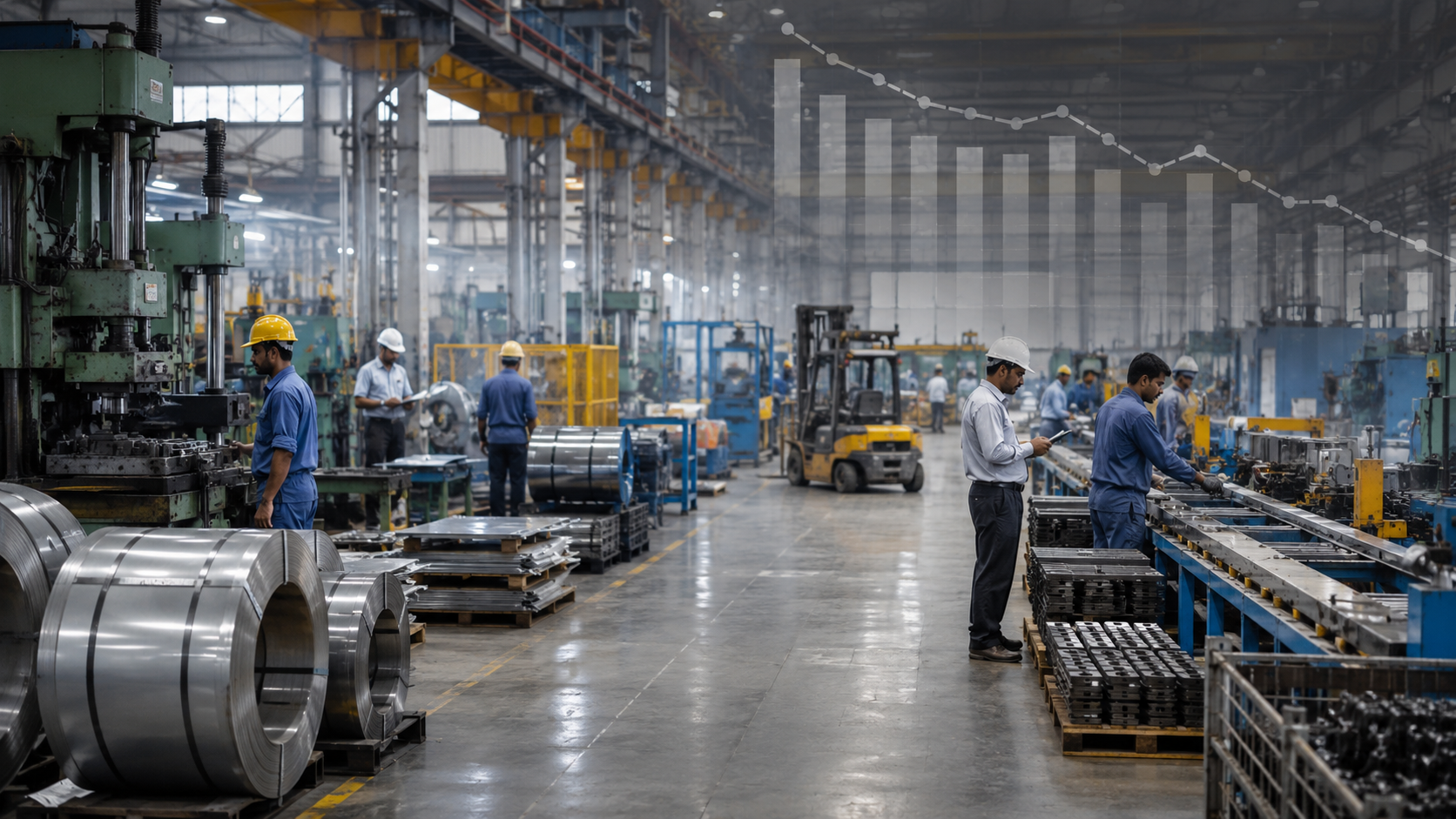
Daily essentials may cost more soon Key Highlights Consumers could soon see another round of price increases in everyday household products as several leading FMCG companies have indicated that they may revise prices in the coming months. The expected hikes come ahead of the festive season, when consumer demand typically strengthens across the country. Companies have cited rising raw material prices, higher energy costs and increasing transportation expenses as the primary reasons behind the proposed price revisions. Persistent geopolitical tensions in West Asia have kept crude oil prices elevated, pushing up manufacturing and logistics costs for consumer goods companies. Among the companies indicating possible price increases is Hindustan Unilever Ltd. (HUL), which has said that products such as detergents and dishwashing items could witness limited price hikes in the coming quarter. Other major firms, including Asian Paints and Dodla Dairy, have also hinted at revising product prices in response to higher input costs. Some companies have already implemented price increases. Havells has raised prices of select products by nearly 8%, while Tata Consumer Products has increased salt prices by around 7%, reflecting the growing pressure on manufacturing costs. The timing is significant as the period between August and November marks India’s peak festive shopping season, covering festivals such as Raksha Bandhan, Navratri, Dussehra and Diwali. Higher consumer demand during this period generally provides companies with greater flexibility to pass on increased costs without significantly affecting sales volumes. Industry experts believe that if consumer demand remains resilient, more FMCG companies could follow with calibrated price revisions across multiple product categories, including personal care, home care and packaged food products. Meanwhile, inflation remains under close watch. Food and fuel prices have already contributed to higher retail inflation in recent months. Although inflation continues to remain within the Reserve Bank of India’s tolerance band, broader price increases across consumer goods could add fresh pressure in the coming months. The Finance Ministry has also indicated that inflationary pressures are gradually spreading beyond food items into a wider range of consumer products. Analysts believe companies will continue balancing pricing strategies with consumer demand as they navigate rising costs and competitive market conditions during the festive season.