India expands semiconductor ecosystem ambitions Key Highlights News Story New Delhi, August 31, 2026: The government has notified the Semicon 2.0 scheme, formally setting in motion a ₹1,27,500-crore programme aimed at expanding India’s semiconductor ambitions beyond chip manufacturing. The scheme seeks to develop a full semiconductor ecosystem covering indigenous chip design and intellectual property, equipment, materials, advanced packaging, research and development and talent development. Semiconductors have become an increasingly important strategic resource globally, particularly as artificial intelligence drives growing demand for advanced chips and memory technologies. The programme was approved by the Union Cabinet on July 15, 2026. The latest notification outlines the implementation framework, incentive structure and eligibility criteria for different categories under the programme. For silicon semiconductor fabs, the scheme provides fiscal support of up to 40 per cent. Compound semiconductor fabs, display fabs and other specialised facilities can receive support of up to 35 per cent. The programme also provides incentives for semiconductor packaging and testing. Advanced packaging projects can receive incentives equivalent to 35 per cent of capital expenditure, while conventional packaging can receive support of up to 25 per cent. The scheme also supports Indian startups and companies working on commercial chip design. Financial assistance for startups may include grants and equity co-investment, while companies may receive support through royalty financing or equity co-investment. Under the earlier phase of India’s semiconductor programme, the government approved 12 semiconductor projects across six states. Three facilities, including Micron’s ATMP plant, Kaynes Semicon and the CG Semi OSAT facility, began commercial production earlier this year. The Semicon 2.0 programme is expected to further strengthen India’s semiconductor ecosystem and reduce dependence on concentrated global supply chains.
IOC Boosts LPG Amid Hormuz Crisis
Refineries raise output during disruption Key Highlights News Story New Delhi, August 31, 2026: Indian Oil Corporation increased liquefied petroleum gas production by nearly 30 per cent and operated its refineries above 100 per cent utilisation as disruptions to maritime trade through the Strait of Hormuz created challenges for India’s energy supplies. IOC Chairman Arvinder Singh Sahney said the company diversified crude sourcing, realigned refinery operations and strengthened supply-chain coordination to secure alternative supplies. The disruption followed an escalation of conflict in West Asia, which affected global energy markets and raised concerns over supplies moving through the strategic waterway. India imports more than 88 per cent of its crude oil requirement, while around 45 per cent of its crude imports and nearly 90 per cent of LPG imports are linked to the Strait of Hormuz. IOC used round-the-clock control rooms, daily reviews and real-time market monitoring to respond to supply gaps and maintain product availability. Despite a significant shift away from Middle Eastern crude grades, the company’s refineries continued operating above 100 per cent utilisation. For the financial year ended March 2026, IOC reported a standalone net profit of ₹36,802 crore on turnover of approximately ₹8.86 lakh crore. The company processed a record 75.45 million tonnes of crude during the year. IOC is also expanding its refining operations, with projects at Panipat, Gujarat and Barauni expected to increase group refining capacity from 80.75 million tonnes annually to around 98 million tonnes. The company is also increasing its focus on petrochemicals, natural gas, renewables, biofuels, green hydrogen and sustainable aviation fuel.
Ex-Mill Sugar Prices Fall 30%
Government measures ease wholesale pressure Key Highlights News Story New Delhi, August 31, 2026: Ex-mill sugar prices have fallen nearly 30 per cent from their peak earlier this month following a series of government interventions aimed at increasing domestic availability and controlling stockholding. The ex-mill price of sugar declined to around ₹47 per kg on Monday from approximately ₹67 per kg on August 18. However, the decline has not yet fully reached retail consumers. Industry sources said changes in ex-mill prices are reflected relatively quickly in wholesale markets, while retail prices generally take longer to adjust. Retailers holding sugar purchased at higher prices may continue selling their existing inventory at earlier rates until fresh stock is procured at lower prices. Retail sugar was selling at around ₹64.23 per kg on Sunday, compared with a wholesale rate of ₹59.72 per kg. The decline in ex-mill prices followed the government’s decision to allow mills that had refined sugar for export to instead sell the product in the domestic market. An estimated 3-3.5 lakh tonnes of refined sugar is expected to enter the domestic market over the next two months. The government has also tightened stockholding norms for bulk sugar consumers. From September 1, bulk users consuming more than 10 tonnes of sugar per month will not be permitted to hold stock for more than 15 days at a stretch. The government has also opened imports, tightened stockholding norms and previously banned sugar exports as part of efforts to manage domestic prices.
PhonePe Launches Offline UPI Service
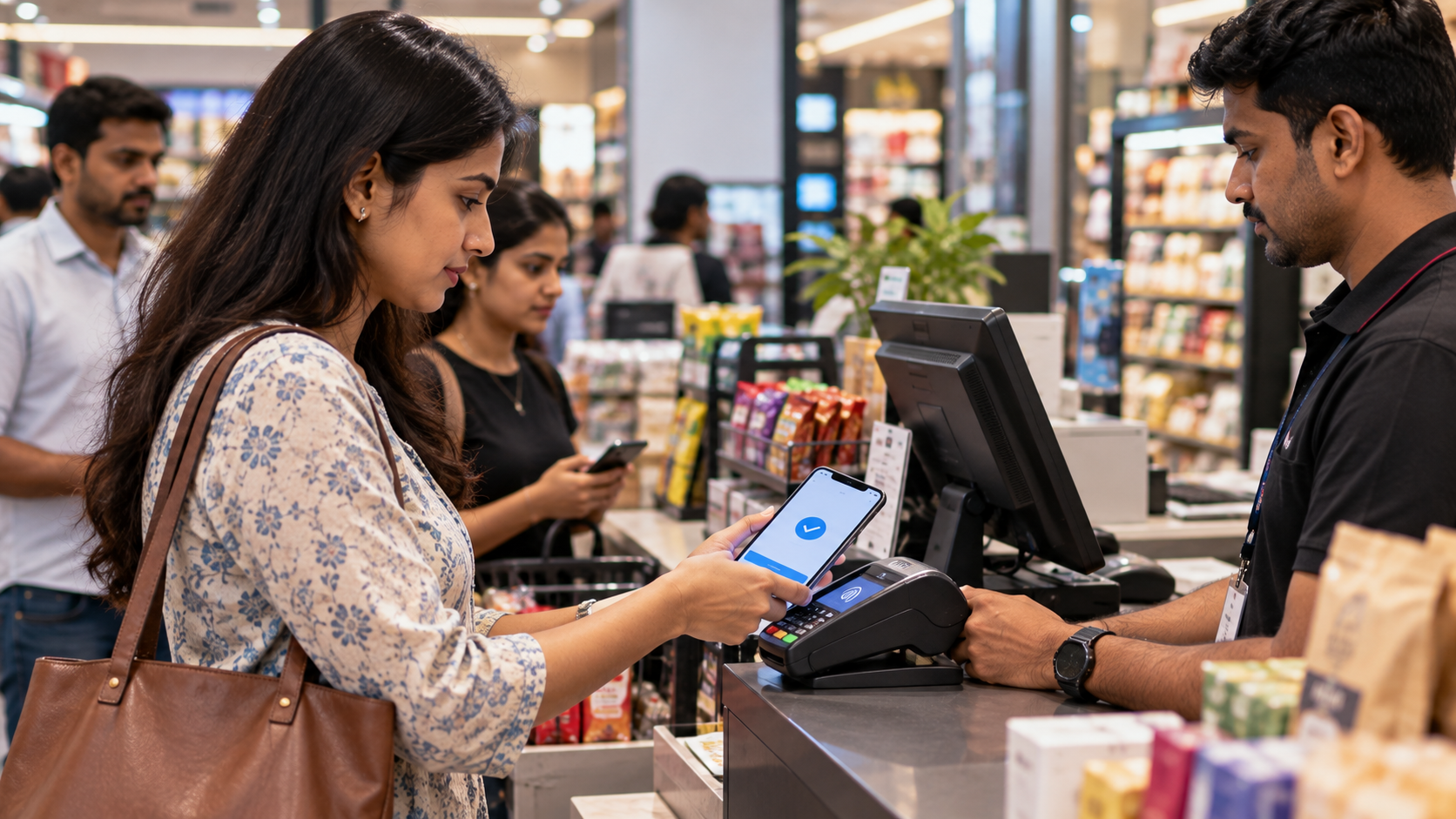
Feature phones get internet-free payments Key Highlights News Story New Delhi, August 31, 2026: Fintech company PhonePe has launched PhonePe UPI 123Pay, a new service designed to enable feature phone users to make UPI transactions without requiring an internet connection. The company said the service is aimed at extending digital payment capabilities to an estimated more than 200 million feature phone users across India. The platform uses a proprietary technology stack and an SMS-based architecture designed to support transactions even in areas with limited 2G connectivity. PhonePe has partnered with handset manufacturers including Nokia, HMD, Lava International and Itel Mobile to offer the service pre-bundled on compatible devices. Users will be able to make peer-to-peer transfers and peer-to-merchant payments through the platform. Feature phones equipped with cameras will also be able to use QR code scanning for supported transactions. The service will additionally allow users to manage their accounts, check balances and view transaction histories. To support first-time users, PhonePe has introduced a voice-first, AI-powered helpline that provides activation guidance in English and 12 Indian languages. PhonePe said future updates are expected to add services such as utility bill payments, mobile recharges and Aadhaar-based onboarding. The company said the initiative is intended to expand digital financial access and bring more users into India’s digital payments ecosystem. As of July 2026, PhonePe reported more than 71.5 crore registered users and a merchant network exceeding five crore partners.
Coal India Targets Two IPOs
SECL and MCL listings planned Key Highlights News Story New Delhi, August 31, 2026: Coal India Ltd is targeting the completion of initial public offerings for two of its largest subsidiaries, South Eastern Coalfields Ltd and Mahanadi Coalfields Ltd, within the current financial year. Coal India Chairman and Managing Director B. Sairam said the company plans to complete the proposed listings by the end of the year, although the final timing will depend on market conditions and government directives. The company’s board had earlier granted in-principle approval for the divestment of up to a 25 per cent equity stake each in SECL and MCL through an offer for sale. The plan also includes the issuance of fresh equity shares representing up to 10 per cent of SECL’s post-issue paid-up capital through the IPO route. MCL’s proposed public issue is expected to be worth around ₹10,000 crore, although the final size and structure will be decided closer to the launch. SECL’s IPO is also expected to be valued between ₹8,000 crore and ₹10,000 crore, according to market expectations. SECL and MCL are among the largest coal-producing subsidiaries of Coal India and together account for approximately half of the company’s total output. The proposed listings follow the public listings of two other Coal India subsidiaries, Central Mine Planning and Design Institute Ltd and Bharat Coking Coal Ltd, earlier this year. The IPO plans are expected to further expand the number of listed subsidiaries within the Coal India group.
Gujarat Invites Global Investors
State targets investment across key sectors Key Highlights News Story New Delhi, August 31, 2026: Gujarat Chief Minister Bhupendra Patel has invited domestic and global investors, entrepreneurs and business leaders to explore investment opportunities in the state, highlighting Gujarat’s strengths in manufacturing, new technologies and green energy. Speaking at the curtain-raiser for the 11th Vibrant Gujarat Summit, Patel said the state offers stable policies, skilled youth, effective governance, scale and transparency for investors. The three-day Vibrant Gujarat Summit is scheduled to begin on January 10, 2027. Patel said Gujarat has emerged as a major global investment destination and called on businesses to participate in the state’s future growth. He invited investors to establish new manufacturing capacities, invest in emerging technologies and explore opportunities in green growth. According to Patel, Gujarat attracted investments worth $74.6 billion between January 2000 and March 2026. He also referred to Prime Minister Narendra Modi’s seven-point reform framework, known as Sapta Dhara, and said Gujarat is prepared to contribute across the identified areas to support India’s journey towards becoming a developed nation by 2047. The framework focuses on manufacturing, agro-food production and food processing, technology and innovation, logistics, defence, the green and blue economy, and soft power. Deputy Chief Minister Harsh Sanghavi said Gujarat would work as a partner with investors and highlighted the state’s growing semiconductor ecosystem. He said six of the 12 approved semiconductor plants in India are coming up in Gujarat, with three facilities having already started production. The state government said Gujarat remains focused on attracting investment across traditional and emerging industries as it prepares to host the next edition of the Vibrant Gujarat Summit.
India’s Q1 GDP Grows 7.8%
India’s economy grew 7.8% in the April-June quarter of FY27, beating the RBI’s 7% forecast as domestic activity remained resilient despite geopolitical and energy-market uncertainty.
E20 Fallout: EV and CNG Car Waiting Periods Stretch
Indian customers examining electric and CNG vehicles at a dealership amid rising demand and longer waiting periods
Rural Resilience, Urban Catch-Up: FMCG and Durables Hold Up Despite Volatility
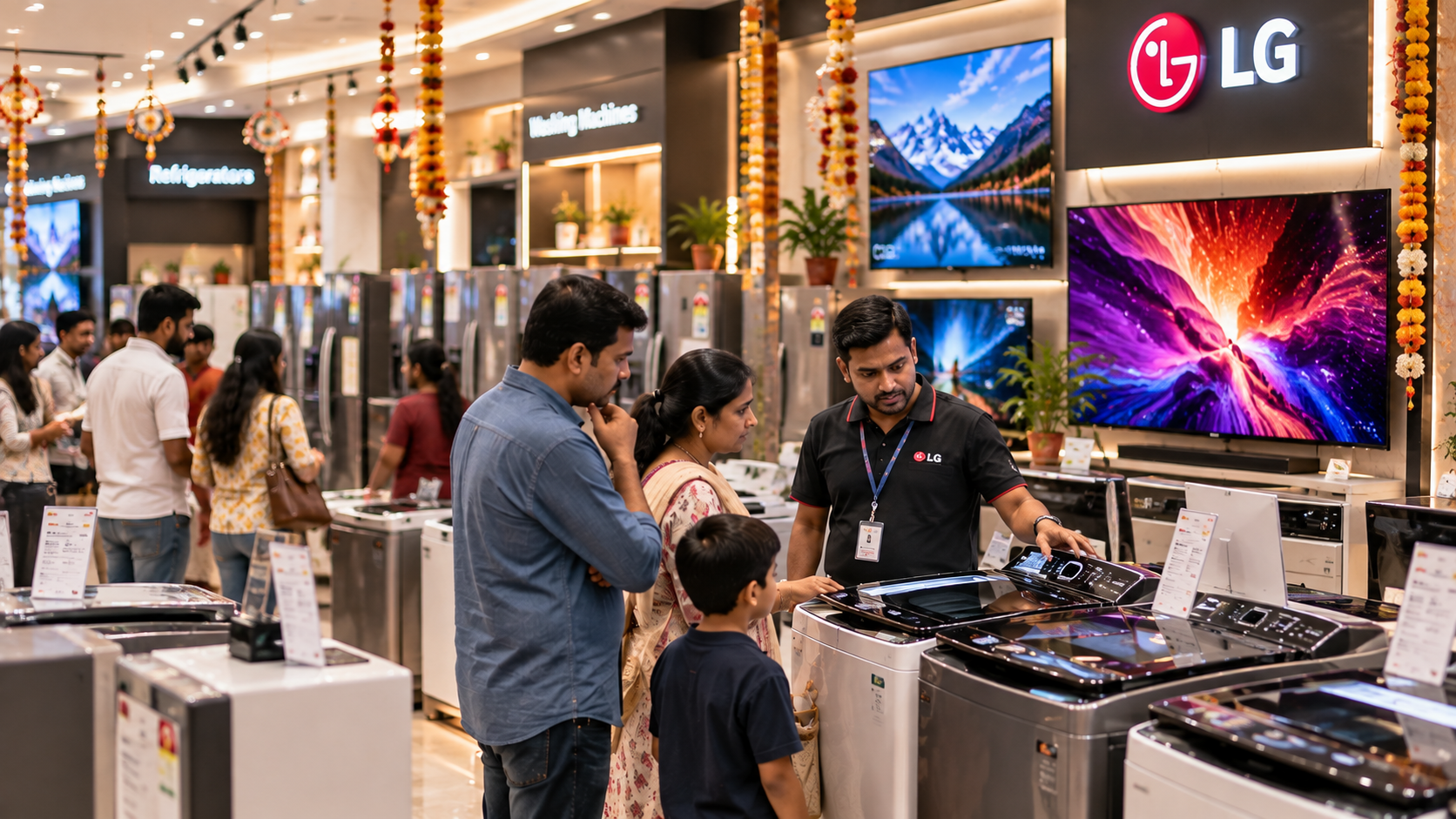
Indian consumers shopping for FMCG products and household appliances in a retail store amid resilient consumer demand
Electric two-wheeler demand accelerates sharply
Electric two-wheelers on an Indian city road reflecting rapid EV sales growth in 2026