

Marketing is emerging as a data-driven, algorithmic exercise and as we say, more of a science than art. Rather than relying on just one stream of data, firms are relying on disparate data sources. The collection of this huge data exposes individuals & organisations to concerns of privacy. These privacy concerns impact small and medium enterprises differently than their larger counterparts. Further, governments and policy makers are increasingly pressing for regulations regarding privacy and data usage. To deal with this, SMEs can solve this ‘Privacy Paradox’ by designing unique and innovative products, competitive advertising and building transparency. Marketing is emerging as a data-driven, algorithmic exercise and as we say, more of a science than art. These benefits of collecting, analyzing and storing cheap data has led to the use of data across many areas of marketing. Whenever we think about privacy, an individual’s brush with privacy is restricted to the assent page that pops up at the time of downloading or upgrading an app. We propose that there’s more to privacy than the consent forms. Further, these privacy concerns impact small and medium enterprises differently than their larger counterparts. First, Data Fusion: Rather than relying on just one stream of data, firms are relying on disparate data sources (website activity data, mobile phone based location data, actual purchase data etc.). All these data sources are fused and analyzed together. This can lead to grave privacy concerns. For example, research has documented that publicly available data can be used to predict social security numbers and publicly available Facebook profile pictures can be used to predict one’s sexual orientation. Therefore, on one hand, data fusion can be advantageous to firms in terms of gaining consumer insights not possible before and at the same time, pose significant privacy threat if not handled properly. SMEs (Small and Medium Enterprises) can be at a disadvantage here as data driven marketing is an algorithm driven function and privacy sensitive algorithms require trained and expert data scientists to aid marketers – a privilege not necessarily available for resource constrained small and medium businesses. Second, Regulatory Frameworks: Governments and policy makers are increasingly pressing for regulations regarding privacy and data usage. Though, tech giants (Facebook, Google and Amazon) remain in the news and face intense media scrutiny, still, we can’t deny the fact that SMEs are at a disadvantageous position than the tech-giants. For example, European Union Parliament has backed a call for tighter regulations on behavioral ads in favor of less intrusive, contextual forms of advertising. If implemented, these regulations will definitely impact the business models of Facebook, Google but one shouldn’t forget that these giants are better equipped than SMEs to handle the challenge. Big firms are at an advantage as they have invested heavily in building sophisticated algorithms (e.g. transfer learning) that work on less data but are highly predictive of consumer behavior. The most recent regulatory framework is ’General Data Protection Regulation’ in May, 2018. First, GDPR encompasses any information that directly or indirectly relates to an identified or identifiable natural person (e.g. IP addresses) as personal data. Further, GDPR requires firms to obtain consent for the usage of their data through simplified forms and any infringement will attract significant monetary penalty. GDPR’s influence on data will have an impact on targeted advertising, personalized recommendations and use of consumer data. Also, India’s equivalent of GDPR – Personal Data Protection Act(PDPA) is set to become legislation soon. Third, Ivory Towers: Large firms can respond to privacy concerns by building closed ecosystems, controlled by a single operator. For example, Apple nudges users to access apps from the Apple store, that hosts apps curated by Apple. Further, Apple has introduced tracking block on Safari (Apple’s own internet browser) limiting ad agencies’ ability to collect consumer data. Google went a step ahead and decided not to provide log-level user data to marketers, therefore, limiting their ability to leverage this data to power their own apps, independent from Google. Rather, firms have to rely on ad exposure data from Google’s in-house Data Hub that further connects to Google’s own attribution, analytics and data management solution. This can protect privacy but also strengthens the monopoly power of tech-giants like Google and Facebook. Though all these factors favor large incumbent firms, there are ways in which SMEs can bounce back and solve this Privacy Paradox. 1. Designing unique and innovative products: Search engine, DuckDuckGo, distinguishes itself from other search engines by not collecting or sharing its users’ personal information and shows each user the same results for a given query, as if this is user’s first visit to the search engine. This is the unique proposition offered by DuckDuckGo. Similarly, open source web-browser Brave is targeted towards privacy-conscious users. Brave’s users can leverage private tabs with Tor – a novel feature that lets a user browse internet anonymously through the Tor network8. 2. Competitive advertising: Microsoft has accused Google of misusing consumer information in its advertising campaigns and small firms can promote their privacy-preserving nature as a way to differentiate them from the giants. Though one must be cautious about outright vile attack, especially during these tough times – i.e. learn from the Microsoft’s Scroogled 9 campaign against Google. 3. Privacy versus Accuracy: If firms are forced to account for privacy (and therefore, leverage less accurate) AI-algorithms, this can lead to biased and unfair decisions. This can act as leveler for small firms, as their resource constraints force them to opt for less accurate algorithms for their business decisions. 4. Transparency and Trust: Research has proven that consumers are more likely to share their data with firms that they can trust and provide a stable consumer experience. Smaller firms should focus on providing a trust worthy experience and gain consumer trust as well as their data. We believe that privacy paradox favors large firms but small and medium enterprises are at advantage if they look at privacy regulations as an opportunity and take deft actions. _______________________________________________________________________________ Anuj Kapoor is

Export volume of Basmati to Iran has dipped
Gurnam Arora, Joint Managing Director, JMD – Kohinoor Foods Ltd, states that the Government of India should institute a system whereby payment transactions between India & Iran can be entertained in any internationally free trade currency. Alternatively, there should be a 3rd Party payment mechanism which would help Indian exporters to secure their long overdue remittances. IBT: What role does Iran play as a market for you? How do you view the potential of the market? Gurnam Arora : For Basmati rice, Iran has been a prominent market and accounted for 34% share in the exports from India in 2018-19. In quantity terms Iran imported 14.83 lakh tonnes of basmati rice in 2018-19, which came down marginally in 2019-20 to 13.19 lakh tonnes (30% share). But during the period April-October 2020, the export volume to Iran has been a mere 4.43 lakh tonnes out of a total export of 27.44 lakh tonnes, reflecting a phenomenal dip in share to 16%. Iranians prefer Indian Basmati rice to any other rice. Discounting for the problems that persist in export of Basmati rice to Iran, I would say that there is tremendous potential and the export could grow up to 20 lakh tonnes over the next three years. This is because if we look at year on year growth since the export to Iran has grown at a CAGR of 14% over 5 years from 2015-16. Thus the importance of Iran as a market for Indian basmati rice with high potential cannot be over-emphasized. IBT: How has the imposition of sanctions on Iran by the US affected trade with your Iranian clients? Gurnam Arora : The genesis of the current set of problems in trade of Basmati rice with Iran is a result of the imposition of sanctions on Iran by US. Because of these issues, India has not been able to import crude oil from Iran since May 2019. Both countries have an agreement to transact business in Rupee terms and accruals from oil imports would be utilized for remittances against export of Basmati rice apart from other non-sanctioned essential items. IBT: Why is the Rupee-Rial payment mechanism not helpful in retrieving payments from Iran? Gurnam Arora : As mentioned, both countries have an agreement regarding trade in Indian Rupees and the system has been functioning very well since its inception. It has been suggested to the Government of India to institute a system whereby payment transactions can be entertained in any internationally free trade currency. As an alternative we have been suggesting the implementation of 3rd Party payment mechanism which would help Indian Exporters to secure their long overdue remittances against stuck up cargo at Iranian ports which amounts to around INR 1750 crore approximately. IBT: What challenges are you facing in routing payments through other countries? Gurnam Arora : The present system is bound by the mutual agreement between the two countries under which only rupee payments are the accepted norm. The Government of India has nominated UCO Bank and IDBI Bank for handling transactions. Today the situation has come to a pass where remittances are not forthcoming from Iran because the Central Bank of Iran is not issuing currency allocations to local Iranian rice importers. Because of this large number of consignments have got stuck at Iranian ports for last several months and the funds of exporters are blocked. This has created an uncertainty because of which exporters are constrained to withhold further shipments for the time being. IBT: How can the Government of India/banks step in to resolve this issue? Gurnam Arora : The present crisis, as mentioned earlier, is aggravated by two factors: (a) There is accepted rupee payment norm through the two nominated Indian Banks and from Iranian side Central Bank of Iran (b) Due to non import of crude oil from Iran, the accumulations in the two Indian Banks have depleted to a drastically low level and cannot take care of the volume of Basmati trade. From trade side, the only solutions that can be foreseen are, I reiterate, that either third party payment mechanism is instituted or the mutual agreement is immediately amended to incorporate a mechanism for payment in any internationally freely traded currently. But for the moment we are keeping our fingers crossed till a workable solution emerges. Gurnam Arora, Joint Managing Director of Kohinoor Foods Limited, is widely acknowledged for changing the way people look at commodity business. A Graduate in Business Management from Amritsar University, not only did he made ‘Kohinoor’, the most trusted & preferred brand in the industry, but also gave the Basmati Rice industry a line of innovations like convenient packaging options and many more value additions for universal consumers that most of the companies today follow. Single minded in his zeal, Mr. Gurnam Arora is also a member of the Basmati Development Fund, APEDA, Indo American Chamber and Ministry of Commerce and has officiated earlier as the President of All India Rice Exporters Association. He is also a part of various industry associations like FICCI, ASSOCHAM, to name a few. Recently, he was also awarded as “Corporate Leader of the Year” among selected few at the PowerBrands Hall of Fame Awards in London. With a keen interest in brand, in the current capacity, Mr. Arora takes care of Kohinoor’s brand development in all the 65 countries where the brand is presently available.

Carotar Rules are leading to the delay in returning of containers
Praveen Vashishtha, Founder, Gxpress, states that Carotar rules are leading to a delay in returning of the shipments due to the pandemic effect. Earlier, there were very random examinations of containers in the US. Now, every next container is going for an examination load. So, this is leading to a 10-15 day delay in returning of containers. IBT: What are the reasons for the unavailability of containers? How is this impacting Indian exporters? Praveen Vashishtha: This is an international scenario because containers travel to and fro between countries as commodities are traded between them. A balance of trade is important to maintain so that there is no dearth of containers in the country. The current shortage of containers is the result of a mismatch between exports and imports. At present, our imports from other nations have reduced because India has changed the import rules; we have increased the duties and taxes on certain products. Another reason for this is that earlier, China was the source for import for majority of commodities for India. But owing to political & strategic reasons, India has reduced its dependence on China for the same. Meanwhile, given the drastic change in shopping behaviour of consumers which drove e-commerce sales, wherein anyone could buy anything from any corner of the world, the exports & consequently the need for exporters have risen. While there was a sudden spike in exports, there was a paucity in the supply of concrete containers, giving birth to the current situation. This shortage of container, significantly drove up the cost of shipping freight to other countries. So, for example, while earlier the cost of shipping something to New York was US$ 2750, currently it costs anything between US$ 3,800 to US$ 4,000. And even now, there is no certainty about the availability of containers. This is leading to delay in delivering orders. Another thing that is happening is that while some of these orders were booked at the initial cost, the cost of the product has increased for the exporters due to the unprecedented rise in the price of containers. Now, there is a difference of almost a thousand dollars per container, which is a huge difference. Further, India does not manufacture containers. Therefore, our country’s dependability, regarding the containers, rests upon all international countries like China, the US, Europe, Canada. IBT: Which are the markets worst hit by container shortage? Praveen Vashishtha: The main affected market is the US because the maximum containers which we have are the US LNG. This is a peak time for the US, we have the Christmas season and Black Friday, which are all the important seasons for the US and Europe. This is the time when we have maximum exports, but as containers are unavailable and the prices are going up, this is the main market which is most affected. Apart from that, Europe and Canada are the other locations where our trade has been affected due to the containers’ availability. IBT: How are the Carotar Rules leading to the delay in returning of containers? Praveen Vashishtha: The Carotar rule is defined for 2020 already. If you know the circular, that circular was issued on 24th August, after the COVID-19 situation. The role Carotar plays is that the customer who is issuing a commercial shipment, has to maintain an ability for that and within a particular time they have to return this back. So, that’s the only rule that we have in our country. If you are going to compare this rule with other countries, they have a very lenient rule, they do not have such static rules as we have in our country. Carotar rules are leading to a delay in returning of the shipments due to the pandemic effect. Earlier, there were very random examinations of containers in the US. Now, every next container is going for an examination load. So, for an examination, if we talk about one container, it is going to take at least seven to ten days in the US and other countries. So, this is straightforwardly a delay of 10 to 15 days for a container. IBT: What steps can the government take to address the situation? Praveen Vashishtha: The government should support the companies who are coming forward and who are interested to start this kind of industrial corridor and create their own container lines. It should promote those people who really want to come ahead and resolve these kinds of issues. Acquiring permissions is not easy if you want to have your own lines from the country. And if you want to start in a business of manufacturing the containers, the kind of permissions we have, it’s not easy to get. That’s a reason people drop the idea. IBT: What repercussions will setting up a national regulatory authority have on container shortage in India? Praveen Vashishtha: Till date, we do not have any access from the government side. So, things are dependent on the freight forwarders and the lines. The freight forwarders and lines, both are struggling. The lines are just showing that they have less containers but at the end of the day, they are the ones who are filling up the pockets. So, this is a situational advantage for both the lines and the airlines. If you talk about the airlines also, the airline prices have shot up like anything because the crude oil was down during this time. So, the operating cost is supposed to be less, but still, the average price before COVID-19 for an airline for India to the US or New York port was approx. 135 to 140 rupees per kg. Now, the same price goes up to 400 to 450 rupees. The situation is the same for the ocean lines also. So, when the container price is going to up, the government should have enough control over the prices because there is supposed to be a fair practice from the lines side as well as the airline’s side. At
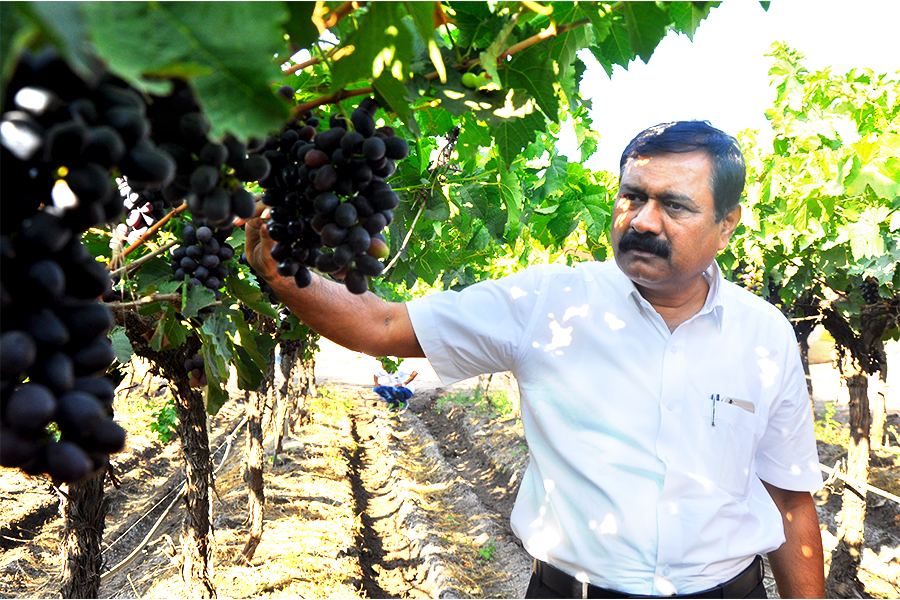
GAP farming helped us to increase our market share
Rajaram Sangle, Director, Sangle Agro Processing Pvt. Ltd., states that GAP farming has helped his business establish a strong hold in European markets. He also claims that farmers have benefited from GAP because of less use of resources like water & pesticides, and thereby save costs by this sustainable agricultural practice. IBT: What do you mean by GAP agriculture? What prompted you to adopt this mode of farming and what other sustainable agricultural practices do you have? Rajaram Sangle: Good agricultural practices refer to a sustainable method of farming incorporating the best suited technology to complement the crop being cultivated. It entails appropriate usage of plant protection chemical and fertilizers, both synthetic and organic. It includes, but is not confined to, IPM, INM, suitable and viable irrigation system like drip, sprinkler etc. Product safety and workers safety are primary concerns of GAP. I mainly export to European region. Almost all markets in Europe have made global GAP mandatory. GAP requires minimal use of pesticides as they’re toxic for human health. The documentation process involved in this made us keep a check on the limit and kinds of pesticides and chemicals that were being used in our farms. Prior to this, there was no documentation and no defined system when it came to the kind of resources which were being deployed at our farms. That prompted us to adopt GAP farming around 15 years ago. IBT: How did you bring farmers on board to cultivate their produce according to these practices? What benefits does this agricultural practice have for them? Rajaram Sangle: The farmers are brought under a group and the technical support through technical persons are given to producers. Once farmers have the required documentation in place, GAP allows them to save costs as it prevents an unnecessary usage of pesticides & water. Moreover, there is a promising market for Indian farmers practicing GAP farming in Europe. IBT: What were the initial hiccups that you faced while practicing it? How did you overcome it? Rajaram Sangle: The biggest problem was the infrastructure. In GAP, one of the biggest challenges is that it requires hygiene – which wasn’t the case with Indian farms. So, we asked farmers to build toilets at their farms, storage facilities for pesticides and clean drinking water. All these parameters were taken care of. Another challenge was that farmers were reluctant to adopt this farming practice initially as it involves a lot of documentation and audit of farms. Farmers were initially wary of allowing outsiders to audit their farms. In order to bring farmers on board, we made them familiar with the various benefits that it brings. We ensured them that we will teach them about the process of documentation. Gradually, when farmers realised that they have to hire fewer farm labour and saving time, fertilisers & costs, more farmers came on board. IBT: Which countries can India look up to for lessons in GAP farming and what can it learn from them? Rajaram Sangle: We learned GAP farming from Europe, where it is very structured. After the success of this farming practice in Europe, other nations like Japan from where Europe imports agricultural commodities were asked to come on board. GAP farming then came to India. IBT: What are the key markets that you serve? What benefits has GAP farming as a business model brought for you in terms of ROI & profit maximization? Rajaram Sangle: We export mainly European Countries where Global Gap is mandatory. GAP helped us to increase our market share. It enabled us to increase the confidence among our customers by establishing traceability. Plus, it also helps farmers to save their costs. IBT: How did COVID-19 impact your business? What challenges did you face & how did you get past them? Rajaram Sangle: The pandemic had a major impact on our business. Owing to the lockdown, shutting down of hotels and curbs on the entry of tourists in India there was a decline in the sales of our products by around 40%. Moreover, given the short shelf-life of our products, there was wastage and high losses. Rajaram Sangle is a Director at Sangle Agro Processing pvt Ltd, Maharashtra. The views expressed by him are personal and not necessarily those of his organisation.

Container shortage acting as dampener for India’s exports
Container shortage is proving to be a devastating last mile barrier to India’s robust export growth in recent months. It is important for authorities to manage the immediate issues hampering container availability and also institute a proper overarching regulatory framework for such issues in the long term. Of late, shipping lines are shutting out containers abruptly, giving reasons that the vessels are full. This paucity of containers is the result of a sudden improvement in exports and a slump in imports, especially from China, which has created a shortage of containers. The situation is proving detrimental for Indian exporters & importers since it is leading to a surge in shipping charges and cancellation of orders. Building a robust container production set up in the country, faster customs clearances and having a nodal regulatory agency for the sector can help mitigate such eventualities in future. Image Credit: https://bit.ly/3fzLpri According to Indian Container Market Annual Report, 2019, the total thoroughput of Indian container terminals in FY 2018-19 was 16.99 million teus, with a year-on-year growth of 10.5%, while total installed capacity stands at 28.65 million teus. It also notes that the Indian container market is recording incremental growth on account of several policy reforms such as mechanisation, deepening the draft and speedy evacuations. However, despite the impressive performance of the sector, the sector finds itself in the middle of a serious problem today – the paucity of containers in India. This article attempts to analyse the causes for this issue and offer some suggestions based on insights from the industry. Source: Indian Container Market Report, 2019 Source: Indian Container Market Report, 2019 COVID-19, China & the paucity of containers in India According to industry estimates, India’s container capacity is currently pegged at 27 million TEU. This, however, is not sufficient to meet India’s demands since of late, shipping lines are shutting out the containers abruptly giving reasons that the vessels are full. This paucity of containers is the result of a sudden improvement in exports and a slump in imports, especially from China, which have created a shortage of containers for exports. India’s export volume grew by 24% between July and September, while its imports reduced by 28%. In October, while India’s exports registered a 5.4% fall, its imports recorded an even higher fall of 11.26%. Amidst the lockdowns, trading was low and the shipping lines also had to cut capacity. However, now that the exports have rebounded, India’s imports (particularly from China, with which it is currently facing severe tensions due to the border fallout) are down. The containers are piled up at some ports and limited in others. Container Shipping Lines Association (CSLA) executive director Sunil Vaswani explains: “As a result, the shipping lines, which, until July 2020 used to ship out empty containers from India, had to start repositioning empty boxes into the country and move them inland to demand locations at a huge cost for the shipping lines,” . This problem has been worsened by a few other factors: (i) Congested railroad system in the US is further leading to delays; (ii) Around 25% dip in the capacity of shipping companies owing to the low demand due to the pandemic; (iii) Halt in the clearing of containers between March 23 to April 15; (iv) Quarantining of vessels due to added checks on Chinese shipments and an overall negative outlook for China; and (v) Customs (Administration of Rules of. Origin under Trade Agreements) Rules, 2020, and the consequent delay in delays in shipments. This has started taking a toll on India’s exports and imports. According to Mr Ravi K Passi, Chairman-EPCH, the paucity of containers is proving to be a major roadblock for India’s handicraft exporters. Jaipur-based logistics start-up Gxpress, which needs 10-15 containers every week for sending shipments to the US, is now paying nearly US$ 3,600 for each container, up 40% in last one month. It is being reported that ship-liners have raised rates by nearly 60% in the last three months for moving a container to the US. Similarly, in case of African ports, the prices have more than doubled. Rising against the low tide One of the most obvious solutions to this pressing matter is domestic production of containers in India, as pointe1d out by Mr. Vivek Agarwal, MD, Capital Ventures Pvt. Ltd. While the facts that India’s exports exceed its imports, and that India has a large pool of labour work in India’s favour at the moment, India must focus on becoming a larger ‘steel recycler’. Higher price of the metal in India as compared to China makes it an uncompetitive location for container production as it accounts for more than 50% of raw material cost. In this regard, Praveen Vashistha, founder of Gxpress, says: To boost exports, India needs to have a robust logistics system. The government should support container manufacturers in the country & those firms that want to start their own industrial corridors. The process of granting permissions that are involved in the process of starting a company should be made easier. In the immediate context, expediting customs clearances and efficiently managing the lopsided distribution of containers at ports would also help in resolving the issue. Industry is also of the opinion that there should be a nodal regulatory agency for the shipping sector and the proposed National Logistics Efficiency Advancement Predictability and Safety (NLEAPS) Act should be formulated and implemented soon to protect the export-import sector from such abrupt changes.

Remote working provides boost to cloud computing
Sid Nag, VP Analyst, Cloud Services, Gartner, Inc, advises cloud service providers to prepare for the new normal of a more permanent remote workforce in the rebound phase of the COVID-19 pandemic. Cloud providers can demonstrate the inherent strength and adaptability of their services by sharing cultural tips for how remote work at a massive scale must be done. The onset of the coronavirus (COVID-19) has forced organisations to rethink the way they work and operate. Only 18% of IT leaders believe their businesses are highly prepared for the impact of coronavirus, according to a March 2020 Gartner webinar survey. In a couple of months, businesses had to reinvent themselves, reset their IT priorities and renew for the next phase of disruption. In 2020, the use of videoconferencing and other digital collaboration tools has stressed the limits of backend support services, many of which are cloud-based, and significantly increased the volume of traffic in the networks connecting users to their services. This trend is likely to continue, as recent Gartner survey results show 74% of CFOs intend to shift some employees to remote work on a permanent basis. Most corporate networks are not prepared for the onslaught of remote work being driven by COVID-19 (aka coronavirus disease). While companies have spent money to build out their existing capacity to handle remote work, few have come close to provisioning capacity many times their established norms. Customers’ concerns about performance problems that are building due to the increased load of remote workers are not initially focused on the hyperscale cloud providers. Instead, customers are noting slowdowns in connections and bandwidth limitations in their normal workplace and collaboration applications. Many in the workforce do not have a position that is conducive to remote working (e.g., cafeteria workers and janitorial services). Consequently, the microeconomies associated with office complexes are being impacted as remote workers stay away. Now is the right time to move to cloud Cloud computing is well positioned to survive, and even thrive, during the coronavirus crisis. Cloud providers can demonstrate the inherent strength and adaptability of their services by sharing cultural tips for how remote work at a massive scale must be done. Offering cloud-based collaboration tools at a discount or for free is a good start as we’ve seen Cisco Webex, Google, Microsoft Teams, Slack and Zoom do already. Segmenting and prioritizing workloads, especially those that produce significant networking traffic, is recommended in order to balance the immediate needs of stay-at-home workers with processes that can execute with a lower priority. The swell of remote employees provides an opportunity for cloud providers to affect a sea of change in how much digital work becomes the norm rather than the exception — using their cloud. 3 immediate actions for CSPs Here are three actions cloud providers must ensure they are taking to support end users and deliver uninterrupted service during the COVID-19 pandemic, if they aren’t already. Ease customers’ concerns by demonstrating a strong ability to handle spikes to both their VPNs and cloud-supported applications that are brought on by rapid increases in remote workers. Build customer confidence by both stress-testing cloud data centers, networks and services and releasing the results of such testing to customers. Prevent both financial and work hardships during the COVID-19 outbreak period by practicing customer engagement and employee philanthropy to act as a stopgap. CSPs should prepare for the new normal of a more permanent remote workforce in the rebound phase of the pandemic. It will be important to plan for new services and applications that will spawn as a result of this, such as those based on virtual reality and other advanced technologies that will serve as core underpinnings of the new work environment in the post-pandemic era. How can MSEs make the most of this opportunity? According to Gartner research, 75% of midsize enterprises (MSEs) base their cloud sourcing decision on inadequate financial information and cost savings expectations. MSE CIOs must understand the practical benefit that they will be able to realize and adjust their cloud strategy accordingly. They need to understand that it does not take much in terms of absolute dollars to represent a double-digit increase to a typical MSE IT budget of US$ 5-10 million, of which 37% is dedicated to personnel. To deploy cloud solutions successfully in an MSE environment, CIOs must: Eliminate IT time spent maintaining on-premises infrastructure by adopting secure, cost-effective, cloud-based alternatives. Address their organization’s disaster recovery objectives by identifying cloud-based alternatives to conventional disaster recovery solutions. Improve business and IT operational effectiveness through prescriptive adoption of cloud services. Deploy or migrate workload to cloud services by making a definitive determination that desired operating expenditures and business outcomes will be achieved. Sid Nag is a Vice President in the Technology and Service Provider group at Gartner, focused on cloud services and cloud technologies from the vendor, service provider as well as the buyer perspective. Mr. Nag’s areas of focus include public cloud, hybrid cloud, multi-cloud, CIPS, cloud trends, cloud market insights, cloud product strategy, cloud marketing strategy, cloud go to market, cloud brokerage, cloud migration, cloud managed services and cloud networking. Among other cloud-related coverage, he provides thought leadership for the Gartner public-cloud market share and the public-cloud forecast research programs. He is a member of the Gartner Cloud Leadership Council. Mr. Nag is Gartner’s most widely quoted analyst in the press including Wall Street Journal, Forbes and Bloomberg. Mr. Nag is currently the Gartner Vendor Lead Analyst for Dell. Mr. Nag came to Gartner from Dell, where he held the role of Senior Director of Enterprise Strategy, driving strategic direction for initiatives with major technology and alliance partners as well as global system integrator for cloud, virtualization and integrated systems. While at Dell, he also spent two years as Senior Director of Product Management and Marketing for Cloud Services and Networking Consulting Services. Prior to joining Dell, he spent six years at Cisco in various leadership roles, focused on competitive strategy, business development and technology

Despite COVID, India & Brazil are pursuing US$ 15 bn trade target by 2022
H.E. Mr. André Aranha Corrêa do Lago, Ambassador of Brazil to India, envisages huge opportunities for bilateral investment between India and Brazil in in electrical manufacturing, biofuels, aerospace, defence, pharmaceuticals, and information technology. Trade is also way lower than the potential, considering that India and Brazil are among the top ten economies of the world. However, as the two countries aggressively explore avenues to intensify business engagement, he admits that a major challenge is making private sector aware about opportunities in both countries. IBT: How has the COVID-19 crisis affected Brazil’s economy and trade? What are the industries that Brazil considers key to economic revival post-pandemic and why? André Aranha Corrêa do Lago: Estimates for GDP, as expected, are still of a 5% contraction in 2020, approximately. The impact – less severe than that forecast for many G20 economies – would have been even greater, were it not for the countercyclical measures adopted by the Brazilian Government, including Emergency Aid cash transfers; federal transfers to local authorities for improvements in health services; the Emergency Credit Access Program and the National Support Program for Micro and Small Enterprises. These measures should mitigate the severity of the recession and preserve the financial integrity of businesses and families, setting a basis for recovery. Brazil is facing two very clear short-term impacts from the COVID-19 crisis. First, an external demand shock caused by the slowdown in other countries. Second, an internal demand shock due to the impact on consumption, production and services. On a less negative note, agricultural exports have held up well over this period and should remain a reliable growth driver for our economy. According to recent estimates, some industrial sectors are also on the path to recovery, such as construction, pharmaceuticals and electrical appliances. Retail commerce too has shown improving signs with the gradual easing of lockdowns. The oil price slump naturally may harm Brazil as a net oil exporter. Resumption of sustained economic growth will also depend on the continuity of the reforms agenda with an emphasis on fiscal consolidation and improving resource allocation. Sustainable development is also a key priority, demonstrated by the recent approval of a new Bill on basic sanitation — with an extraordinary potential for unlocking public-private partnerships — and the continued development of our renewables sector, including sugarcane ethanol fuel. IBT. How has the pandemic impacted Brazil’s approach to its trade relations with partner countries and outlook towards global value chains? André Aranha Corrêa do Lago: Concerning international trade, in the 1st semester of 2020, we experienced a relatively small decrease of 6% in comparison with the same period in 2019. The size and competitiveness of the Brazilian agribusiness accounts for this relative resilience, which was particularly remarkable given that most countries faced significant reductions in exports caused by falling demand and logistics disruptions. One of the main lessons of the pandemic has been the importance of ensuring a better-balanced production capacity in key areas such as pharmaceuticals and medical equipment. We have also seen that we need to integrate more deeply into global value chains, including in the health sector. IBT: What are your views on the current level and potential of trade between India and Brazil? What are the major areas where you see potential of collaboration between the industries of the two countries? André Aranha Corrêa do Lago: India is already a key partner in Asia and our trade ties have much potential for growth. Brazil and India have an important trade and investment relationship, but the figures remain shy considering the size of two of the ten largest economies in the world (5th and 9th). In 2019, Brazil’s exports to India stood at US$ 2.78 billion, while India’s exports to Brazil were recorded at US$ 4.26 billion. Following President Jair Bolsonaro’s visit in January with an impressive official and business delegation, both governments committed to expanding bilateral trade to US$ 15 billion by 2022. In spite of the difficulties brought by the pandemic, we are pursuing this ambitious target by exploring the complementarities between our economies. We are confident that the Indian economy will soon resume a growth trajectory. Brazil is keen to play a greater role in India’s development story by providing the products demanded by an expanding and affluent middle class, by benefiting from the globally competitive products developed by Indian business, particularly in the technology sector, and by engaging Indian innovators in partnerships to meet the challenges of our times. Brazil has proven through the years – and most recently during the high point of the pandemic – that it is a reliable trading partner. We expect to play an increasing role in providing for high quality, diverse, nutritious and sustainable agricultural products that contribute to Indian food security. Furthermore, sparked by the President’s visit in January, we have also seen an increased interest for bilateral investment opportunities in electrical manufacturing, biofuels, aerospace, defence, pharmaceuticals, and information technology. These are all areas where collaboration between both countries can result in excellent market opportunities for our businesses. One of our main challenges remains to raise the awareness of the private sectors to the emerging opportunities of each market. The Brazilian Government has been working with our Indian counterparts and business associations to address this, including by bringing the innovation agenda to the forefront of our bilateral relationship. The Memorandum of Understanding signed between the Brazilian Trade and Investment Promotion Agency (APEX Brazil) & Invest India in January is already bringing tangible results. IBT: Distance is a major barrier to ease of trade between the two countries. What roadmap is being considered and worked on to revive it? André Aranha Corrêa do Lago: While distance might be a challenge, it certainly is not a barrier to trade. For instance, Brazilian exports to Asia have increased significantly in the past decade with China – farther away than India – now our main trading partner. Increasing bilateral investment and supporting closer contacts between Brazilian and Indian businesses is one of the
Year 2020 saw the largest number of new customers on Amazon.in
Manish Tiwary, Vice President, Amazon India states that customers from over 99.3% pin codes shopped on Amazon.in with more than 3X more customers signing up for Prime during the festive season as compared to a normal business day, with 3 out of 5 signups coming from beyond the metros from cities & towns like Agra, Bhopal, Dehradun, Gorakhpur, Vijayawada and Kottayam. IBT: How have sales on Amazon India trended in the post-COVID period as opposed to the previous years? Manish Tiwary: Sellers on Amazon.in witnessed their biggest Great Indian Festival (GIF) bringing happiness to millions of customers across all corners of the country. Close to 600 sellers saw more than INR 1 crore in sales while over 6,500 sellers have clocked sales worth INR 1MM (10 lakh) in SMB pre-festive lead up and during the Great Indian Festival. With over 1.2 lakh sellers receiving orders, we are humbled by how sellers, brands and ecosystem partners nationwide have come together during these unprecedented times to spread joy across the country. With 90% of new customers coming from smaller cities, this year saw the largest number of new customers shopping for the first time on Amazon.in. Customers from over 99.3% pin codes shopped on Amazon.in, with more than 3X more customers signing up for Prime during the festive season as compared to a normal business day, with 3 out of 5 signups coming from beyond the metros from cities & towns like Agra, Bhopal, Dehradun, Gorakhpur, Vijayawada and Kottayam. Prime members from 98.3% pin codes of India shopped during the Festive season. For the first time, customers experienced GIF in Hindi, Tamil, Telugu, Malayalam and Kannada. Customers managed their budget through affordability programs fueling consumption across the country. Credit amount of INR 2,700 crore was disbursed through partners. IBT: Which are the categories doing relatively better during the lockdowns and after, and what insights do they reveal on consumer behaviour during this period? What were your expectations from consumer facing sectors in the current festive season? Which key products are likely to consumer demand? Manish Tiwary: Customers shopped for everything big and small this festive season. Top sold categories included smartphones, large appliances, fashion, consumer electronics, home & kitchen; registering the biggest sales ever for devices. 50% of all premium smartphones being bought on Amazon.in were 5G ready. Over 1.5 million customers bought a phone from Amazon for the first time. Over 40% customer growth from tier-II and tier-III cities. Customers purchased more iPhones in 29 days of the Great Indian Festival than all of last year. Customers upgraded their work & study from home setup – 10 PC devices (laptops and desktops), 9 routers and 4 printers bought every minute during the festive season on Amazon.in. New photography trends emerged this year with drone cameras, mirrorless cameras and vlogging cameras gaining popularity from top brands. 120 audio products were purchased every minute. Gaming continues to enthrall customers – more than 2 computer accessories bought every minute. Gaming accessories, graphic tablets, playstation, Xbox, nintendos and virtual reality brand Oculus see stellar growth. Customers get more environment conscious with 2 out of 3 refrigerators bought being energy efficient. 99% of all TVs sold this season were smart TVs. One in two TVs sold during GIF were Alexa-enabled Televisions. Customers shopped across Men’s Casual wear tops and shoes, Women Ethnic wear, Kids Apparel, Winter wear, Athleisure, Fashion Jewelry, Smartwatches and Travel luggage. In Apparel, home essentials like t-shirts, innerwear, sleepwear shorts, Women kurta, Sarees, Men’s ethnic, Smartwatches, Travel luggage, Women Sandals, Jewellery were the popular products during the festive period. Customers purchased Gold coins, Gold pendants, Earrings, Rings, Necklaces and more this festive season. Customers showed their love for Designer Boutique. RIVER – a newly launched, affordable, multi-designer brand created in partnership with some of India’s most celebrated designers – JJ Valaya, Ashish Soni, Suneet Varma & Manish Arora popular this GIF. IBT: How did the lockdown affect your supply chain and operations, and what approach did you follow to normalise them in collaboration with your partners on the platform? Which product categories, if any, continue to be impacted by disruptions and why? Manish Tiwary: We are humbled how sellers, brands and ecosystem partners nationwide have come together during these unprecedented times to spread joy across the country. We continue to help our sellers and partners reach millions of customers across the country and support them in accelerating their business. At the same time, our aim is to help our customers find everything they need during the festive season and deliver it safely to them. In order to ensure safe and reliable deliveries, and serve customer demand during the Great Indian Festival, Amazon has ramped up its delivery infrastructure adding close to 200 delivery stations and added tens of thousands of delivery partners to its network. Amazon.in expanded its fulfilment footprint with more than 60 fulfilment centres in 15 states offering a storage capacity of over 32 million cubic feet to serve customers in the farthest parts of the country. Further, we have announced 5 new sort centres and expansion of 8 existing sort centres across the country to strengthen fulfilment capacity. In addition to this, we have created more than 100,000 seasonal job opportunities ahead of the festive season across our operations network in the country. IBT: With people stepping out of their homes post-lockdown, do you see some normalisation of customer demand from your platform? What is your projection on expected revenues in the coming years and what are your plans in terms of expansion in India? Manish Tiwary: One thing we’ve learnt from the COVID-19 crisis is how important a role Amazon and e-commerce can play with enabling policies – for our customers as much as for small businesses & economy. We take this responsibility seriously, and we’re proud of the work our teams are doing to help customers through this difficult time. At this moment in time, our focus is to ensure our customers get all that they need

Digitally determined SMEs are leveraging public cloud
Rishu Sharma, Principal Analyst, Cloud & Artificial Intelligence, IDC India, surmises that budget limitations and need to meet up with capacities are among the top drivers for the SMBs to adopt cloud. They have been leveraging enterprise applications such as accounting software and core HR applications and could see an increased use of managed services for collaboration, security, data management etc. IBT: How has COVID-19 impacted the adoption rate of cloud computing across the world and for India in particular? Rishu Sharma: COVID-19 has accelerated cloud adoption for organizations in India as businesses look to gain resiliency and meet up with the demand for additional capacities. Organizations in India are planning to increase their investments across the cloud segments including IaaS, PaaS and SaaS. Our survey shows that establishing digital infrastructure resiliency is among the top priorities for Indian organizations and cloud will play a pivotal role as they progress to the new normal. As per IDC’s COVID-19 impact survey, Wave 5, more than 58% organizations in India are planning to increase investments in cloud computing. IBT: What are the drivers for this shift? Which industries have emerged as new growth avenues for cloud computing adoption and why? Rishu Sharma: There are multiple factors driving this demand including seamless business continuity, cost optimization, scalability and optimizing operations to create resiliency, are some to name a few. We are seeing the demand being generated as a result of online education, virtual streaming and maximizing workforce productivity as some of the key use cases driving demand across education, media and ITeS verticals. Apart from these, as a result of the supply chain disruption in the manufacturing industry, there is likely to be increased focus on standardizing operations, increased automation, and more sustainable operations, all of which will enforce organizations to relook and modernize their supply chain systems. The banking sector is looking at the increased adoption of online banking, mobile banking, and self-service. We are also witnessing conversational platforms being seeing an uptick in this environments. In the healthcare segment, collaboration platforms and conferencing solutions are being leveraged for diagnosis, screening, and better collaboration. IBT: What benefits do DAAS and SAAS provide for Indian SMEs in particular, as they embrace greater levels of digitisation and formalisation? Rishu Sharma: There is an uptick in the communication, collaboration applications and cloud-based VDI adoption primarily being driven by remote working. Organizations are able to achieve benefits like seamless business operations, uninterrupted access to data, customer continuity and also sales continuity in form of SaaS-based CRM. While the spend by SMBs has been impacted as a result of COVID-19, the digitally determined SMBs are leveraging public cloud services to meet up with their business demands. Budget limitations and the need to meet up with capacities are among the top drivers for the SMBs. SMBs have been leveraging enterprise applications such as accounting software and core HR applications etc and are likely to see an increased use of managed services for collaboration, security, data management etc in the long term. Cloud is imperative for these organizations as they focus on gaining business agility and productivity while managing the cost of operations. IBT: What should be the approach to cloud deployment by SMEs to ensure optimum utilisation and maximum benefits? Rishu Sharma: The current environment has resulted in organizations recalibrating their business plans. But one thing is certain that businesses have realised that they will have to leverage technology to become resilient in their path to the new normal. While some SMBs were already leveraging public cloud, the current environment has only been a catalyst to push their adoption further. The cloud deployments would require developing the organization’s cloud plans, taking stock of current applications, evaluating the workloads for cloud (best fit, security, end of lifecycle etc) and also focusing on the skills aspect to with IT teams being trained for cloud environments. IBT: With the government aggressively backing Digital India, what role is cloud computing playing in governance, and how do you see its role getting transformed in the coming years? Please also provide some use cases in this context? Rishu Sharma: The government’s focus on citizen enablement and healthcare has resulted in state governments exploring use cases like AI-powered crowd surveillance, data analytics, drone-based surveillance, emergency response platform and automation to name a few. Rishu Sharma leads the consulting and research practice for cloud and artificial intelligence (AI) markets in India. She is involved in advisory assignments for IT vendors in the areas of strategy, strategic marketing, and end-user insights across technologies and industry verticals. She also advises tech buyers (CIOs and lines of business) in their business planning, for them to make informed, viable, and sustainable strategic decisions on cloud and AI. Rishu has over 11 years of experience in the fields of consulting, business research and project management, digital marketing, presales, and bid management in the IT industry, focusing on hardware, software, and IT services.

Cybersecurity: The new corporate DNA?
As remote work became the new normal in the face of COVID-19, companies became soft targets for hacktivists as their employees worked in less secure work environments. A study found that states that the number of cyberattacks on Indian organisations doubled in March 2020 from January 2020. Cybersecurity will hence become a way of life for all stakeholders. Cybersecurity will hence become a way of life for all stakeholders. In order to deal with this situation, companies need to make cybersecurity as a way of life. Building a cyber-risk free ecosystem should be part of a firm’s DNA – not just a reactive addition. This entails training employees to detect and report cyberattacks & using end-to-end encrypted collaboration tools. As COVID-19 shook businesses across the globe and companies evolved to remote work in a bid to adjust to this new normal, organizations were left with no choice but to rapidly move towards adopting new age technologies. However, sooner rather than later, cracks began to emerge resorted to telework, long after most expected a return to their workspace. As remote work continues to garner traction, employees became soft targets for hacktivists as their home Wi-Fi networks likely have weaker protocols that hackers can access more easily. A PwC report states that the number of cyberattacks on Indian organisations doubled in March 2020 from January 2020. It adds that phishing domains resembling the Centres for Disease Control and Prevention cropped up all over the world in an attempt to obtain credentials or deliver Trojans by exploiting human anxiety related to the COVID-19 outbreak. According to another study, 68% of Indian companies surveyed admitted that as employees connected from outside the corporate (fire)walls, secure access turned out to be the biggest challenge for the IT security department in most organisations when supporting remote workers. Vishak Raman, director (security business – India & SAARC), Cisco, explains, “With organisations forced to shift to a new way of working almost overnight, the newly distributed workforce became a focal point for malicious actors. As a result, the pandemic has amplified the criticality of cybersecurity and brought new complexities to the fore.” Gearing up for an ordeal by fire A study by EY finds that only 31% Indian companies that it surveyed say that their cybersecurity team is involved right from the start of a new business initiative. It adds that just 39% of organizations quarterly schedule cybersecurity as a board agenda item. This approach needs to change if companies and countries are to battle cyberattacks. As Dr. Pavan Duggal, Cyber Expert and Senior Lawyer, Supreme Court of India believes, “These are unprecedented times where a new world order is replacing the existing systems. After the pandemic, we enter a new age where the ground reality is different with different rules of engagement. Cybersecurity will hence become a way of life for all stakeholders.” The following strategies can be deployed by businesses to mitigate the risk of cyberattacks: i. Raising alarm As employees work from their homes, it is more important than ever to develop their ability to detect and report cyberattacks. This requires companies to train users about the possibility of such threats and testing the efficacy of training. Employees need to be made aware about using a secure VPN, advance malware protection & using end-to-end encrypted collaboration tools. ii. Reflection time This is a good time to reflect on the organization’s security awareness plan and to see where it stands in terms of its preparedness. This entails a better understanding of the organization’s commercial imperatives and the ability to anticipate the evolving cyber threats. Allocation of a certain chunk of their budget to developing a safety valve for their remote workers will be crucial in this regard. ii. Re-evaluate status quo Companies may also need to re-evaluate their current framework for protection against cyber threats. One thing that is a must is to draw up fresh contracts that make data protection legally binding for their employees and put the onus of data leak on employees in a work from home environment. Softwares which offer solutions like blocking the copying of data in external USB drives can also be devised to ward off the threat of cyberattacks. Firms also need to invest in Security as a Service Solutions (SaaS) such as embracing cloud content security provider.
