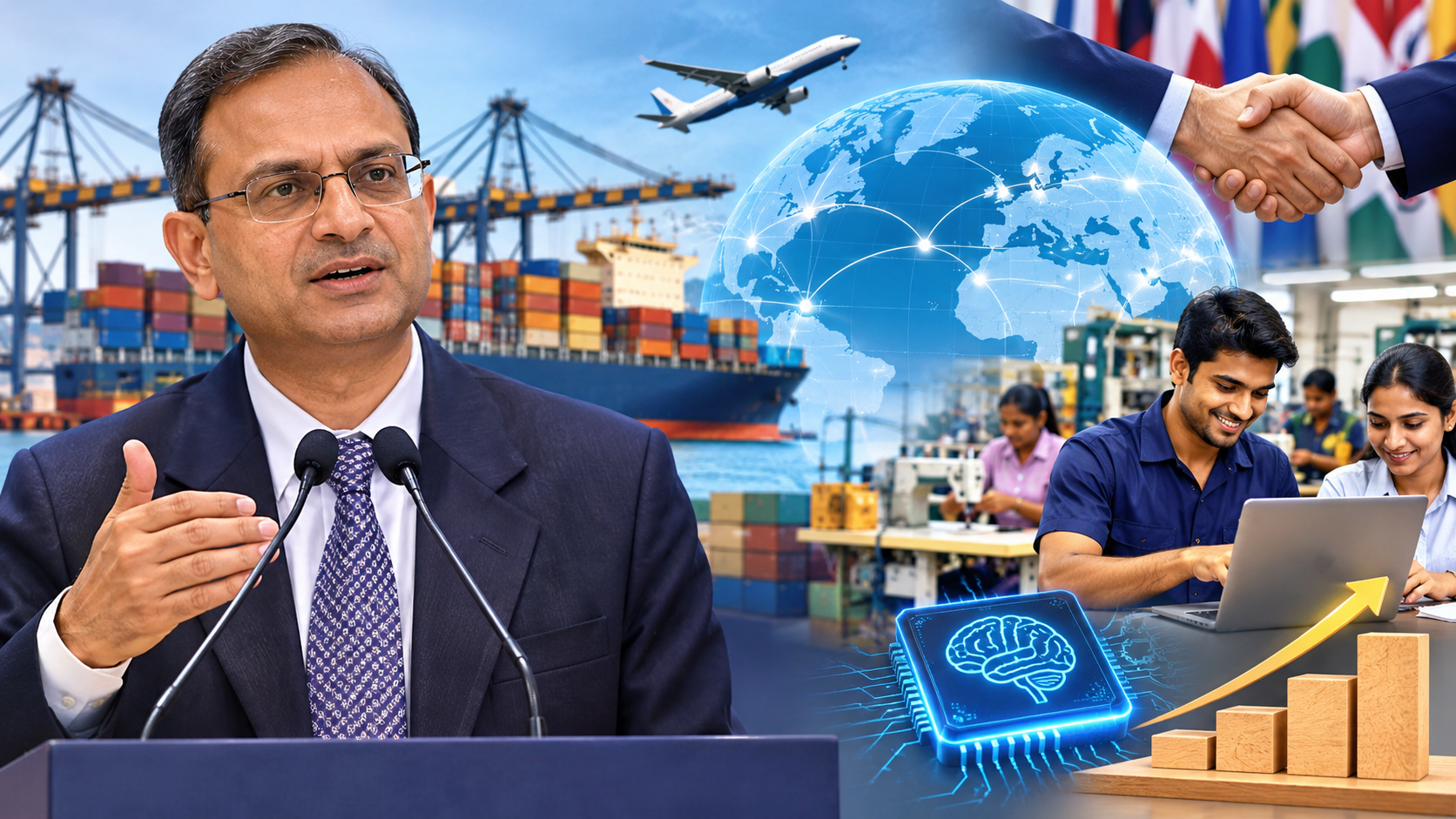
RBI Governor Sanjay Malhotra has called on small businesses to leverage trade agreements, adopt artificial intelligence and improve productivity to strengthen their global competitiveness.
Highlights
- Only 20-30% of eligible Indian exports utilise FTA concessions.
- Partner countries record a significantly higher utilisation rate of 60-70%.
- Bank credit to MSMEs grew 27% year-on-year in September 2026.
- Outstanding MSME loans reached ₹42.89 lakh crore.
- AI adoption among Indian MSMEs remains around 15%.
- Collateral-free loan limit increased from ₹10 lakh to ₹20 lakh.
Indian businesses are failing to fully capitalise on the opportunities created by the country’s expanding network of free trade agreements (FTAs). Reserve Bank of India (RBI) Governor Sanjay Malhotra has expressed concern over the low utilisation of preferential tariff benefits by domestic exporters.
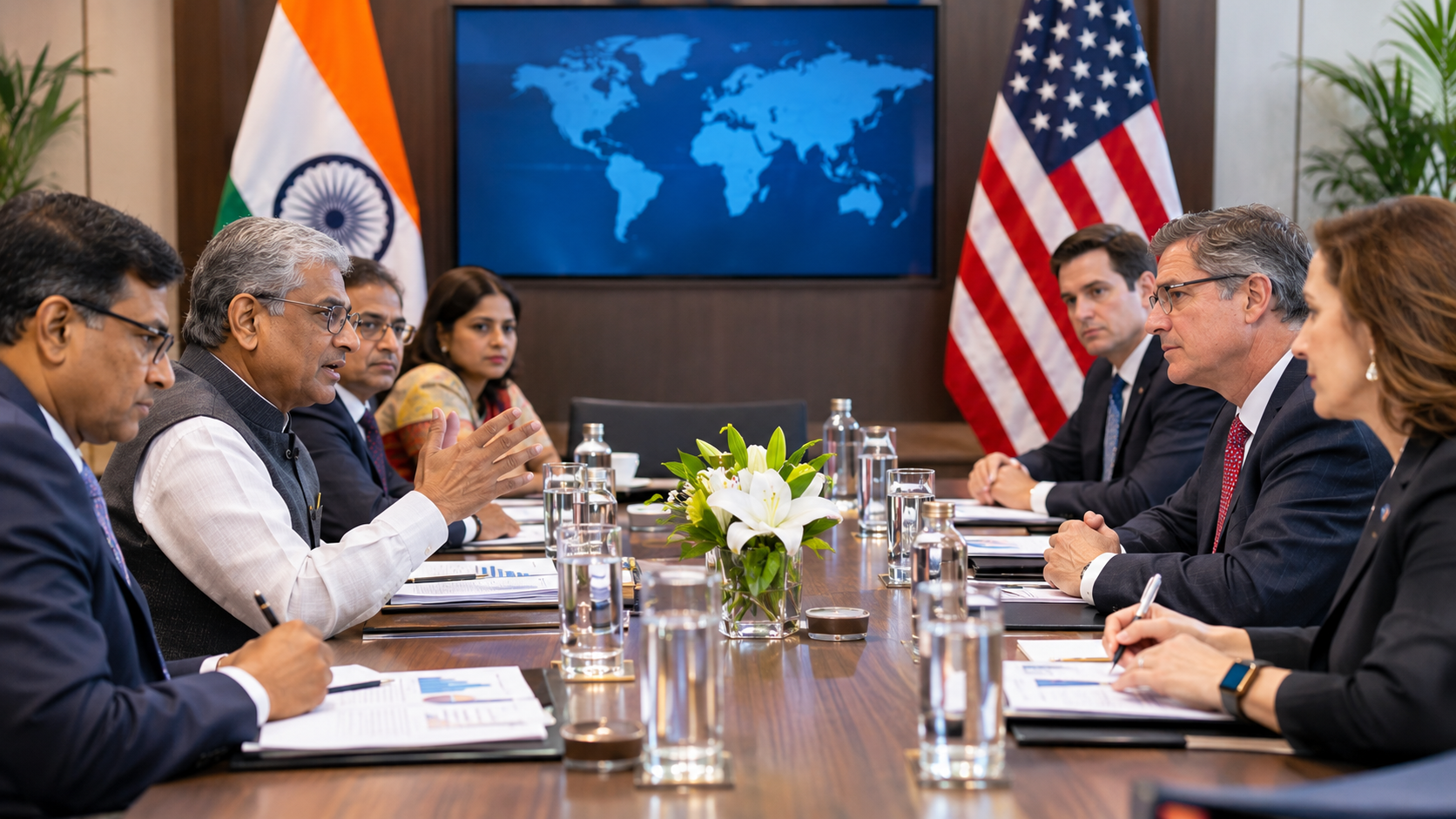
Speaking at the SME Finance & Investment Summit in Mumbai, Malhotra said only 20-30% of eligible Indian exports benefit from reduced tariffs under trade agreements. In comparison, partner countries utilise these concessions for 60-70% of their eligible exports to India.
MSMEs need to explore global markets
The RBI Governor encouraged micro, small and medium enterprises (MSMEs) to expand beyond domestic markets and identify export opportunities. He emphasised the importance of improving product quality, meeting international standards and obtaining necessary certifications.
India has signed 17 free trade agreements with its trading partners. These agreements provide businesses with opportunities to access international markets, procure inputs at competitive prices and participate in global supply chains.
MSME lending registers strong growth
Access to institutional finance has improved significantly over the past five years. Bank lending to MSMEs increased by 27% year-on-year in September 2026, compared with overall bank credit growth of 19.4%.
Outstanding loans to the sector increased from ₹17.97 lakh crore in September 2021 to ₹42.89 lakh crore in September 2026.
Malhotra stressed the need to expand financial access for first-time borrowers, women entrepreneurs, micro enterprises and businesses operating in rural areas and smaller cities.
The RBI has also increased the collateral-free lending limit for micro and small enterprises from ₹10 lakh to ₹20 lakh, effective April 1, 2026. Eligible businesses with a strong repayment record may receive loans of up to ₹25 lakh without collateral.
AI adoption remains a challenge
Malhotra highlighted the need for small businesses to invest in emerging technologies. Artificial intelligence adoption among Indian MSMEs remains at approximately 15%.
Although 76% of MSME leaders surveyed use AI in some capacity, only 5% have integrated it into their core business operations. According to estimates cited by the Governor, AI could generate economic value worth $490-685 billion for the sector.
Productivity holds key to economic growth
The productivity of Indian MSMEs currently stands at just 26% of that of large enterprises. Improving productivity through technology, innovation and operational efficiency could unlock substantial economic gains.
Malhotra also urged banks to strengthen relationship-based lending and develop a better understanding of entrepreneurs’ financial requirements rather than treating MSME financing merely as a regulatory obligation.
Source: Business Standard. Rewritten in original language using the supplied report; figures have not been independently verified.