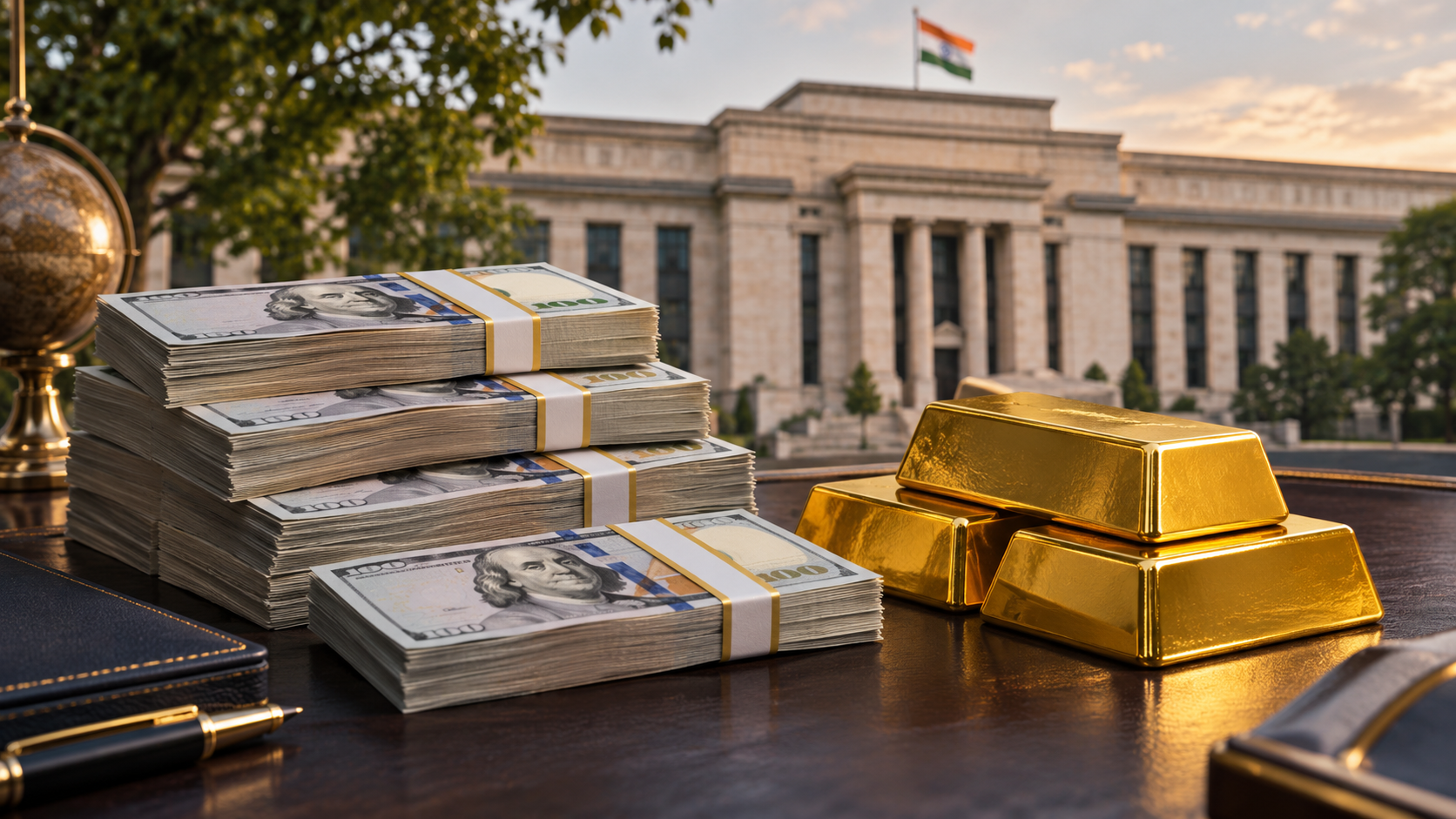
Reserves increased nearly 6.8% during April–September 2026, while gold’s share fell to 14.38%, according to an NDTV Profit report citing RBI data.
Highlights:
- Forex reserves reached $737.78 billion at September-end.
- Total reserves increased by $46.67 billion over six months.
- Foreign currency assets rose to $608.26 billion.
- Gold’s share declined from 16.70% to 14.38%.
- RBI’s physical gold holdings stood at 880.52 tonnes.
- Securities accounted for 87.06% of foreign currency assets.
Story:
India’s foreign exchange reserves rose by $46.67 billion during April–September 2026 to reach $737.78 billion, with foreign currency assets driving the increase. However, gold accounted for a smaller proportion of the reserve portfolio at the end of the period.
According to NDTV Profit’s account of the Reserve Bank of India’s latest half-yearly reserve management report, total reserves increased nearly 6.8% from $691.11 billion at March-end.
India’s reserve portfolio comprises foreign currency assets, gold, Special Drawing Rights and its reserve position with the International Monetary Fund.
Foreign currency assets lead the increase
Foreign currency assets, the largest component of the portfolio, climbed from $552.28 billion in March to $608.26 billion in September. The increase of $55.98 billion exceeded the overall rise in reserves, indicating that changes in the remaining components partly offset this growth.
The composition of foreign currency investments also shifted. Securities accounted for 87.06% of foreign currency assets at September-end, compared with 84.31% six months earlier.
Meanwhile, the proportion held as deposits with other central banks and the Bank for International Settlements declined from 8.48% to 5.91%.
Why did gold’s share decline?
Gold’s contribution to total reserves fell by 2.32 percentage points, from 16.70% in March to 14.38% in September.
A lower share does not, by itself, establish that the central bank sold physical gold. The proportion also changes when gold prices fluctuate or other reserve assets increase in value.
The report put RBI’s gold holdings at 880.52 metric tonnes. Of this, 740.13 tonnes were stored domestically, while 140.39 tonnes were held in safe custody with the Bank of England and the BIS.
International gold prices weakened during the review period, according to the report. Average prices eased from around $4,721 per troy ounce in April to approximately $4,319 in September, weighing on the metal’s dollar valuation.
Global conditions influence reserve management
The review period saw uncertainty linked to the West Asia conflict, energy supply disruptions, government borrowing and monetary policy changes across major economies.
The report linked weaker gold prices to higher US Treasury yields, a stronger dollar and expectations of tighter monetary policy.
RBI’s reserve management approach prioritises safety, liquidity and return optimisation. The figures illustrate why reserve growth needs to be assessed alongside changes in asset composition: a larger overall portfolio can coexist with a declining share for an individual component.
SEO Keywords: India forex reserves, RBI forex data, foreign exchange reserves, RBI gold holdings, foreign currency assets, gold share in reserves, Indian economy, reserve management