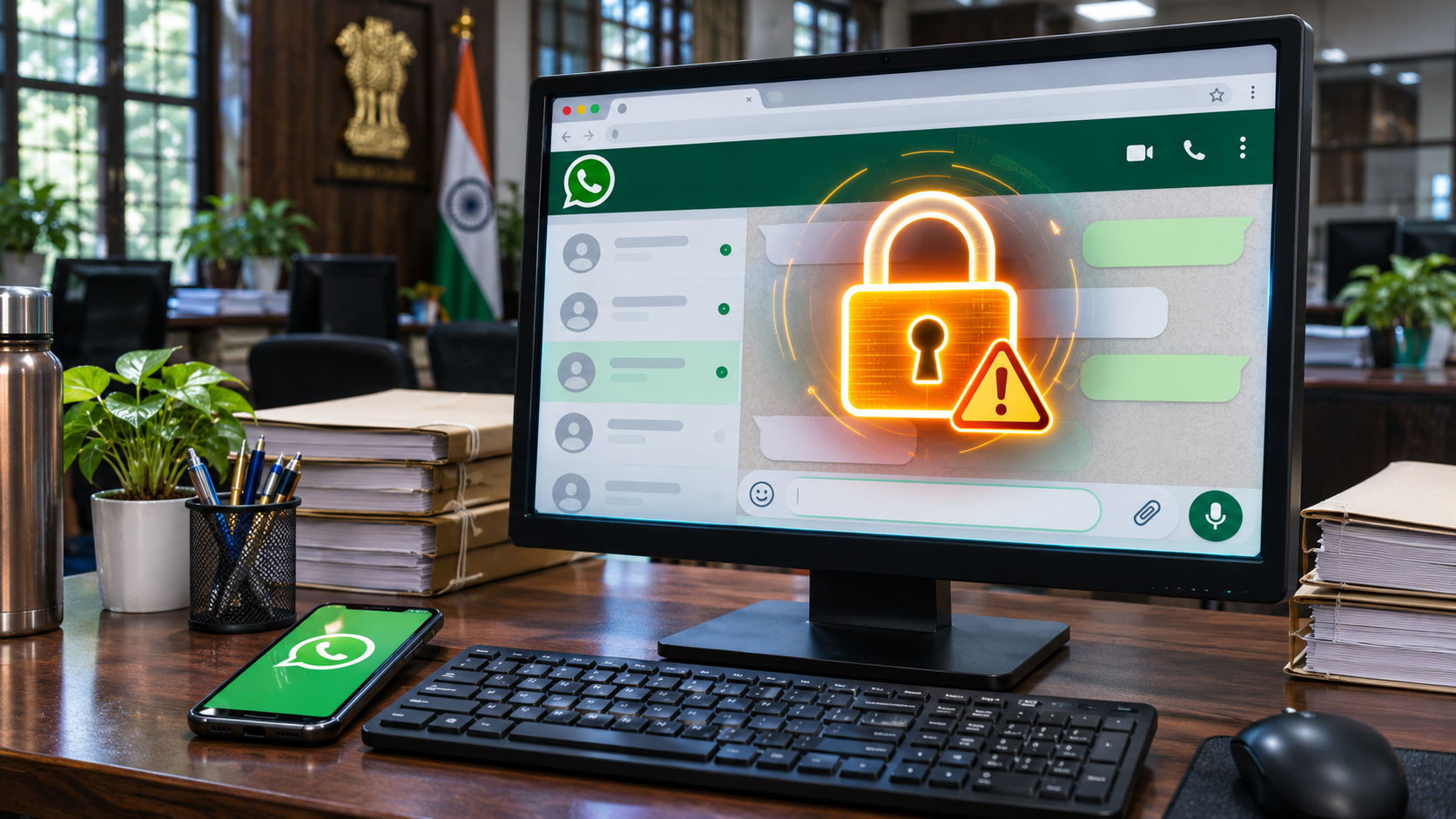
The government’s cybercrime coordination body has advised users to log out after every session, warning that active accounts on shared computers could expose messages and enable impersonation.
Highlights:
- I4C cautions against sharing sensitive information through WhatsApp Web.
- Active sessions could allow unauthorised access to messages and contacts.
- Compromised accounts may be used for phishing, fraud and impersonation.
- Closing a browser tab does not amount to logging out.
- Users should avoid accessing accounts on public or untrusted computers.
- Earlier government guidance recommends designated channels for confidential communication.
The Indian Cyber Crime Coordination Centre (I4C), under the Ministry of Home Affairs, has cautioned users against exchanging government, organisational, financial, confidential or other sensitive information through WhatsApp Web on computers. The advisory highlights the risk of unauthorised access through authenticated sessions, particularly on office and shared systems.
Issued by I4C’s National Cybercrime Threat Analytics Unit, the warning explains that an active session could, under certain circumstances, allow another person to access an account. Attackers could read conversations, send messages in the account holder’s name and access contacts or group discussions. A familiar identity could then be exploited to make fraudulent requests appear credible.
Closing the browser is not enough
A key precaution is to manually log out after every WhatsApp Web session. Simply closing the browser window or tab does not end the authenticated session, potentially leaving the account accessible to someone else using the computer.
The agency has also cautioned against logging in through cyber cafes, public kiosks, hotel business centres, borrowed computers and other untrusted devices. Where access is unavoidable, private or incognito browsing should be treated as an additional precaution, alongside manually logging out.
Users have been asked to watch for unexpected messages sent from their accounts, unusual replies from contacts and other unexplained activity. Keeping operating systems, browsers and security software updated, while avoiding suspicious downloads and unknown files, forms another part of the advisory.
What does this mean for government communication?
The warning raises a practical issue for offices using messaging groups: routine coordination and the exchange of sensitive records require different safeguards. Creating a group does not, by itself, establish that it is an appropriate channel for confidential information.
Earlier government guidance already identifies alternatives. In a parliamentary response, the government recommended NIC email and government messaging platforms such as Sandes and Samvad for communicating confidential and restricted information. It also specified that information classified as secret or top secret must not be shared through those platforms either.
For departments and organisations, the advisory therefore brings communication practices into focus. Its practical implication is that employees need clear instructions on which information can be shared, which approved channel to use and how to secure access on workplace computers.