Speaking at FICCI’s annual gathering, Modi urged businesses to invest in agriculture and questioned whether corporate tax cuts had translated into more jobs and higher wages.
Highlights:
- PM invites suggestions on reforms without hesitation.
- Urges industry to invest heavily in agriculture and allied sectors.
- Asks businesses to prioritise self-reliance in long-term investments.
- Questions whether tax savings have supported hiring and wage increases.
- Cites progress in poverty reduction over the past 12–13 years.
- Calls for respect for farmers, entrepreneurs, wealth creators and taxpayers.
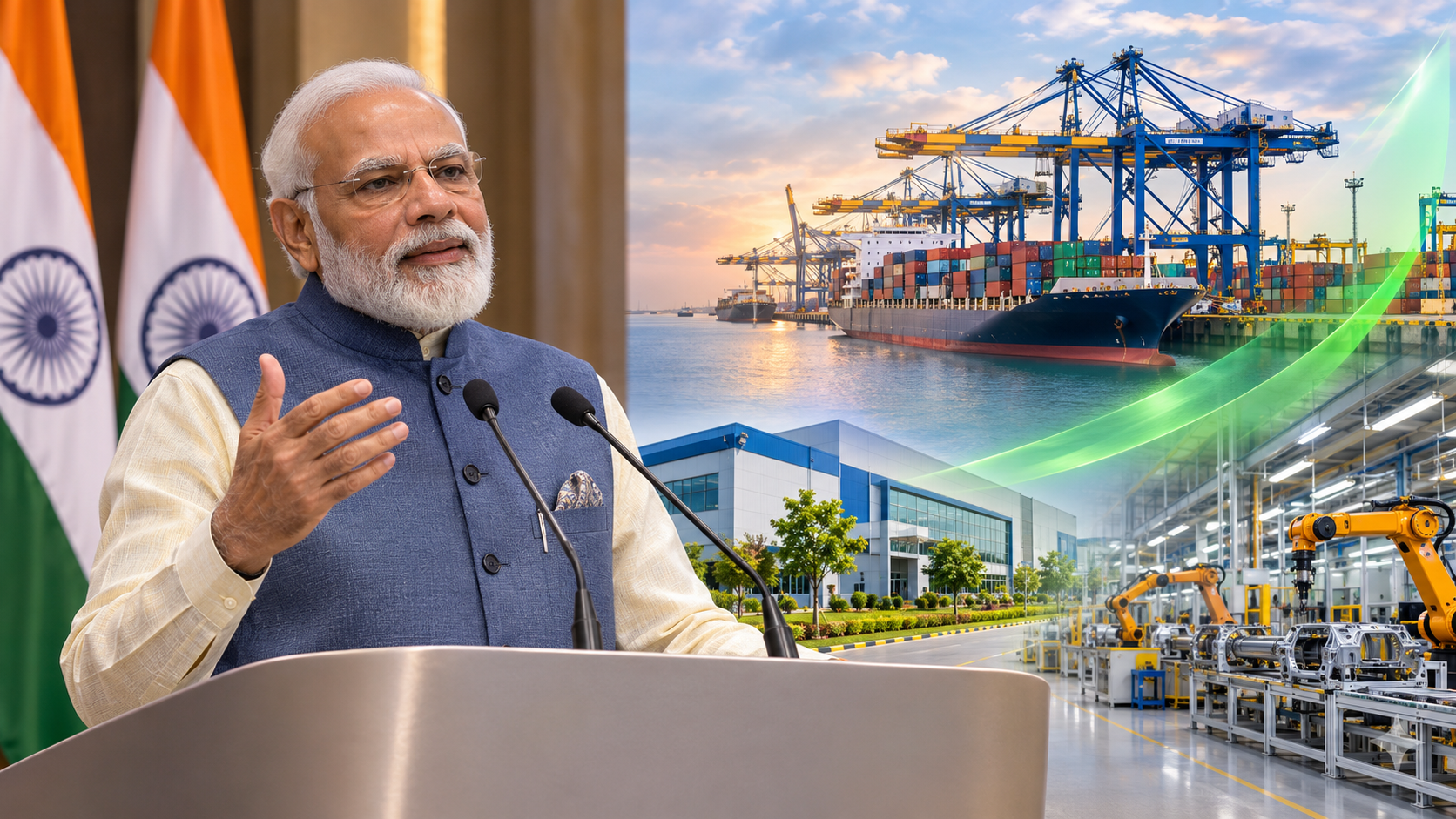
New Delhi, November 19: Prime Minister Narendra Modi on Thursday invited India Inc to openly suggest further reforms needed to accelerate the country’s growth, while urging businesses to increase investment in agriculture and allied sectors.
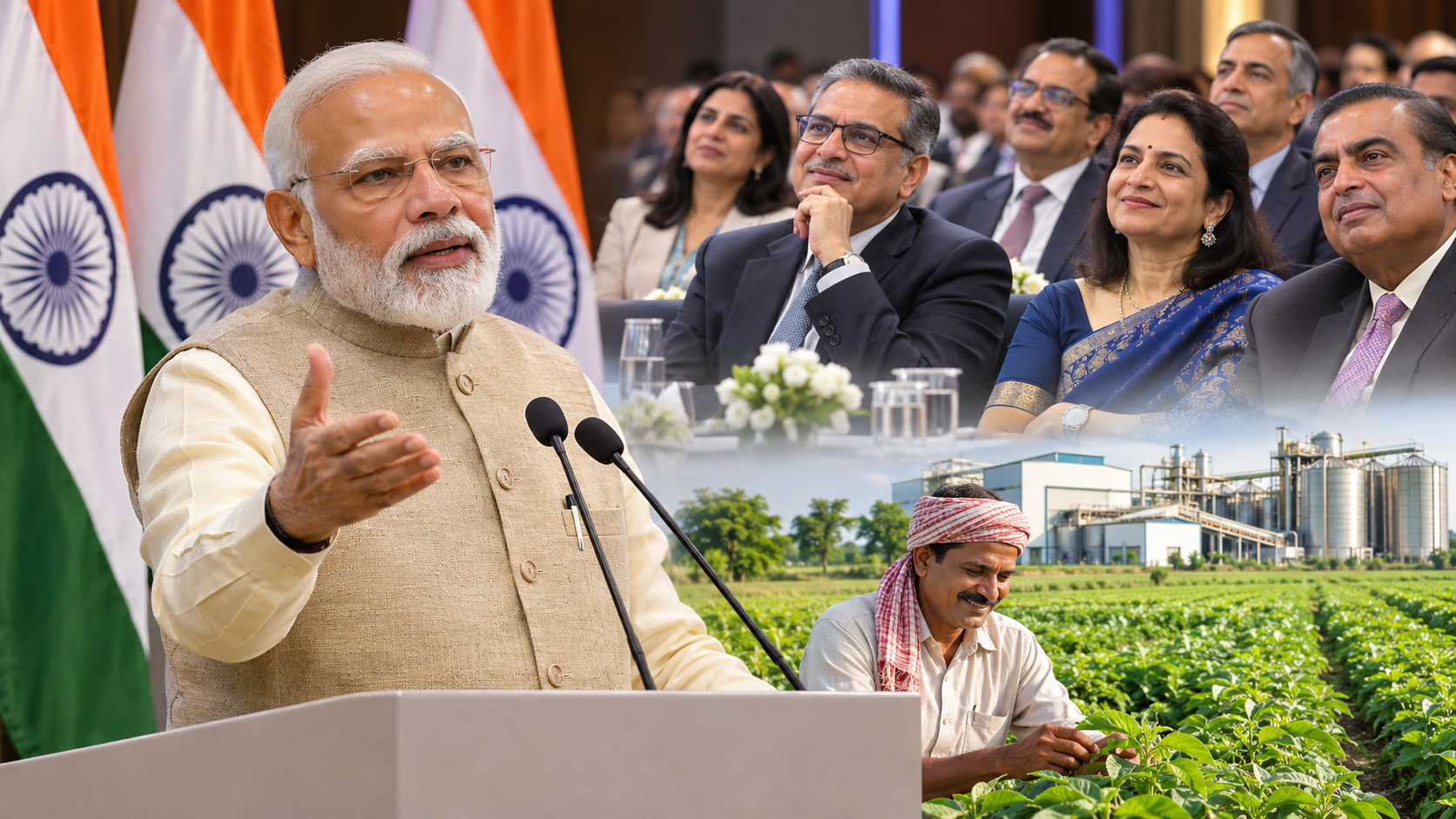
Addressing FICCI’s Annual General Meeting and Annual Convention, Modi asked corporate leaders to share their recommendations without hesitation or reluctance. He said the government was willing to hear what still needed improvement and encouraged industry to communicate its concerns directly.
The Prime Minister linked the industry’s investment choices to India’s long-term economic ambitions. He urged businesses to make “India First” the foundation of every long-term investment decision over the next 20 years, saying this would strengthen self-reliance and create opportunities for business expansion.
Agriculture and allied activities featured prominently in his appeal. Modi asked corporates to invest heavily in these sectors as part of their contribution to the country’s development.
He also raised questions about how businesses had used the benefits of lower corporate taxation. Referring to the reduction in the basic corporate tax rate from 30% in 2014 to 22%, Modi asked whether companies had expanded their workforce and increased employees’ wages.
His remarks placed employment and remuneration alongside investment in the discussion on corporate participation in economic growth. He also referred to the income-tax relief available on annual individual income of up to ₹12 lakh.
Highlighting his government’s record over the past 12–13 years, Modi credited contributions from different sections of society. He said India was progressing rapidly and that people were moving out of poverty at a similarly fast pace.
Citing what he described as the latest World Bank report, the Prime Minister said 50 crore people had overcome poverty during this period.
Modi also argued that national progress required respect for farmers, small entrepreneurs, industry, wealth creators and taxpayers. He criticised the practice of repeatedly targeting these groups with abuse.
Referring to industry’s experiences with previous governments, he suggested that past difficulties continued to influence its willingness to speak openly. He sought to reassure business leaders that they could approach the current government freely.
The address combined an invitation for policy feedback with a call for businesses to support self-reliance, agricultural investment, employment and wage growth through their decisions.