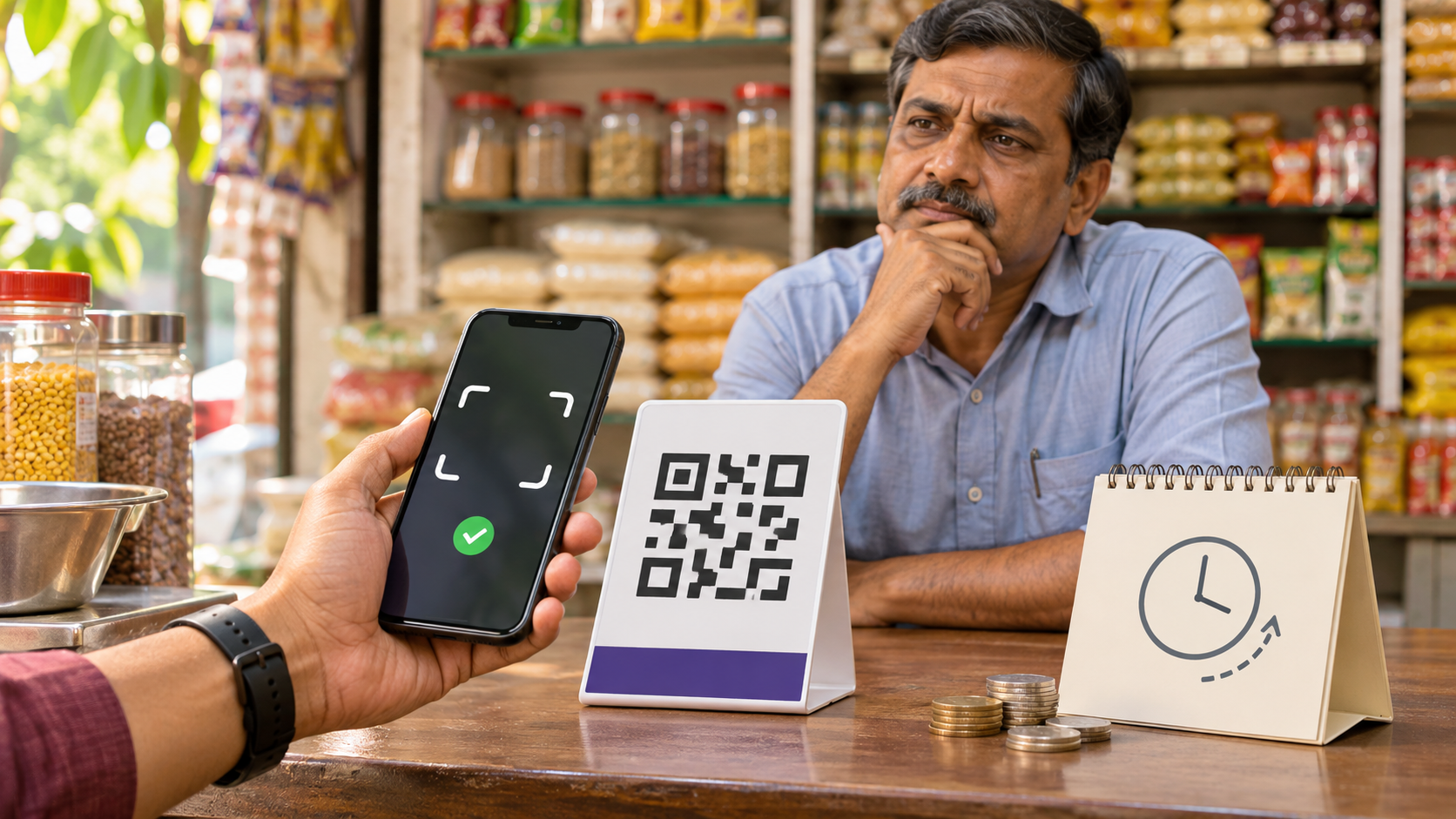
The proposed framework includes a 0.4% fee on specified merchant payments above ₹2,000, while person-to-person transfers and eligible small merchants remain exempt.
Highlights:
- UPI merchant charges could face a further delay.
- Concerns over trader opposition may influence the rollout timeline.
- A delay beyond the polls remains a possibility, not a confirmed decision.
- Proposed 0.4% MDR covers specified merchant payments above ₹2,000.
- The fee is capped at ₹300 per eligible transaction.
- Person-to-person transfers will continue to remain free.
Story:
The introduction of merchant discount rate (MDR) on select Unified Payments Interface (UPI) transactions could be delayed until after the 2027 assembly elections, as the government weighs concerns about opposition from merchants and trade associations.
Moneycontrol, citing a Financial Express report based on industry sources, said the government, Reserve Bank of India and National Payments Corporation of India have yet to agree on an implementation date. Much of the regulatory and operational preparation has reportedly been completed.
Assembly elections are due next year in Uttar Pradesh, Punjab, Uttarakhand, Goa and Manipur. A senior industry official told Financial Express that implementation could extend beyond the Uttar Pradesh elections if discussions fail to produce an earlier agreement. However, the official described this as a worst-case scenario rather than the most likely outcome. The report does not establish an officially confirmed postponement until after the polls.
The framework was initially scheduled to take effect on October 15, 2026. Implementation was subsequently deferred until after Diwali, with a revised date to be announced separately, according to Moneycontrol.
Under NPCI’s outlined framework, a 0.4% MDR would apply to eligible person-to-merchant UPI transactions above ₹2,000. The fee would be capped at ₹300 for transactions of ₹75,000 and above. For example, an eligible ₹5,000 merchant payment would attract an MDR of ₹20, while a ₹1 lakh payment would hit the ₹300 ceiling. These are merchant processing charges, rather than a blanket fee on every UPI transfer.
For consumers, the government has clarified that all person-to-person UPI transfers will remain free, irrespective of the amount. Merchant payments up to ₹2,000 and payments received by qualifying small merchants under the zero-MDR category will also remain outside the charges. The Finance Ministry estimates that approximately 96% of person-to-merchant transactions will remain unaffected.
The policy debate centres on balancing merchant costs with funding for the payments network. Industry participants say a sustainable revenue model is needed to support technology, cybersecurity and expansion. For businesses preparing for the change, the implementation date remains the key unresolved issue, with discussions continuing over a suitable rollout window.